
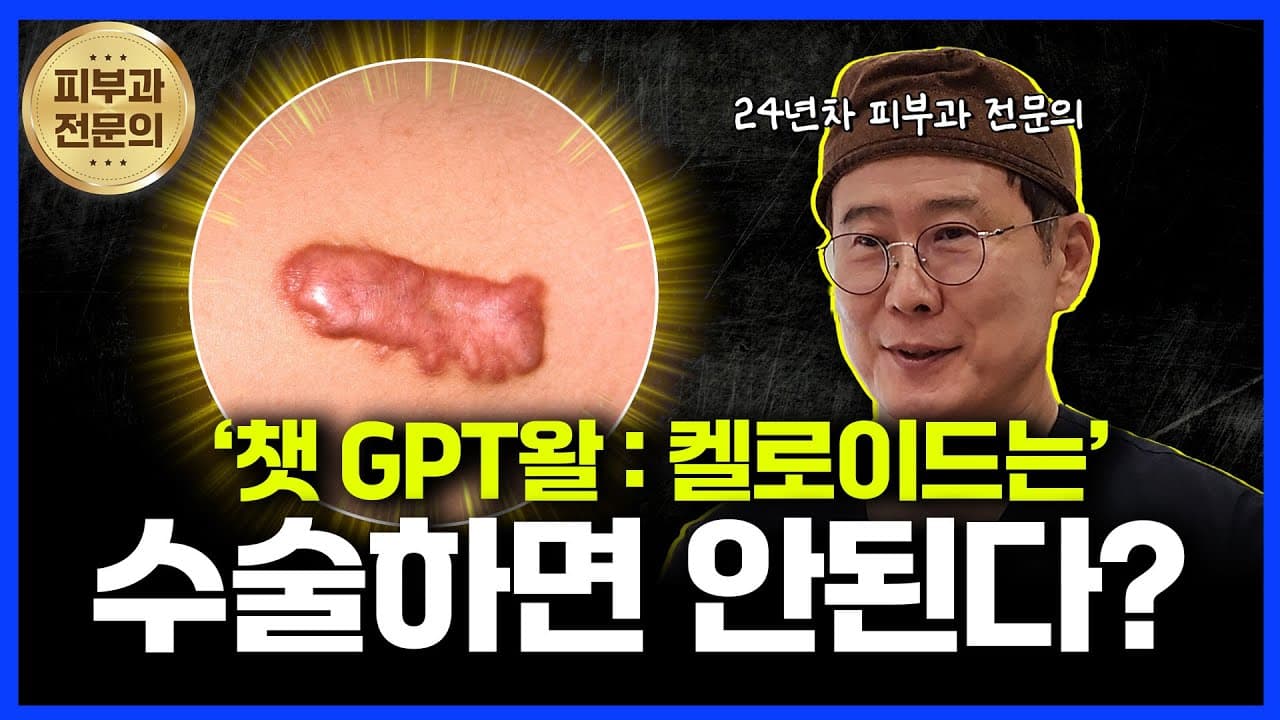
Keloids are scar tissues that abnormally proliferate during the wound healing process after skin damage, causing not only cosmetic problems but also pain and itching. While the advancement of AI technology has made medical information more accessible, there are limitations to relying solely on AI's answers for keloid treatment. In particular, AI's response that 'keloid surgery is not recommended due to a high risk of recurrence' can confuse patients, necessitating an accurate perspective from an expert.
Should keloid surgery always be avoided?
AI may respond that keloid surgery is generally not recommended due to a high risk of recurrence. While this statement itself is not entirely wrong, it does not provide a complete picture of keloid treatment. The risk of recurrence after keloid removal surgery certainly exists, but good results can be expected depending on the rich experience and know-how of the operating physician. Therefore, it is difficult to conclude that surgery should always be avoided solely due to the risk of recurrence.
If left untreated, keloids are likely to worsen
If keloids are left untreated, they are highly likely to worsen. Over time, they may grow in size or pull on the surrounding skin, causing pain and discomfort in daily activities. While AI may suggest that some keloids can shrink or stabilize over time, this is a very rare occurrence.
Some keloids may shrink or stabilize over time.
While this statement is not entirely incorrect, it should not be overlooked that the vast majority of keloids do not shrink on their own and are much more likely to grow. Keloids are a condition that requires active treatment.
Why early treatment is important even for small keloids
Keloids may initially be considered merely a cosmetic issue. However, as they grow, they can cause various problems such as pain and itching, and can even lead to functional problems by pulling on the surrounding skin. Therefore, it is important to treat keloids early when they are small. Starting appropriate treatment early can prevent them from developing into larger problems and enhance treatment effectiveness.
Keloid treatment: the experience and know-how of the physician are key
One of the most crucial factors in keloid treatment is the expertise and experience of the treating physician. While textbook knowledge is important, actual clinical practice requires countless unwritten know-how and skilled techniques. Mishandling keloids without expertise can worsen the problem, so it is advisable to seek medical professionals with expertise in this field.
Limitations of AI information for keloid treatment
AI excels at accurately providing vast amounts of textual information. It can easily find content from textbooks or specialized academic journals. However, AI's limitations lie in its difficulty in handling unwritten knowledge, such as a physician's clinical experience, delicate techniques, and judgments considering individual patient characteristics.
- AI provides general answers based on textual information.
- It is difficult to make judgments about individual patient characteristics or complex situations.
- The skilled techniques and experience of medical professionals are areas that AI cannot replace.
Smart ways to use keloid information
AI can be a useful reference for obtaining basic information about keloids. However, rather than blindly trusting AI's answers, it is important to consult with medical professionals who have expertise to establish the most suitable treatment plan for you. Since keloid treatment may vary from person to person, please be sure to seek an accurate diagnosis and advice from an expert.