
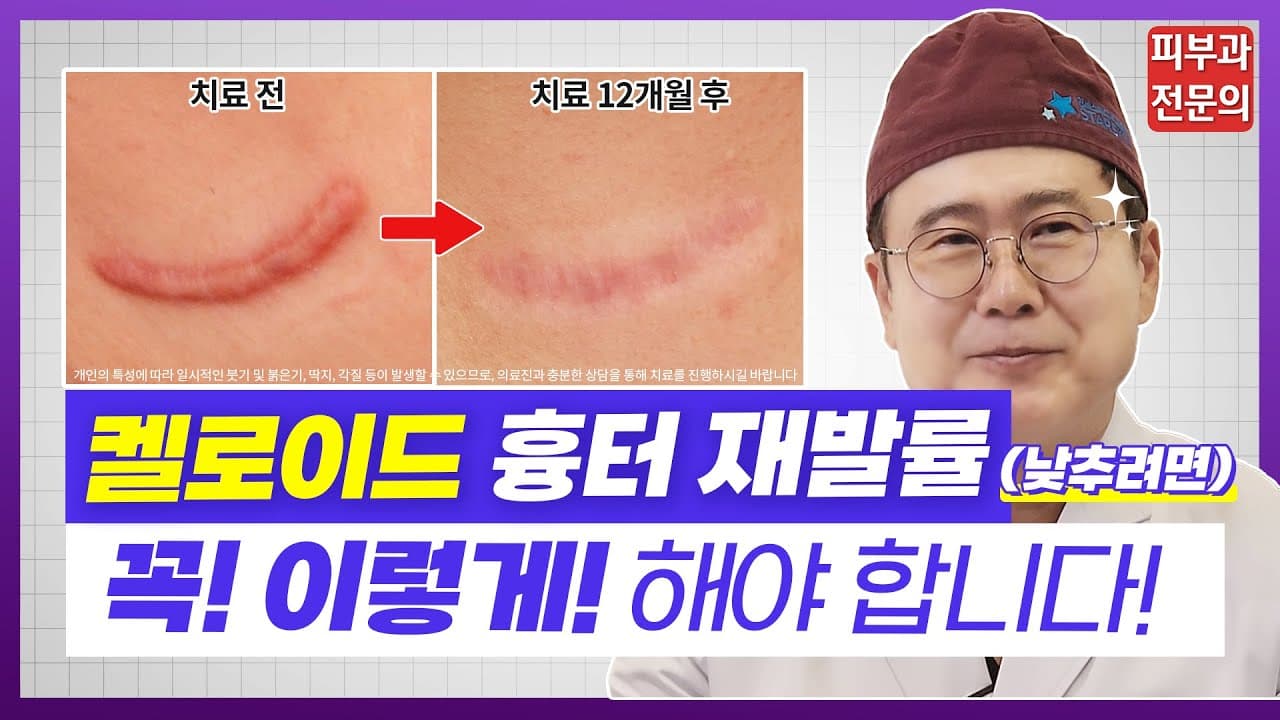
Keloid scars, which protrude from the skin and are aesthetically unpleasing, are a concern for many. In particular, many are disappointed when, after receiving steroid injection treatment, the keloid seems to improve for a while only to recur over time. Why do keloids recur so frequently? And what are the effective treatment methods to minimize recurrence? Today, we will learn more about the causes of keloid recurrence and treatment know-how to reduce recurrence with Dr. Kang Jin-moon from Yonsei Star Dermatology Sinchon.
Why do keloids keep recurring?
Keloids are one of the intractable skin conditions with frequent recurrence. The reason keloids tend to recur so often is precisely because the exact cause is unknown. While knowing the root cause of most diseases increases the likelihood of a complete cure, it is difficult to expect a 100% cure for conditions like keloids where the cause is unknown.
However, even if a 100% cure is difficult, treatment should not be abandoned or neglected. If keloids are left untreated, they can gradually grow larger over time, making treatment even more difficult. Therefore, it is important to start active treatment early.
How long should keloid treatment continue?
When keloid treatment begins, you can see the protruding part flatten and the size decrease from the initial stages. However, it is too early to be relieved just because the keloid's size has reduced and flattened after repeated treatments. If redness still remains, treatment should not be stopped prematurely. In most cases, if treatment is stopped while redness remains, it will quickly recur.
The most important point in keloid treatment is to treat sufficiently until the redness of the keloid completely disappears.
Keloid treatment: Injections alone may not be enough
The most common treatment method for keloids is steroid injections, which many people are familiar with. Therefore, many people want to be treated with steroid injections alone. However, when treating keloids, we recommend combining steroid injections with laser treatment. This is because the success rate of treatment can be higher and the recurrence rate lower when combined with laser therapy than with injection monotherapy.
Role of Steroid Injections
Keloids occur when collagen is excessively produced and accumulated in the skin due to unknown causes. The collagen already accumulated in the skin can be dissolved with steroid injections. Therefore, the role of steroid injections in keloid treatment is very important.
Role of Vascular Lasers
However, there is one more important aspect of keloid treatment: blood vessels. To produce an excessive amount of collagen, more oxygen and nutrients are needed, and for this, the blood vessels near the keloid abnormally expand and proliferate. This is why keloids appear red.
Therefore, blocking the blood vessels that supply the raw materials for collagen is also very important. This role is performed by vascular lasers.
The key know-how for keloid treatment is as follows:
- Already formed collagen is dissolved with steroid injections.
- Vascular laser treatment is combined to block blood vessels, preventing further collagen production.
This combined treatment can help increase the success rate of keloid treatment and reduce the recurrence rate.
Is silicone gel effective for keloids?
Among those who have already experienced recurrence after keloid injection treatment, some inquire whether silicone gel can help due to the burden of dermatological treatment. Silicone gel is known to aid in wound healing and scar reduction, and we agree with this.
Some studies have also reported that silicone gel can be helpful for keloids. However, based on clinical experience, it is judged that it does not significantly help keloid scars in practice. The exact reason is unknown, but it is presumed that keloid scars involve a different mechanism than the healing process of general wounds.
Keloid scars can feel challenging to treat due to frequent recurrence, but they can be sufficiently managed through accurate understanding and consistent treatment. Continuing treatment until the redness completely disappears and adopting a combined approach of steroid injections and vascular lasers can help minimize recurrence and increase treatment success rates.