
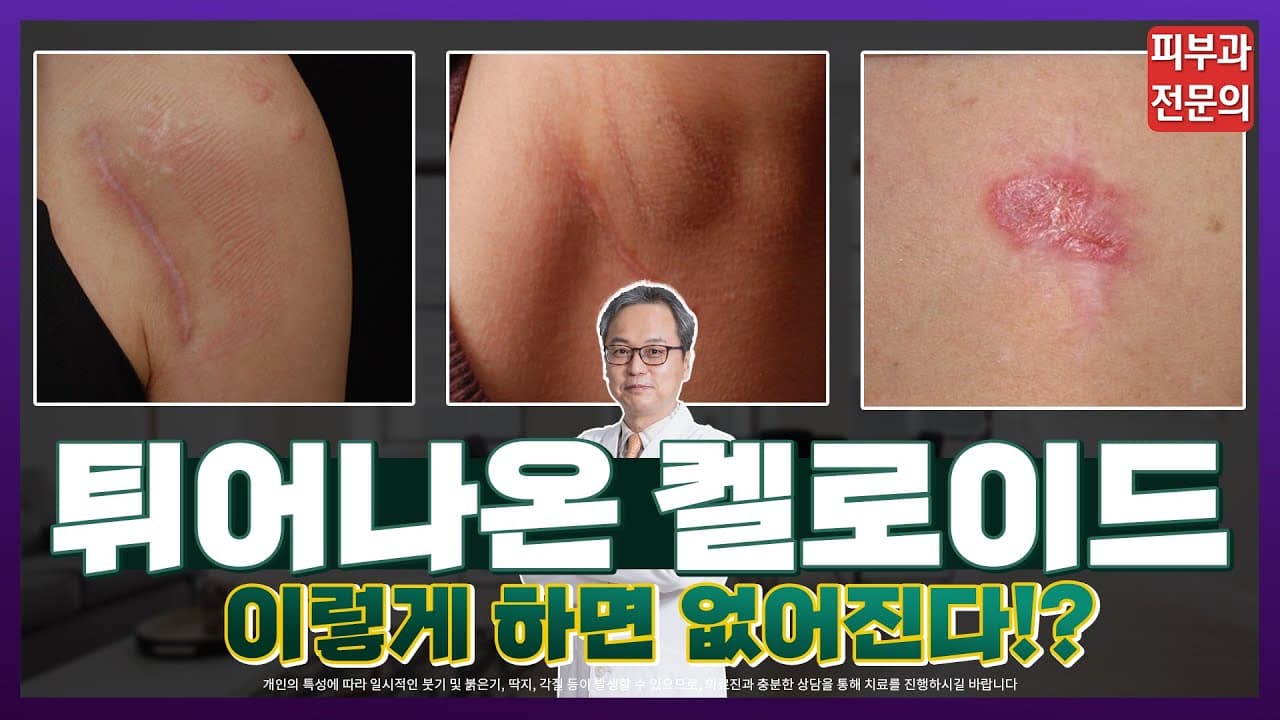
Hello, I am Dr. Lee Sang-ju, a dermatologist. Today, I would like to talk about keloid scars, a concern for many people. A keloid is a type of scar that abnormally proliferates and protrudes during the healing process after skin damage. We will examine its causes, treatment, and recurrence prevention, focusing on frequently asked questions.
Are keloids genetic?
“No one in my family has keloid skin, but I do. Can this happen?” Yes, it can. Keloid skin can develop in anyone, and while the likelihood increases if there are keloid patients in the family, it is not necessarily a hereditary disease. However, it can be considered a condition with a family history.
What is the difference between hypertrophic scars and keloid scars?
Both hypertrophic scars and keloid scars appear raised above the skin surface, but there are important differences.
- Hypertrophic scars: These protrude only within the scope of the original wound.
- Keloid scars: These are characterized by growing beyond the wound area and invading the surrounding healthy skin.
In reality, it is often difficult to clearly distinguish between these two, and in such cases, they may be treated as an intermediate form of the two scars. However, keloid scars have a strong constitutional factor and may tend to grow or resist treatment more during treatment.
Why do keloids form, and do they disappear on their own?
Can blisters or oozing turn into keloids?
Blisters or oozing do not directly turn into keloids. When the skin is injured to the extent that it damages the dermis beyond the epidermis and bleeds, all such injuries can leave scars. Among these, cases where the wound swells as it heals, depending on an individual's constitution, become keloids. Our body continues to produce new collagen because it does not properly receive the signal that the wound has healed, causing it to protrude above the skin surface and be accompanied by itching or pain.
Do keloids disappear naturally?
It is known that less than 1% of keloids disappear naturally. If they disappear on their own, it is more likely to be another type of scar, not a keloid scar.
Is it okay to squeeze a keloid at home?
Many people ask if it's okay to squeeze a keloid the size of a small grain of rice at home. Nothing comes out when you squeeze a scar. What looks like a grain of rice on the neck or chest can be acne developing into a keloid, or acne scars remaining the size of a grain of rice, which can be confusing. Acne is a comedo containing sebum, but a keloid is a lump of collagen, so no contents come out when squeezed. On the contrary, if squeezed incorrectly, it can swell, so it is best to avoid touching it if possible.
Keloid treatment is painful and has a high recurrence rate, isn't it?
Why is keloid injection treatment painful?
Keloid injections are known to be very painful. Keloid scars are made of very hard tissue, and pain occurs because the needle has to penetrate this hard tissue. At our clinic, we strive to reduce patients' pain, and we use methods that can significantly reduce pain to about 10-30% compared to the 100% pain experienced at other hospitals.
Can't it be removed at once with surgery or laser excision?
Keloid scars on the body can be removed at once with surgery. However, in most cases, the recurrence rate is high. Especially for keloid scars on the body, it is known that more than 7-8 out of 10 people experience recurrence after surgical removal, so surgery is often not performed alone.
After injection treatment, it became red and swollen again, and pain occurred.
If you have pain or itching in the keloid area, it is a sign that an inflammatory reaction is progressing in that area. At this time, substances like histamine are secreted, causing these reactions, which may indicate that the keloid scar is growing. This can be seen as similar to the symptoms before a burn bursts, so if these symptoms appear, it is important to visit the clinic quickly to receive injection treatment again or combine it with laser treatment to suppress the activation of the scar.
How are red scars remaining after reducing keloid height treated?
Red scars remaining after reducing the height mean that blood vessels and pigment remain.
- Blood vessels: Can be treated with a vascular laser.
- Pigment: Can be treated with whitening ointment, toning laser, or pigment laser. Reducing the height is not easy, but it can be sufficiently improved with consistent treatment.
Keloid treatment post-care and prevention
What methods can reduce the keloid recurrence rate?
There are several ways to reduce the keloid recurrence rate.
- Reduce thickness: If the keloid is thick, it is important to receive treatment to make it as thin as possible. This is because a remaining lump can become a seed for recurrence.
- Moisturizing and compression: Keeping the keloid area moist can reduce irritation. The cheapest method you can do at home is to apply plenty of moisturizer. Applying silicone tape can also help improve the color of the keloid and suppress its protrusion.
Are there any foods to avoid during keloid treatment?
There is no known direct link between specific foods and scar formation. However, it is generally recommended to avoid alcohol and smoking during scar treatment. Alcohol expands blood vessels, which can also expand blood vessels in the keloid area, having a negative effect. Smoking also hinders wound healing, so it is advisable to refrain from it.
Ear keloids and piercings
Can ear keloids form within 3-4 days after piercing?
Keloids can form within 3-4 days after piercing, but in most cases, it is an inflammatory reaction. If bacteria invade the piercing site or an excessive inflammatory reaction occurs, it can swell, redden, and ooze. In such cases, antibiotic treatment or injection treatment can quickly calm it down. However, since such inflammatory wounds can become the seed for keloids, it is important to treat them as soon as possible.
What is the difference between laser excision and surgery for ear keloids?
For small ear keloids, injection treatment is preferred, but for larger keloids or those that do not respond well to injection treatment, surgical methods or laser removal are considered.
- Surgery: This method involves excising the keloid with a scalpel and suturing, and it has a relatively high recurrence rate.
- Laser excision: This method uses precise laser wavelengths for removal and is known to have a relatively lower recurrence rate compared to traditional surgical methods.
Can I get a piercing again after keloid treatment?
It is not impossible to wear a piercing after keloid treatment. You can get it pierced again after the area has stabilized through surgery or laser treatment. However, from a medical perspective, it is not recommended due to the high probability of recurrence. Since there is a possibility of recurrence related to the keloid constitution, it is best to avoid suffering again.
As keloid scars have strong constitutional factors, early aggressive treatment and consistent management are important. It is advisable to establish a treatment plan tailored to you through consultation with a specialist, along with efforts to prevent recurrence.
Keloid treatment, insurance coverage?
If keloid scars interfere with daily life, insurance coverage may apply. For example, injection treatment for scars that cause functional problems such as gait disturbance or limited joint movement is covered by insurance. However, treatments for cosmetic purposes, such as lasers or surgery, are rarely covered by insurance.