
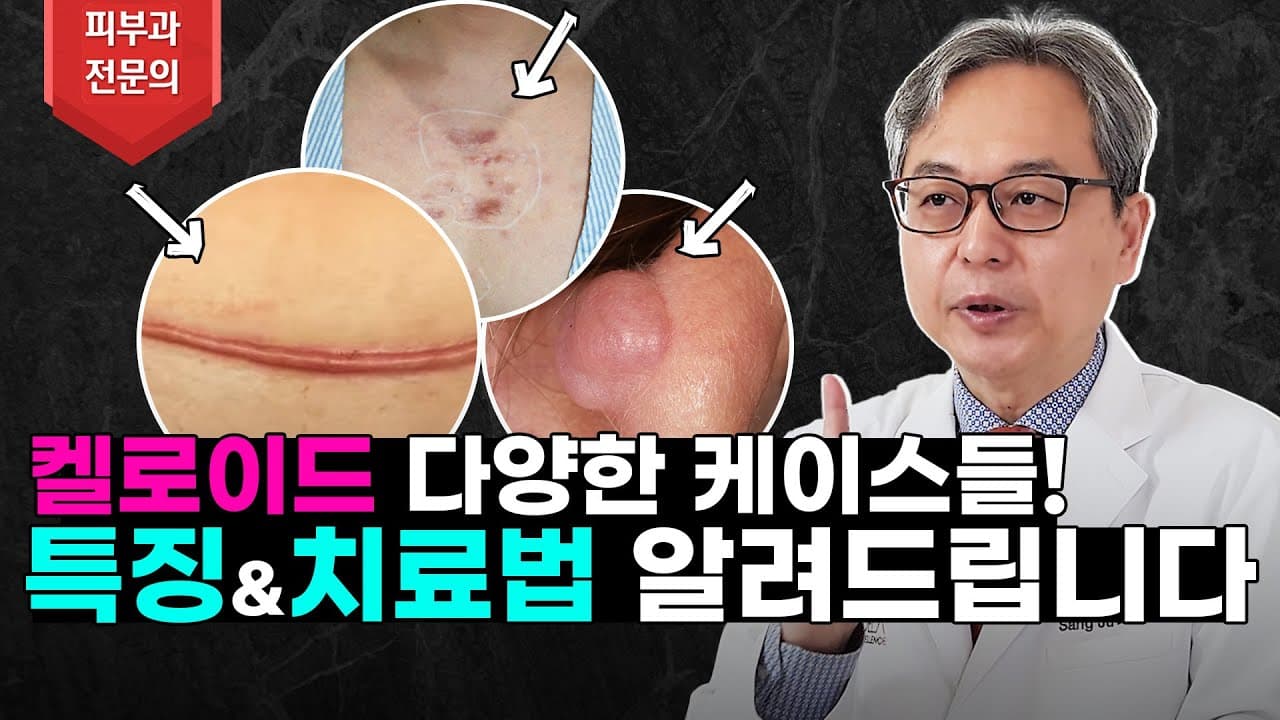
Are you worried that a red, swollen scar might be a keloid? Unlike typical scars, keloids can excessively proliferate beyond the original skin injury, growing larger and sometimes accompanied by itching or pain. Today, we will explore various stories from patients concerned about keloids with Dr. Lee Sang-ju of Yonsei Star Dermatology Sinchon and learn about treatment methods tailored to each situation.
Keloids: When should you suspect them?
Keloids are characterized by scars that continue to grow larger or turn red even after the wound has healed, often accompanied by severe itching. In particular, itching tends to worsen and the color becomes redder when a keloid is about to grow, so if these symptoms appear, it is important to consult a dermatologist as soon as possible to begin appropriate treatment.
Story 1: How are chest acne keloids treated?
This story is about a patient who has been experiencing recurrent acne on their chest since adolescence, which has turned into keloids. Recently, as the acne worsened, the keloids spread across the entire chest, causing significant stress. In this case, it appears that both acne and keloid scars resulting from acne are present.
- Mild cases: Injection treatment may be attempted.
- Less effective or severe cases: Combining laser and injection treatments can yield good results. We recommend consulting a specialist for treatment without too much worry.
Story 2: Pea-sized keloid from ear piercing, surgery vs. laser?
This story is about a patient who developed a pea-sized keloid inside their ear cartilage after an ear piercing, which caused inflammation and has been a source of concern and stress for about a year. If they want to remove it quickly, what method would be effective?
Keloid scars can be treated differently depending on their size.
- Small size: Improvement is possible with injection treatment alone. Therefore, it is important to visit the clinic early for treatment.
- Pea-sized: Injection treatment alone often has limitations. Since it can be aesthetically unpleasing, surgical treatment or laser treatment may be considered.
Surgery involves excising and suturing the keloid area, which has the advantage of immediate removal but the disadvantage of potential keloid recurrence. In contrast, laser treatment can offer more precise results than a scalpel, and the recurrence rate is reported to be relatively lower. If you want to quickly remove a pea-sized keloid, we recommend considering laser removal.
Story 3: What if a C-section scar turns into a keloid?
This story is about a patient whose C-section incision site is gradually swelling, turning red, and even itching. How should one respond in such a case?
Typical symptoms that appear when a keloid is about to grow are itching and redness. If these symptoms are observed, it is advisable to visit the hospital as soon as possible to combine injection treatment and laser treatment. Early and appropriate treatment can help prevent the progression of keloids and improve them.
Story 4: Keloid injection treatment, hesitant due to pain?
This story is about a patient who was diagnosed with a raised keloid after removing a mole on their body and received three injection treatments, but experienced severe pain and felt no significant change. Are there other methods or ways to reduce injection pain?
Generally, injection treatment is commonly used for keloids, and in some cases, laser treatment is combined. Especially when redness is severe, combining a laser like Vbeam Prima with injection treatment can be more effective.
It is not uncommon for patients to discontinue treatment due to pain during injection therapy. However, there are ways to reduce the pain.
Using a low-pain injection method can reduce pain by approximately 10-30% compared to conventional injections.
By utilizing such methods, you can alleviate the burden of pain and continue treatment consistently. If you are hesitant about treatment due to pain, we recommend consulting a specialist.
Keloid Treatment: What is most important?
Today, through the stories of various patients concerned about keloids, we have learned about the diverse symptoms of keloids and appropriate treatment methods. For keloids, early detection and appropriate treatment tailored to the individual's condition are crucial. If you have any questions, it is always best to consult a dermatologist for an accurate diagnosis and a customized treatment plan.