
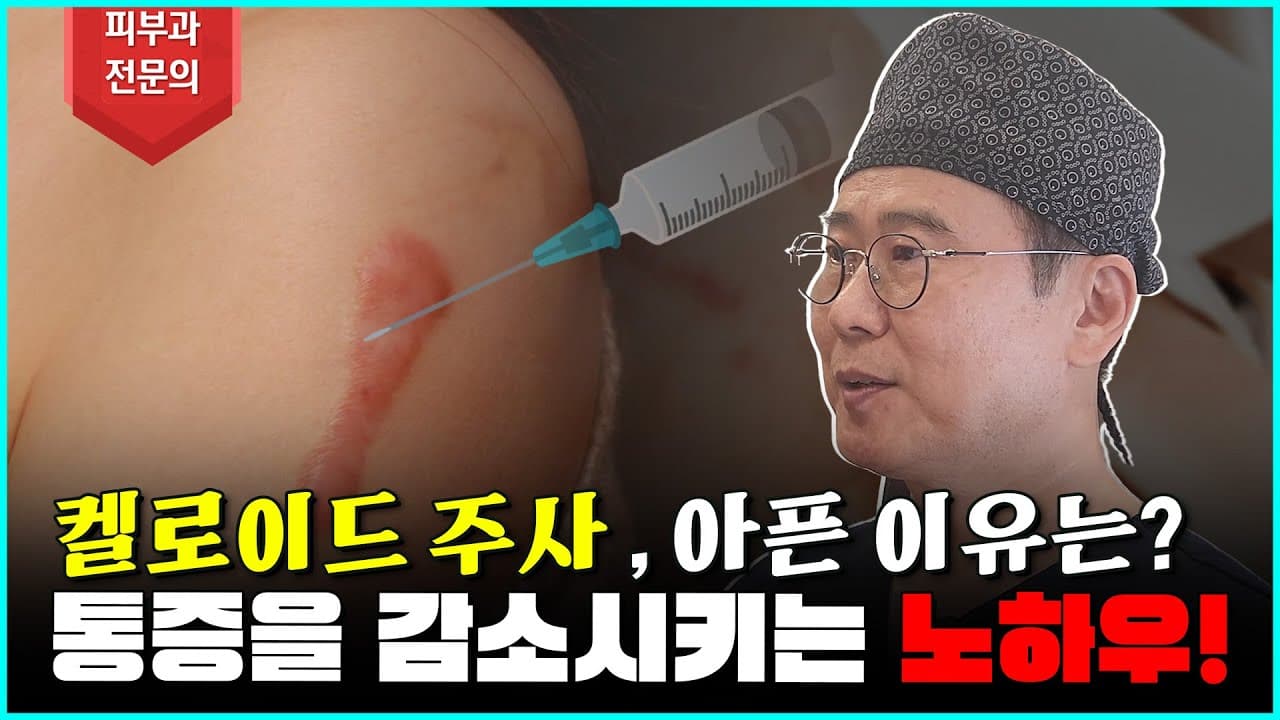
Keloid scars not only cause cosmetic problems but also itching and pain, leading many people to consider treatment. In particular, many people worry about keloid injection treatment because it is known to be very painful. A specialist from Yonsei Star Dermatology Sinchon will explain everything from the ingredients of keloid injections to the causes of pain, treatment goals, and management methods.
What are the ingredients in keloid injections?
Keloid injections contain steroids, specifically a drug called Triamcinolone. The reasons for using Triamcinolone among many steroids are as follows:
- Precipitate formation: Precipitates form in the injected lesion.
- Sustained effect: These precipitates dissolve in small amounts over several months, affecting surrounding tissues.
- Fewer systemic side effects: Because it acts locally, it has fewer systemic side effects compared to other steroids that spread systemically. Other steroids can spread systemically, leading to greater systemic side effects than the desired local effect.
Why keloid injections are particularly painful
People often think that injections hurt when the needle penetrates the skin, but the main cause of actual pain is different.
- pH of the injection solution: The acidity of the injection ingredients can cause pain if it does not match the body's pH.
- Dense collagen fibers: Keloid tissue consists of very densely packed collagen fibers. Because of this, the injection solution does not enter easily, and when medical staff try to inject the solution with force, the collagen fibers tear, causing pain.
The reason injections hurt is that keloids have very densely packed collagen fibers, so the injection solution doesn't go in easily. When we force the injection, the collagen fibers tear. So, the pain that occurs when they tear is very intense.
How to reduce keloid injection pain
The most basic method is to perform the injection gently.
- Adjusting injection speed and force: If the injection is done too quickly, the injection speed is fast and a lot of force is applied, which can momentarily tear the tissue. This can increase pain. If the injecting doctor performs the injection calmly and gently, the pain can be significantly reduced.
- In addition, there may be various other ways to reduce pain depending on the medical staff's know-how.
How long should keloid treatment continue?
Keloid treatment aims not for complete cure, but for the redness to almost disappear.
- Risk of early discontinuation: In the early stages, even if the raised part flattens, redness often remains. If treatment is stopped at this stage, there is a recurrence rate of about 80%.
- Reduced recurrence rate: Continuing injections or laser treatment sufficiently until the redness disappears can help reduce the recurrence rate.
- Individual differences in treatment duration: The time it takes for the redness to disappear varies considerably from person to person. Some people see it disappear relatively quickly, while others with severe cases may require 10, 20, or more treatments.
In any case, it is important to continue treatment until the redness disappears, as this marks the completion of treatment.
How to manage a keloid predisposition
There are several ways to prevent and manage keloid formation.
- Prevent skin injuries: It is important to be as careful as possible to avoid skin injuries.
- Caution during plastic surgery: If you are planning procedures like plastic surgery, you should consult sufficiently with medical staff about the possibility of keloid formation.
- Acne management: Acne can also be a cause of keloids, so thorough acne management is necessary.
Currently, there is no known perfect way to prevent keloids. However, based on personal experience, there is an opinion that there may be a slight correlation between overweight and keloid formation. It is said that keloids may tend to occur more frequently in overweight individuals.