
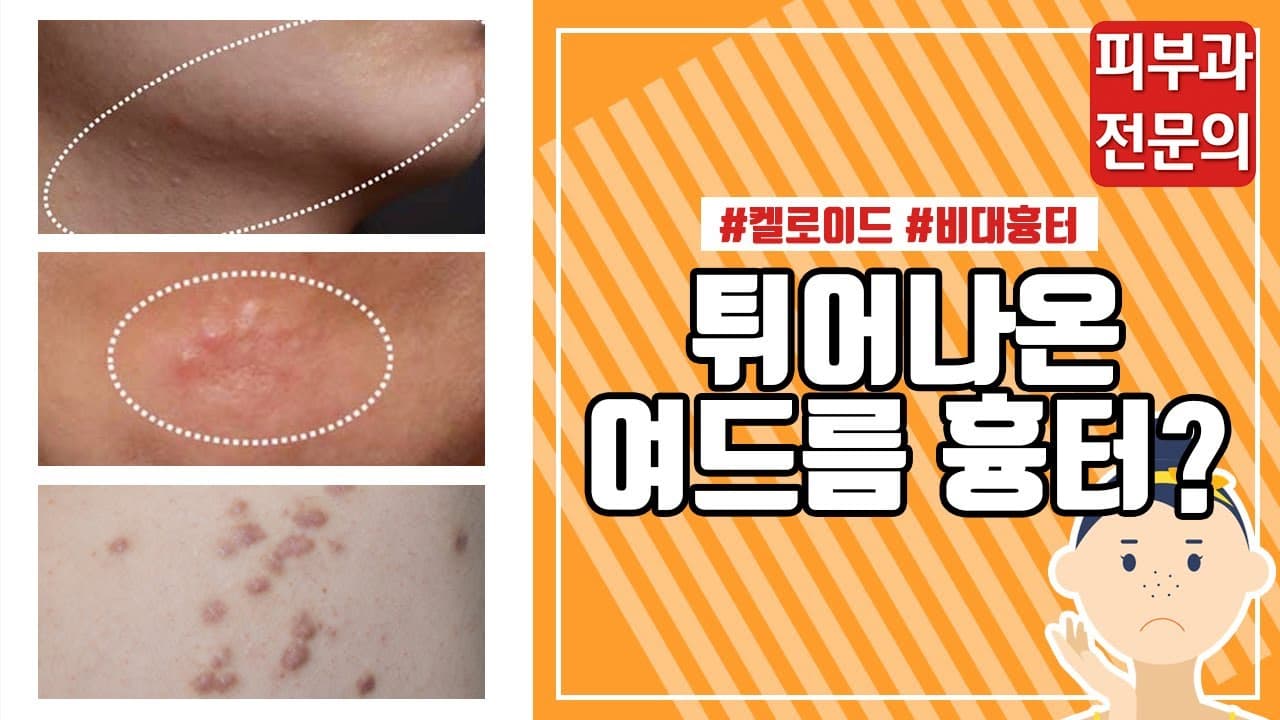
Acne Scars: Did You Know There Are Also Raised Scars?
Hello, I am Dr. Sang-ju Lee, a board-certified dermatologist. Many people probably think of depressed scars first when they hear about acne scars. However, in some cases, scars can become raised after acne on the jawline or chest. Today, we will take a closer look at these raised acne scars.
Are Acne Scars Always Depressed?
Generally, depressed scars are common with acne, but depending on one's constitution, scars can become raised on the jawline, nose, or chin. Keloid scars or hypertrophic scars are particularly common on the jawline, and small, lump-like raised scars can also appear on the nose or chin.
Raised Milia-like Acne Scars: What if they persist for more than 6 months?
Many people often don't consider short, milia-like raised acne scars on the chin to be acne scars. However, if these milia-like formations have settled and persisted for more than 6 months, they are clearly acne scars. Not only on the chin, but also on the nose, chest, or back, if white, milia-like bumps are present, they might be acne scars rather than acne, so consultation with a specialist is necessary.
What is the difference between Hypertrophic Scars and Keloid Scars?
Medically, raised scars can be broadly divided into hypertrophic scars and keloid scars. The differences between the two are as follows:
Hypertrophic Scars: A general term referring to all raised scars. Keloid Scars: Refers to constitutional scars that become significantly larger than the original wound.
How are Raised Acne Scars Treated?
The treatment for raised acne scars varies depending on their condition and color.
- Early or Red Scars: Treatment involves vascular laser therapy such as V-beam Perfecta and Triamcinolone Scar Injection to reduce redness and alleviate the scar.
- White, Long-lasting Scars on the Chin or Nose: Treatments such as the Pinhole Technique may be considered. The Pinhole Technique is a method that creates microscopic holes in the scar area to induce tissue regeneration, thereby improving the scar, and is often used for white, raised scars. It is especially recommended to consider the Pinhole Technique for white, milia-like raised scars on the chin or chest.
Acne Scar Prevention is Most Important
The most important way to prevent acne scars is to treat acne quickly when it appears to prevent inflammation. Please follow these prevention guidelines:
- If acne appears, it is best not to squeeze or touch it with your hands.
- If acne turns red, it is a sign of inflammation, and medication or management is needed to quickly reduce the inflammation.
- Afterward, for early red acne marks, it is important to minimize their progression to scars through vascular laser treatment for scar prevention, appropriate management, and regenerative creams.
Today, we learned in detail about raised acne scars. If you have any questions, please feel free to inquire via comments or KakaoTalk.
This was Dr. Sang-ju Lee, a board-certified dermatologist. Thank you.