
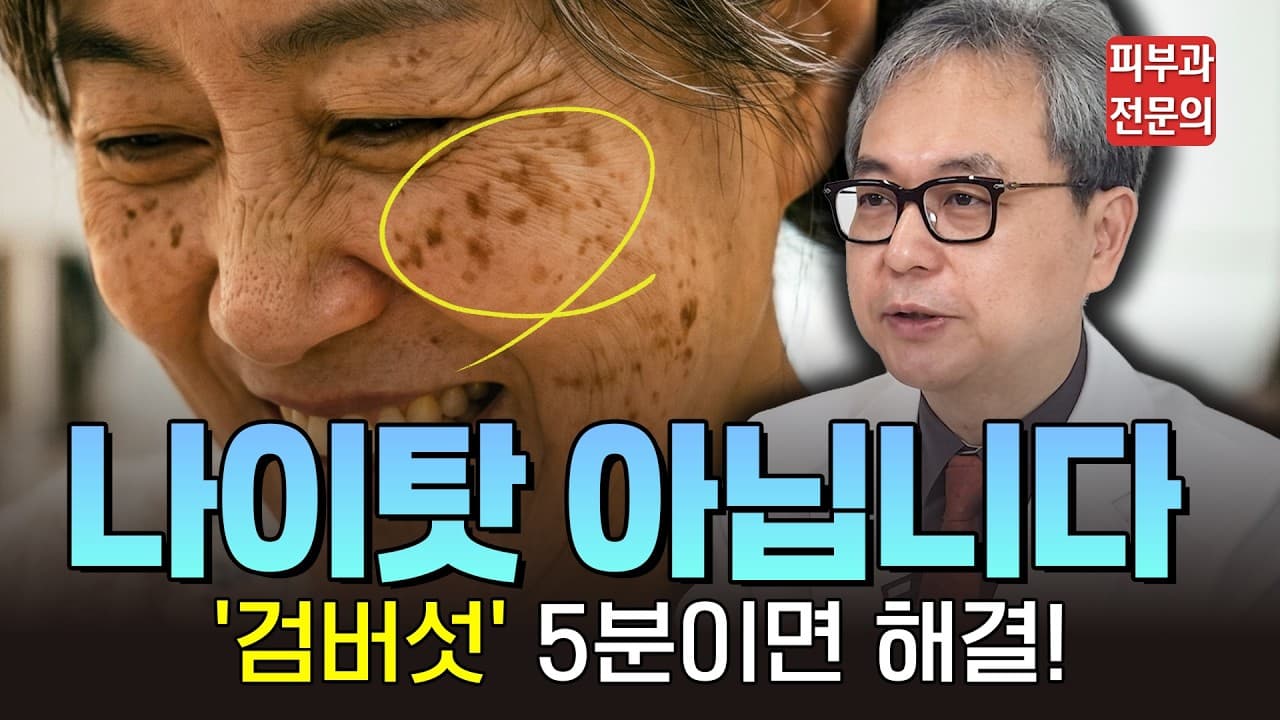
When you see your parents' faces after a long time at holidays or family gatherings, black spots might catch your eye before wrinkles. While they might dismiss it as "just something that happens with age," many are actually upset when they look in the mirror. We've explained why seborrheic keratoses, commonly called "death flowers," don't disappear on their own, and how to remove and manage them.
Why Seborrheic Keratoses Don't Disappear on Their Own
Seborrheic keratoses are a type of benign tumor that forms as the skin surface thickens due to aging and UV exposure. As they are directly linked to aging, they do not disappear if left untreated, and tend to grow larger and become more prominent over time.
Why You Shouldn't Dismiss Them as Simple Aging
Seborrheic keratoses can resemble malignant melanoma, a type of skin cancer.
Since it can be difficult to distinguish them by appearance alone, it is safer to get a differential diagnosis from a specialist rather than neglecting them as a simple sign of aging. It is important to consult with a doctor to confirm whether early treatment is needed or if removal is recommended.
Removal Procedures Are Simpler Than You Think
Many mothers delay treatment due to concerns that it might be "expensive and painful." In reality, it is performed with only Topical Anesthetic Cream, so the pain burden is not significant.
- A method that trims the raised area and removes the lesion
- Pain control with Topical Anesthetic Cream; injection anesthesia is not required
- Completed in a relatively short time depending on the area
- Regenerative tape is applied immediately after the procedure to aid recovery
Two-Step Post-Procedure Care Determines the Outcome
At-home care determines recovery and prevention of recurrence.
- Step 1, Regenerative Tape Care: For 1-2 weeks after the procedure, carefully ensure the regenerative tape does not fall off. As skin regeneration capacity decreases with age, tape management during this period is particularly important.
- Step 2, UV Protection: The new skin after removing the tape is vulnerable to external irritation. Wearing sunscreen when going out helps reduce secondary pigmentation and recurrence.
Seborrheic keratoses may seem like natural signs of aging, but they are also lesions that require differential diagnosis. We recommend checking their condition with a single consultation rather than leaving them untreated for a long time.