
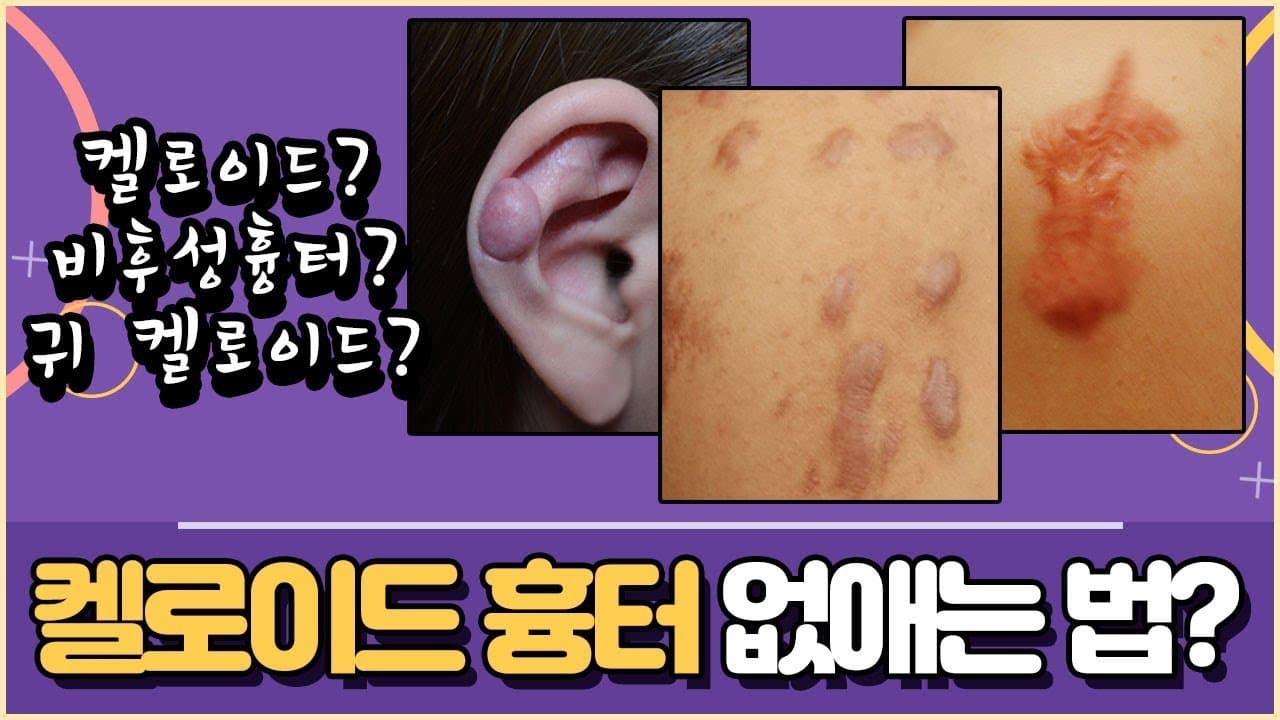
Injuries inevitably leave scars as they heal. However, some scars can be deeply indented below the skin surface, or conversely, bulge upwards. One type of scar that significantly protrudes above the skin surface is a keloid scar. Today, we will delve into the causes, prevention, and effective treatment methods for keloid scars with Dr. Lee Sang-ju, a dermatology specialist.
What are Keloid Scars?
When we get injured, scars form as the wound heals. If these scars sink below the skin surface, they are called depressed scars (a typical example being acne scars). Conversely, scars that bulge above the skin surface are called hypertrophic scars. Keloid scars are a type of hypertrophic scar, specifically referring to cases where hypertrophic scars develop significantly due to constitutional factors. They are commonly known to occur on the earlobes, chest, and shoulders.
Not everyone develops keloid scars; some individuals are constitutionally more prone to them. These individuals need to pay extra attention to scar management.
Medically, hypertrophic scars refer to scars that bulge but are confined to the wound area, while keloid scars refer to cases where they extend beyond the wound area, invading surrounding healthy skin and growing larger. However, in clinical practice, it is often difficult to clearly distinguish between the two.
Why Do Keloid Scars Form?
Keloid scars develop after an injury. Generally, when an injury occurs, an inflammatory response appears, and if this inflammation is excessive, a large scar can remain. In particular, keloid scars tend to occur in people with a specific constitution.
How Can Keloid Scars Be Prevented?
Since keloid scars develop after an injury, good management in the early stages of the wound can be an important preventive measure to reduce keloid scars. The key is to prevent excessive inflammation.
- Early wound treatment and management: It is important to manage wounds well in the early stages to prevent excessive inflammation.
- Early injection and laser treatment: Consulting a specialist for injection treatment or laser treatment in the early stages of a wound can help prevent keloid scar formation to some extent.
- Scar-reducing ointments and taping: Recently, ointments and taping methods that help reduce scars are also being utilized.
What Treatment Methods Are Available for Keloid Scars?
Treatment methods for keloid scars can be broadly divided into surgical treatment and non-surgical treatment.
- Surgical treatment: This method involves removing and suturing the keloid scar, but recurrence is common, so it is not widely used for keloid scar treatment.
- Non-surgical treatment: There are various methods such as compression therapy, injection therapy, laser therapy, cryotherapy, and radiation therapy. Among these, injection therapy and laser therapy are the most widely used methods.
Effective Non-Surgical Keloid Treatment Methods
Injection Therapy
Injection therapy has the advantage of alleviating itching or pain in keloid scars. In the past, pain during injection was considered a drawback, but recently, low-pain injection therapy has been developed and is widely used.
Laser Therapy
Laser therapy helps reduce the redness of keloids, lower the height of the scar, and alleviate overall symptoms. Treatment is usually performed about once a month, and it has the advantage of allowing treatment without significant disruption to daily life.
Combined Effect of Injection and Laser Therapy
Especially recently, combining injection therapy and laser therapy often yields even better results. When the two treatments are performed together, a synergistic effect can be expected, reducing the side effects of injection therapy and enhancing the effectiveness of laser therapy.
Can Old Keloid Scars Also Be Treated?
Newly formed and growing keloid scars can be somewhat challenging to treat, but consistent treatment can lead to good results. Even old keloid scars can be sufficiently improved if treatment is not given up and diligently pursued.