
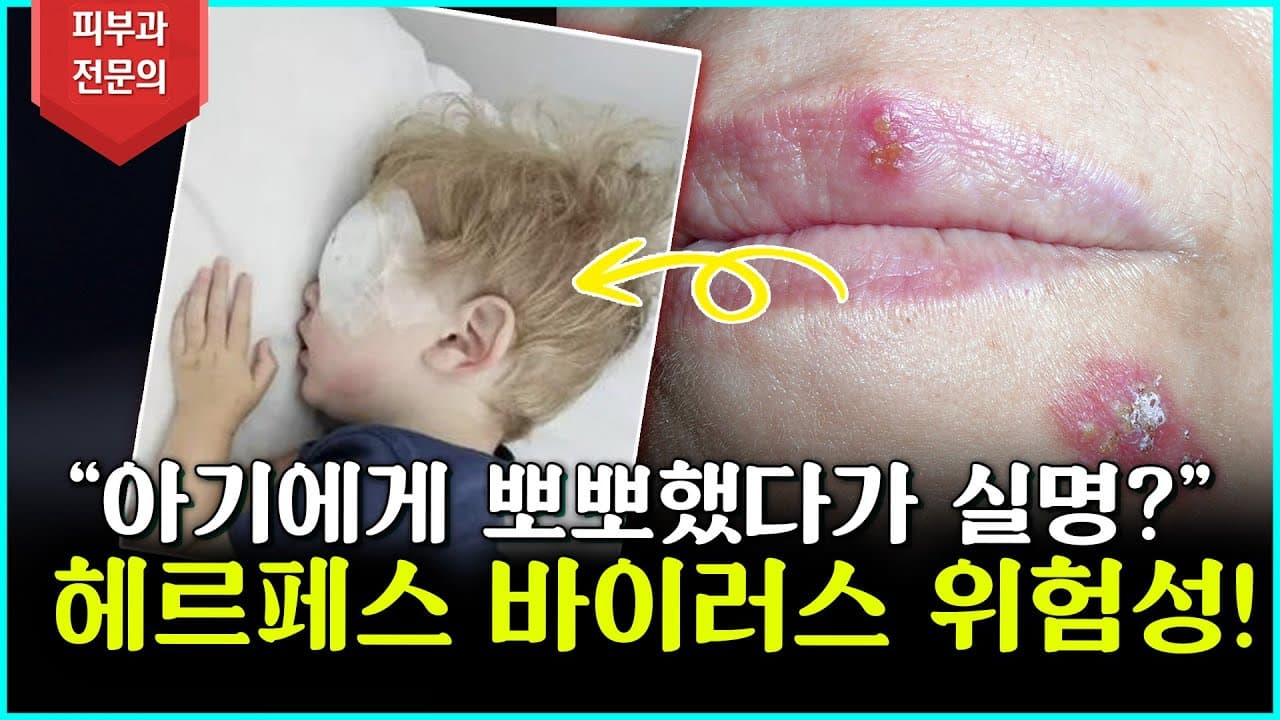
Recently in the UK, a tragic incident occurred where a two-year-old baby lost vision in one eye after being infected with a virus from a kiss on the face. The virus that stole the baby's eyesight was herpes virus. While it may be a relatively familiar virus to adults, it can lead to serious consequences for newborns and young children. Today, we will explore how dangerous herpes virus can be for babies and how to prevent it.
Herpes Virus: What is it?
Herpes virus infection is a disease in which herpes virus infects the skin, causing blisters and erythema. This virus is relatively large, about 100-200 nanometers in size, and contains DNA. It is broadly classified into eight types based on genetic and biological characteristics, with the most representative being Herpes Simplex Virus Type 1 (HSV-1) and Type 2 (HSV-2). These two are also collectively referred to as 'herpes simplex virus'. Type 1 typically causes lesions around the mouth, while Type 2 primarily causes lesions around the genitals.
Why Herpes Virus is Especially Dangerous for Babies
Generally, herpes virus often occurs around the mouth, but it can also infect the eyes through contact. If the eye is infected, it causes inflammation of the cornea, the outermost part of the eye, and is known as a dangerous viral disease that can lead to blindness if repeated inflammation progresses. Babies, in particular, have weak immune systems, so they can experience much more severe consequences than adults, requiring special attention.
How is Herpes Virus Transmitted?
Herpes virus is primarily transmitted through contact.
- Type 1 Herpes (HSV-1): Transmitted through contact with sores, saliva, or virus on the skin surface around or in the mouth. It can also be transmitted through seemingly normal oral commissures or skin surfaces, but its infectivity is particularly strong when there are sores or blisters.
- Type 2 Herpes (HSV-2): Primarily transmitted through sexual activity by contact with the genitals or skin surface of an infected person.
Is Kissing a Baby Really Okay?
Babies have weakened immune systems, so they can become infected immediately upon contact with the herpes simplex virus. Especially when people kiss a baby because they find them cute, the virus can be directly transmitted to the baby. Since it is a disease where one must live with the virus in their body for life once infected, it is advisable to avoid kissing or skin contact with a baby if you have a history of herpes or currently have herpes lesions.
Herpes Prevention Guidelines for Your Precious Baby
It is important to remember that herpes virus, which may be a mild infection for adults, can lead to serious consequences such as blindness for babies.
Herpes virus may be considered a mild infection for adults, but it can lead to serious consequences for babies. Special caution is needed, especially for newborns and young infants. The following are prevention guidelines to protect your precious baby from herpes virus:
- Avoid contact if you have herpes symptoms: If you have herpes symptoms such as cold sores or blisters, you should refrain from kissing or direct skin contact with the baby.
- Maintain strict personal hygiene: It is important to maintain strict personal hygiene, such as frequent hand washing.
- Protect babies with weak immune systems: During periods when a baby's immune system is weak, even more careful attention is required.