
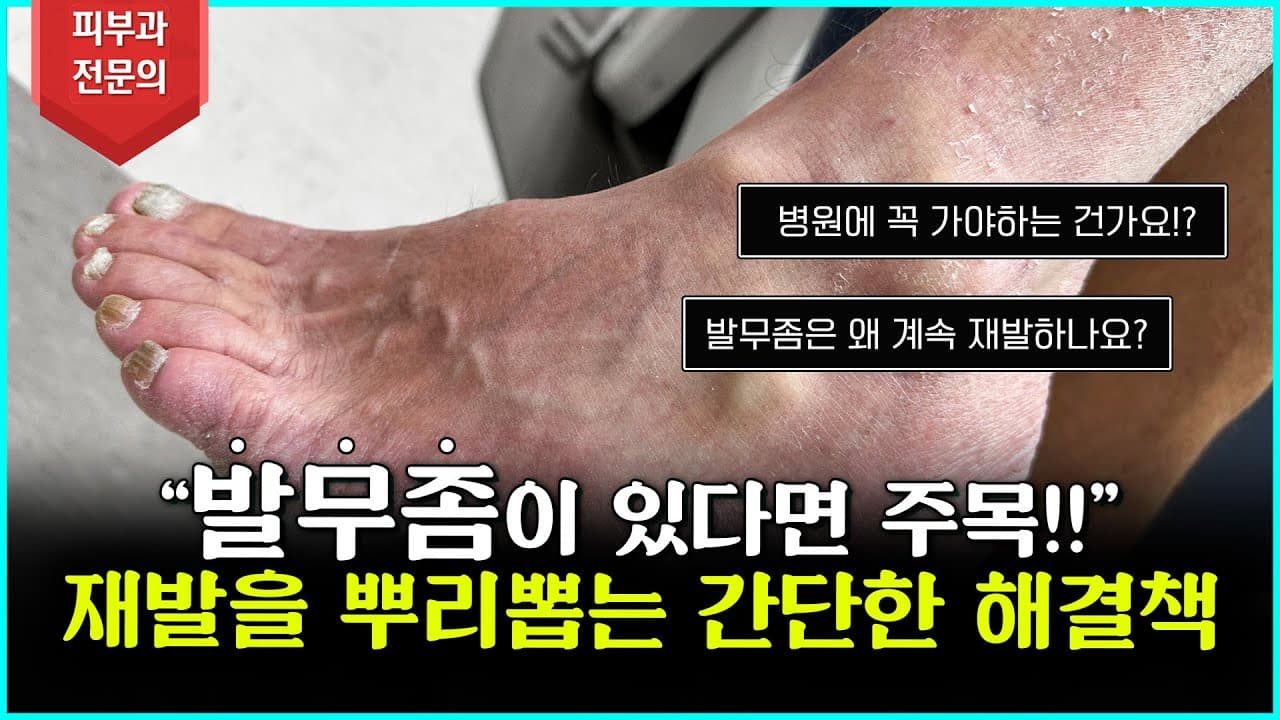
Hello. I am Dr. Lee Sang-ju, a dermatologist. Through the many questions and comments on the previous athlete's foot video, I realized that there are still many curiosities about athlete's foot. Today, we will take some time to learn about everything from the causes of athlete's foot to proper treatment methods, and the problems that can arise if left untreated.
Athlete's Foot, Why Does It Affect Me More?
Athlete's foot can occur more frequently in individuals with certain constitutions. Wearing shoes for long periods, excessive sweating, and rising temperatures in the feet create favorable conditions for the fungi that cause athlete's foot to multiply. Just as mold easily grows in damp, sunless areas of our homes, athlete's foot fungi are a type of mold, so if these conditions are met, you may be more susceptible to athlete's foot than others. Individuals with these constitutional factors may also have a higher chance of recurrence even after treatment.
How Does Athlete's Foot Spread?
Athlete's foot is primarily transmitted through skin contact. While there is no specific research on how easily fungal infections spread, it is generally common for infection to occur through contact in shared spaces like public swimming pools or gyms.
Are Home Remedies Really Effective?
If you have athlete's foot, you might hear advice from others to soak your feet in vinegar or apply crushed garlic to the affected area. However, improper use of vinegar or glacial acetic acid can damage the skin's stratum corneum and even cause burns, leading people to seek medical attention, so it is advisable to avoid such methods.
The fastest and most effective way to treat athlete's foot is to visit a hospital for an accurate diagnosis and treatment.
How Long Does It Take to Cure Athlete's Foot?
Athlete's foot on the soles or between the toes can usually improve with consistent treatment for about 1-2 weeks. However, nail fungus may require a longer treatment period. Generally, the fastest and most effective treatment is medical treatment.
There is a difference between over-the-counter medications easily available at pharmacies and prescription medications from a hospital. Over-the-counter medications often contain older ingredients, and recently, newer medications that effectively eliminate athlete's foot fungi have been developed, often requiring a hospital prescription.
- Over-the-counter medications: Available at pharmacies, often contain older ingredients.
- Prescription medications: Require a hospital prescription, contain newer ingredients that can help with more effective treatment.
What Problems Can Arise If Athlete's Foot Is Left Untreated?
If you have athlete's foot, the areas between your toes can be severely itchy, and scratching can easily cause skin damage. Furthermore, leaving athlete's foot untreated carries the risk of spreading it to family members. In particular, if bacteria penetrate through skin lesions, it can lead to secondary bacterial infections such as cellulitis, which can result in serious situations. Therefore, early and appropriate treatment is very important.
Athlete's foot is not just a simple skin condition; it can cause various problems if left untreated. If you experience itching or skin changes, please do not hesitate to consult a dermatologist for an accurate diagnosis and treatment. If you have any further questions, please contact Yonsei Star Dermatology Sinchon via KakaoTalk channel.