
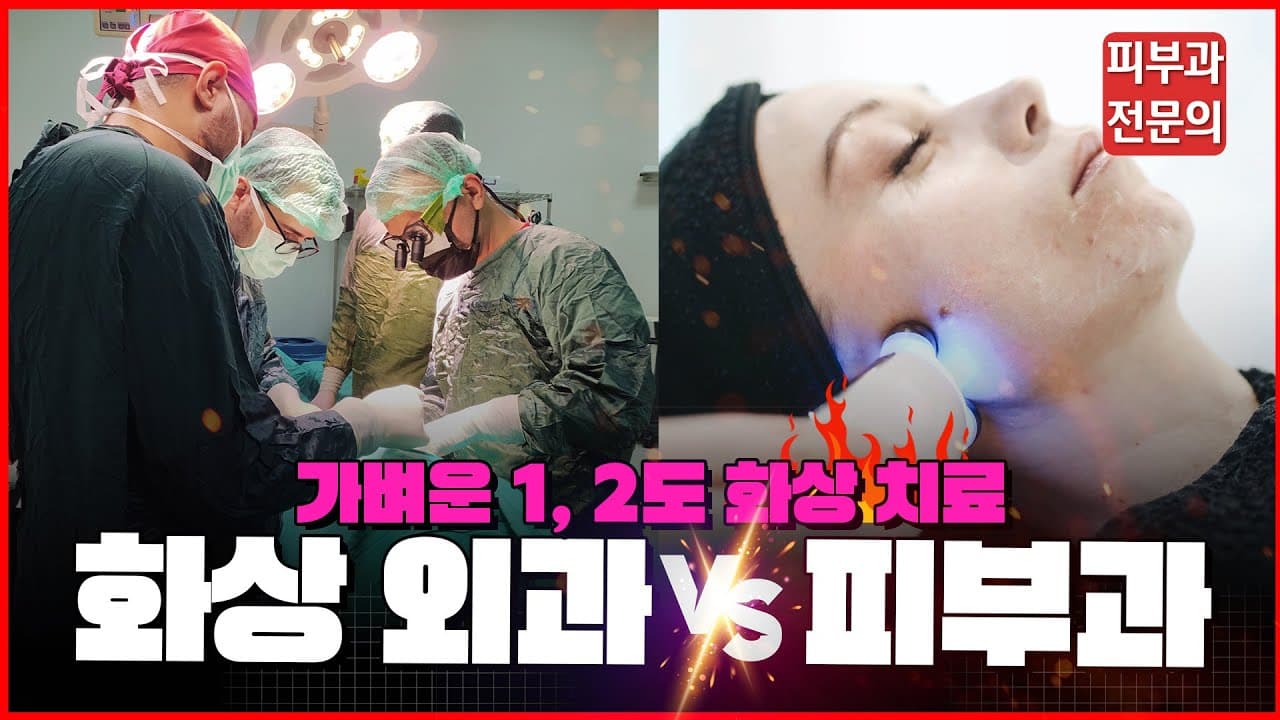
Anyone can experience minor or major burns in daily life. When you get burned by various causes such as hot water, curling irons, or clothes irons, especially if it's a minor 1st or 2nd degree burn rather than a severe full-body burn or a 3rd degree burn, you might wonder which hospital to visit. Today, we will learn about the correct initial response to 1st or 2nd degree burns, as well as appropriate hospital selection and treatment methods to minimize scarring.
What to do first when a burn occurs
The most important thing when you get burned is immediate initial response.
- Cool down the burned area with running tap water at a temperature that is not too cold.
- There are many cases of burns from hot sugar water while making tanghulu, which has recently become popular. Since sugar water is sticky and not easily removed, it is recommended to cool the area with running water for at least 20 minutes in such cases.
- If tap water feels unsanitary, cooling the area sufficiently with slightly chilled bottled water for at least 20 minutes is also an option.
What degree is my burn? Types of burns
Burns can be classified into 1st, 2nd, and 3rd degree burns depending on their severity.
- 1st Degree Burn: Only the outermost layer of the skin (epidermis) and the upper part of the dermis are damaged. Redness, itching, and slight pain may accompany it.
- 2nd Degree Burn: The epidermal and dermal layers of the skin are damaged, characterized by the formation of blisters.
- 3rd Degree Burn: This is a very severe burn where all layers of the skin are damaged. Extensive full-body burns or burns of 3rd degree or higher require treatment such as eschar removal to prevent bacterial infection, which should be done at a specialized burn hospital or general surgery clinic.
Why dermatology treatment is suitable for minor 1st and 2nd degree burns
It is important to remember that minor 1st or 2nd degree burns commonly sustained in daily life, or mild burns occurring after high-frequency or laser procedures, might actually result in larger scars if treated too aggressively at a specialized burn hospital or surgical clinic. Therefore, it is advisable to receive treatment for these types of burns at a dermatology clinic. Dermatology clinics focus on treatments that promote faster wound healing and minimize scarring.
What kind of treatment does a dermatology clinic provide in the early stages of a burn?
The main goal of dermatological treatment immediately after a burn is to help the wound heal quickly.
- Low-energy repeat treatment: Helps promote wound healing.
- Moist dressing: Creates an environment where regenerative cells can grow well in the damaged skin area.
- Medication: Medications such as antibiotics or anti-inflammatory drugs may be prescribed to prevent secondary bacterial infection or alleviate pain.
Even as the burn heals, it is important to consistently maintain moist dressings to ensure good wound recovery. In many cases, Cell Regeneration Injection or laser treatment that aids regeneration is also performed concurrently.
If burn scars remain? Dermatological scar treatment
If scars remain due to a burn, a dermatology clinic can improve them through various methods.
- Pinhole Technique: This laser is known to be effective for improving burn scars.
- Injection treatment: If the scar area is excessively raised or, conversely, deeply indented, injection treatment can be helpful.
At home, consistent use of silicone ointments or tapes can positively influence scar improvement.
Burn scar treatment is customized according to the individual's scar condition, so it is important to consult with a specialist to find the most suitable method.