
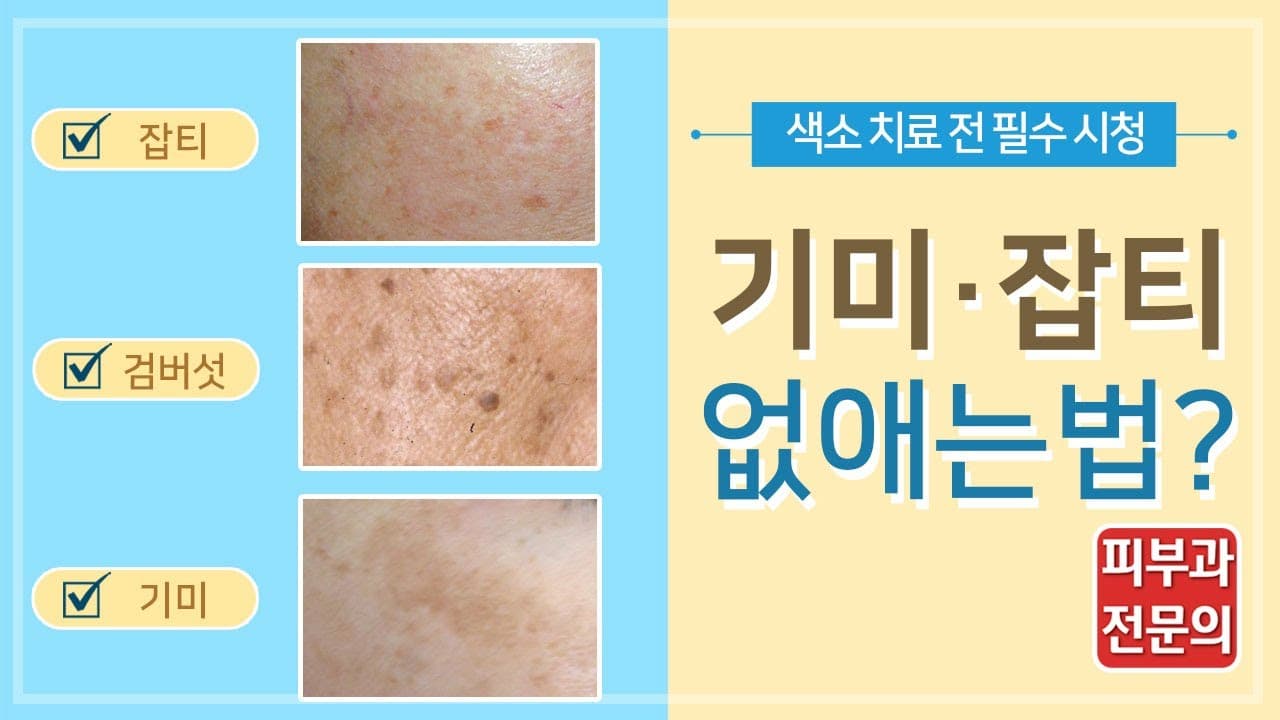
Hello, I am Lee Sang-ju, a dermatologist. Many people visit dermatology clinics due to various pigmentations on their faces. Many assume it's 'melasma,' but in reality, there are various types of pigmentary disorders besides melasma, such as freckles, blemishes, and spots. Today, we will delve into facial pigmentary disorders, focusing particularly on melasma.
Why does melasma occur?
The exact cause of melasma is not yet known, but it is generally believed to be a combination of several factors.
- Genetic factors: If there is a family history of melasma, other family members are more likely to develop it.
- Hormonal changes: Given that melasma often appears after childbirth, female hormones are thought to play a significant role in its development.
- UV exposure: Sunlight, especially UV rays, is one of the main factors that make melasma darker.
- Stress: Recent studies also report that stress can induce or worsen melasma. Therefore, stress management is also important.
What types of melasma are there?
Melasma can be broadly divided into three types:
- Epidermal melasma: Appears as dark brown or blackish-brown, located closer to the skin surface.
- Dermal melasma: Occurs when melasma is in the deeper dermal layer of the skin, characterized by a slightly grayish tint.
- Mixed melasma: A combination of both epidermal and dermal melasma.
Accurate diagnosis requires the skilled assessment of a dermatologist.
How to distinguish melasma from other pigmentary disorders?
Most people who visit a dermatology clinic say they came for melasma or blemishes, but there are subtle differences in reality.
- Melasma: Characterized by a hazy, widespread pigmentation on both cheekbones, like a fog.
- Blemishes: Refers to brown spots the size of a grain of rice or a bean, tending to appear more after the age of 20-30.
- Freckles: Characterized by tiny spots, like sesame seeds, scattered across the face during puberty.
- Bilateral Nevus of Ota-like Macules (ABNOM): Pigmented spots with a slightly grayish tint, which can be confused with freckles or blemishes.
- Seborrheic keratosis: Begins to appear after the age of 30, characterized by symptoms of slight protrusion above the skin.
Facial pigmentary disorders are diverse, and it is often difficult to distinguish them with the naked eye. It is crucial to consult with a dermatologist for an accurate diagnosis and to establish an appropriate treatment plan.
What are the treatment methods for melasma?
There are several ways to improve melasma. The three main treatment methods are as follows:
- Medication:
- Whitening ointment: Regularly applying a whitening ointment that inhibits melanin production can help treat melasma.
- Oral medication: Recently, oral medications that can help treat melasma have also been developed and are being utilized.
- Skincare management:
- Vitamin C administration: Administering substances like vitamin C to the skin can have a positive effect on melasma improvement.
- Light peeling: Light peeling, which exfoliates the skin surface, also has the effect of improving melasma.
- Laser treatment:
- This is one of the most notable treatment methods recently. It involves continuously irradiating the skin with a low-intensity laser to reduce the activity of melanocytes and shed the already formed melasma pigment from the skin, thereby clearing the skin.
- It is widely known as 'laser toning,' and recently, Pico toning using a Pico laser is being evaluated as even more effective.
Melasma prevention, practice these habits!
Healthy lifestyle habits to prevent melasma and its worsening are as follows:
- Review medications and hormone therapy: If you are taking hormone therapy or certain medications that could worsen melasma, you should consult with a specialist to consider discontinuing or replacing them with other drugs.
- Stress management: Stress can affect the occurrence and worsening of melasma, so it is important to maintain healthy lifestyle habits that can reduce stress, such as meditation or regular exercise.
- Thorough UV protection: UV rays are the most important factor in worsening melasma.
- It is essential to apply sunscreen regularly, meticulously, and frequently.
- Physically blocking UV rays using hats, parasols, and sunglasses is also effective in preventing melasma.
This has been dermatologist Lee Sang-ju. I hope this content was helpful.