
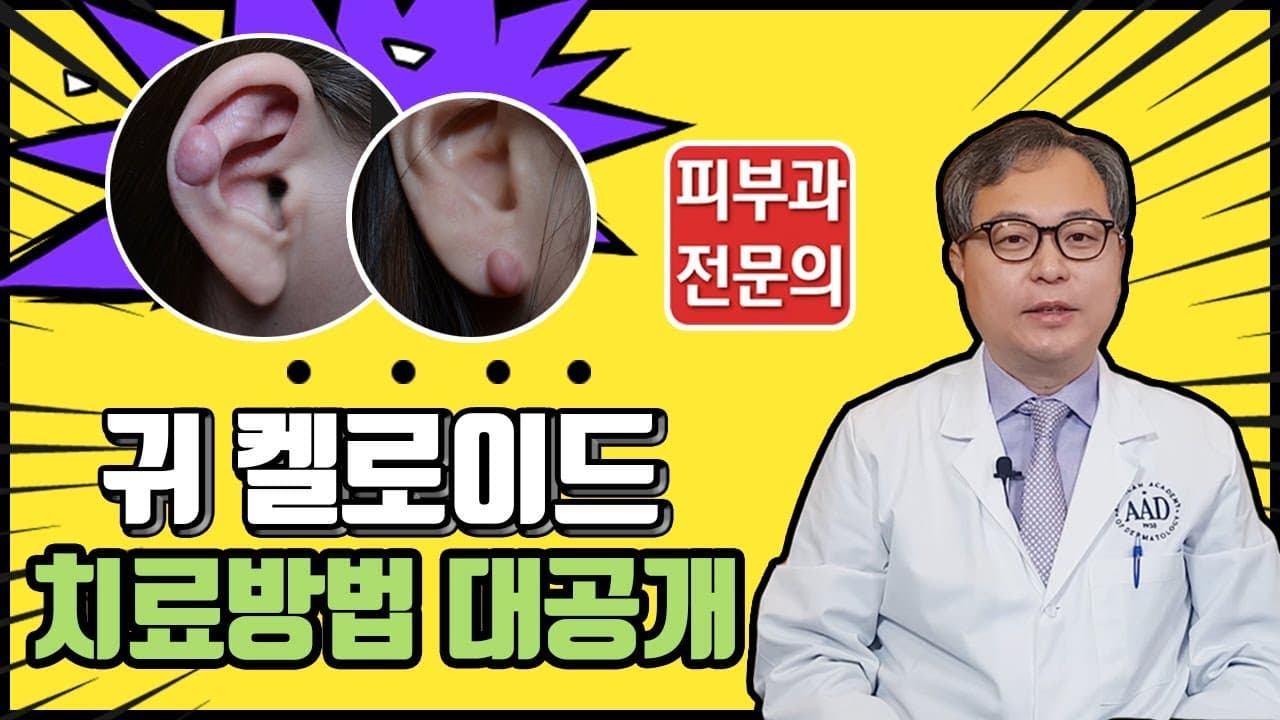
Hello, I am Lee Sang-ju, a dermatologist at Yonsei Star Dermatology Sinchon. Today, we will take a closer look at ear keloid scars, which many people are concerned about, especially keloids that are often mistaken for 'flesh bumps' after piercing. We will explore why keloids occur, how to prevent them, and what treatment options are available.
Why do ear keloids occur?
Keloids fundamentally occur when there is an injury. The most common cause of keloids on the ear is ear piercing. In many cases, an injury occurs during the process of piercing the ear for a piercing or earring, and this injury develops into a keloid as it heals. In addition, keloids can also occur after inflammation or acne on the ear.
If you have a keloid predisposition, will it always occur?
It is often easy to think that if you have a 'keloid predisposition,' keloids will definitely occur just by piercing your ears. However, this is often not the case. Even if a person with a keloid predisposition has both ears pierced, keloids may only appear on one side, or they may appear at some times and not at others, indicating significant individual differences. This is because keloids may be more likely to occur when the body's condition is not good or when the injury is large, and scars may not form if the keloid occurrence threshold is not exceeded.
"If you do not pierce your ears, keloids will not form, so it is most advisable not to pierce your ears if possible."
How can ear keloid scars be prevented?
The most certain way to prevent keloid formation is to avoid creating injuries. It is especially good to pay attention to the following points:
- Do not pierce ears: It is especially good to avoid thick and deep piercings.
- Inflammation management: If you inevitably pierce your ears, you should manage them well to prevent inflammation.
- Body condition control: When piercing your ears, it is important to maintain a good condition, such as avoiding being too tired or consuming alcohol. Your body's condition can also affect keloid formation.
Ear keloid scars, various treatment methods
Existing ear keloid scars can be treated in various ways. Representative treatments include surgery, injections, laser, cryotherapy, and radiation therapy. Each treatment method has its pros and cons, and the appropriate method may vary depending on the size and condition of the keloid.
Surgical treatment and injection treatment
Surgery is a method of directly removing keloid scars. However, there is a possibility of recurrence even after surgery, so regular observation and injection treatment are necessary after surgery.
Injection treatment is particularly effective when keloid scars are small. However, for keloids larger than a pea, improvement may be difficult with injection treatment alone.
Laser surgery and cryotherapy
Laser surgery has the advantage of less bleeding and faster wound healing, and is reported to have a relatively lower recurrence rate compared to general surgery.
Cryotherapy can help reduce the size of keloids, but it has the disadvantage of being difficult to completely eliminate keloids and potentially causing prolonged oozing. For this reason, it is only performed restrictively in some clinics.
What about radiation therapy?
Radiation therapy is theoretically possible, but it is not commonly used for ear keloids. This is because radiation can have a significant impact on other parts of the body or the skin. It is mainly used partially to prevent recurrence after removing keloids on the body, but it is generally not a recommended method for ear keloids.
Ear keloid scars, what is the most effective treatment?
Recently, the most effective method is known to be removing keloid scars using laser surgery and then managing recurrence through regular observation. This is because consistent management is important in lowering the recurrence rate, along with the advantages of laser surgery.
If you have any questions, please feel free to contact us.