
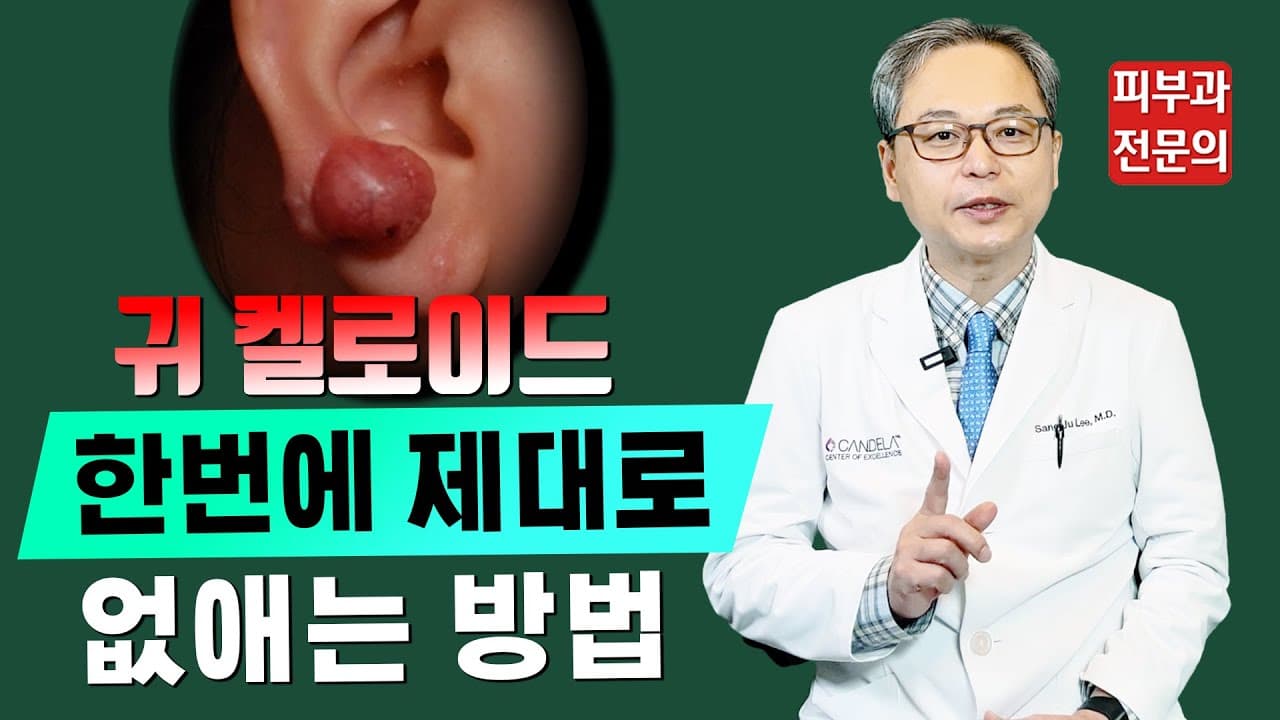
Many people get earrings or piercings as a means of self-expression. However, if the wounds or inflammatory reactions caused by the accessory material are left untreated, keloid scars can remain on the earlobe or helix. Ear keloids, in particular, gradually grow like a lump, which is aesthetically undesirable, making treatment highly necessary. Today, we will take some time to answer your questions about ear keloid treatment.
Ear Keloids: Why Do They Occur and How Do They Appear?
Ear keloids often start as small, round inflammations at the piercing site, appearing as small lumps. Like general keloid scars, satisfactory results can be expected with early treatment. However, many people dismiss them as insignificant or believe they will disappear naturally, only deciding to seek treatment after they have grown excessively large.
Therefore, if you experience the following symptoms, it is advisable to consult a dermatologist:
- When a small lump at the piercing site persists for more than a month
- When redness is severe and inflammation continues
What Are the Treatment Options for Ear Keloids?
The treatment method for ear keloids varies depending on the extent and size of the keloid. When the keloid is small, injection treatment can yield good results. However, if the keloid exceeds the size of a bean, injections alone are often insufficient for improvement. Therefore, if the size has increased, it is important to visit a hospital for an accurate diagnosis.
Generally, when ear keloids are large, surgical or laser excision may be considered.
Why Laser Excision Is Preferred
Surgical procedures can cause new scars during the incision process or increase the possibility of recurrence. In contrast, excision using a CO2 laser is known to show good results in treating ear keloids. Laser excision precisely removes keloids using a CO2 laser with various modes and tips, such as the Ultrapulse Encore, instead of a scalpel.
Laser excision is characterized by superior treatment efficacy compared to surgical procedures, faster wound healing, and a lower recurrence rate.
Especially for keloids on the helix or cartilage, the cartilage structure varies complexly from person to person, and conventional surgery may lead to ear deformation or prolonged procedure times. However, laser excision precisely removes the lesion with a very fine 0.2mm laser beam, allowing for the removal of keloids in narrow areas without much difficulty, and the procedure time can be shortened to about one-third of that of conventional surgery.
Is a Single Procedure Sufficient? What About the Pain?
Many people believe that laser procedures require multiple repetitions to be effective, and they ask if ear keloid laser excision also needs to be repeated. However, if the ear keloid does not recur, it can be completed with just one procedure. Laser excision is evaluated as a highly satisfying procedure for patients, as it retains the advantages of surgical procedures while minimizing side effects such as scars or bleeding that can occur after surgery.
Concerns about pain are also common, but since the procedure is performed after local anesthetic cream, there may be individual differences, but pain during the procedure is generally not a major concern.
Piercing Wear: During and After Treatment
Occasionally, some individuals wish to undergo keloid treatment while wearing a piercing, or they want to keep an adjacent piercing in place during treatment. To answer directly, keloid treatment is possible even with a piercing. However, the piercing may interfere with the treatment, so it is advisable to remove it before treatment if possible and reinsert it only after treatment is completely finished.
Furthermore, many people wonder if they can wear earrings or piercings again after ear keloid treatment. While this is possible, keloids are mostly associated with one's constitution, so re-piercing and wearing accessories again carries a high possibility of recurrence. Therefore, re-piercing is not recommended.
How Can Keloid Recurrence Be Prevented?
Just as there is no way to prevent a cold from recurring once caught, there is no 100% foolproof method to prevent keloid recurrence. However, there are certainly ways to lower the probability of recurrence. This is the method of combining laser excision with injection treatment.
While laser excision itself is a treatment method with a low recurrence rate, if it is combined with follow-up treatment to reduce inflammation periodically for about 6 months after the procedure as a preventive measure, it can suppress excessive proliferation of fibrous tissue and lower the possibility of recurrence.
When Should Treatment Be Sought?
If an ear keloid has formed and has remained stable for a month or two, delaying treatment slightly may not pose a major problem. However, if the affected area is itchy or painful, or if it feels like it is growing in size, it is important to visit a hospital for treatment without delay.
We have explored various questions about ear keloids. If you have any further questions, please consult a dermatologist.