
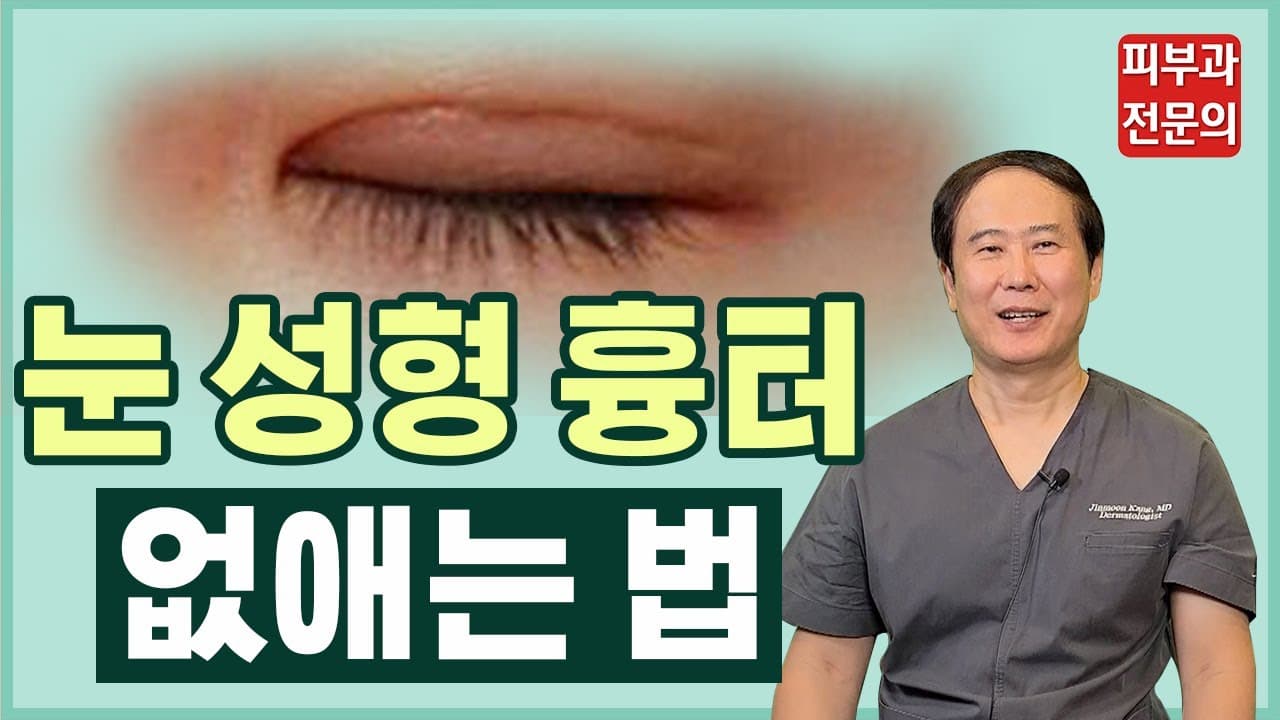
How should scars after eye surgery be treated?
Eye surgeries such as double eyelid surgery or epicanthoplasty have become common aesthetic procedures. However, many people experience stress due to scars remaining after eye surgery, despite hoping for beauty. Eye surgery scars, which are not easily visible when the eyes are open but become prominent when looking down or closing the eyes, are a growing concern as smartphone use increases, making them more noticeable to others.
Today, we will explore effective ways to treat scars that appear after eye surgery.
Past scar treatments, and a new turning point
Until the early 2000s, there were no suitable scar treatments other than surgical methods such as skin grafting and tissue expansion. However, these surgeries often resulted in a sense of incongruity between the original skin and the surgical area, and could lead to new scars, resulting in very low patient satisfaction. Consequently, scars caused by eye surgery often had to be endured without much recourse.
Amidst these limitations, Yonsei Star Dermatology Sinchon developed and announced a scar laser treatment called Pinhole Technique in the early 2000s, which improved the satisfaction of scar treatment.
A new horizon in scar treatment: What is the Pinhole Technique?
Pinhole Technique is a treatment method that creates microscopic holes in scars using a laser that can reach deep layers of the skin. Its goal is to effectively regenerate scars that have formed deeper than they appear on the surface, restoring them to be as similar as possible to normal skin.
Subsequently, as the excellent efficacy of the Pinhole Technique in scar improvement was proven through numerous clinical trials, many similar scar treatment methods emerged. This led to the widespread recognition that cosmetic scars can also be sufficiently treated with a combination of laser and surgical methods, rather than just surgery.
The importance of a skilled practitioner
For the Pinhole Technique, the treatment results are largely dependent on the practitioner's skill in effectively irradiating the laser according to the size, depth, and extent of the scar.
Therefore, if you have undergone scar treatments similar to the existing Pinhole Technique multiple times but have not seen improvement, it is possible that a practitioner with a misconception that making holes in scars with a general fractional laser will improve them, may have mimicked the principles of the Pinhole Technique for treatment.
Therefore, when receiving laser scar treatment, it is crucial to carefully verify that a skilled practitioner with extensive experience in scar treatment uses proven treatment methods with excellent specialized scar laser equipment. Especially for eye surgery scars, which are on the face, it is advisable to make a decision with even greater caution.
Various types of eye surgery scars and customized combination treatments
In the case of epicanthoplasty or incisional double eyelid surgery, some degree of scarring is inevitable because the thin skin around the eyes is incised. The patterns of scars resulting from eye surgery are very diverse:
- White, long linear scars
- Red, bumpy scars
- Scars where the sutured part has opened or is depressed
- Raised scars
- Keloid-type scars
Rather than insisting solely on laser treatment because of its excellent scar improvement, combining laser treatment with surgical methods appropriate for the scar's pattern can help achieve satisfactory results.
For example, if the skin is often pulled down and depressed after double eyelid surgery, Subcision can be considered. This involves cutting the fibrous tissues that pull the skin down with a medical needle to restore the depressed skin to its normal height. Additionally, for raised scars along the double eyelid line, combining scar injections can lead to improvement. However, the results of scar injections can vary depending on the practitioner's meticulous and precise technique, so it is important to receive treatment from a practitioner with extensive experience in scar treatment.
For white, long linear scars often seen after epicanthoplasty, or bumpy scars on the double eyelid line, laser treatments like the Pinhole Technique introduced earlier can be effective.
Since each patient experiences stress from scars differently, focusing treatment on the scar area they most wish to improve can lead to highly satisfactory results.
Is timing important for scar treatment?
Similar to other scars, eye surgery scars can be minimized and achieve the most satisfactory treatment results if treated in the early scar stage, which is the phase after the wound has healed and before the scar fully forms. Particularly in the early scar stage after double eyelid surgery, scars often appear red or bumpy. At this time, combining Vascular Laser with surgical methods can yield good results. However, immediate treatment right after surgery is difficult; treatment is possible approximately 1 to 2 weeks after the stitches are removed.
Therefore, within 6 months after surgery, the focus is on scar prevention and minimization. After 6 months, the focus shifts to scar restoration, with treatments typically performed at one to two-month intervals.
So, are old scars untreatable? No, they are treatable. Many people who had double eyelid surgery in the late 90s, when eye surgery became popular, and developed scars but had no suitable treatment at the time, visit for treatment decades later. With customized treatment methods for their scars, they can make their scars much less noticeable than before.
If you are concerned, consult a specialized scar clinic
We have discussed scar treatment that can occur after eye surgeries such as double eyelid surgery and epicanthoplasty. If you are concerned about old eye surgery scars, we recommend visiting a specialized scar clinic for a consultation. The most suitable treatment plan can be established based on the type and condition of your scar.