
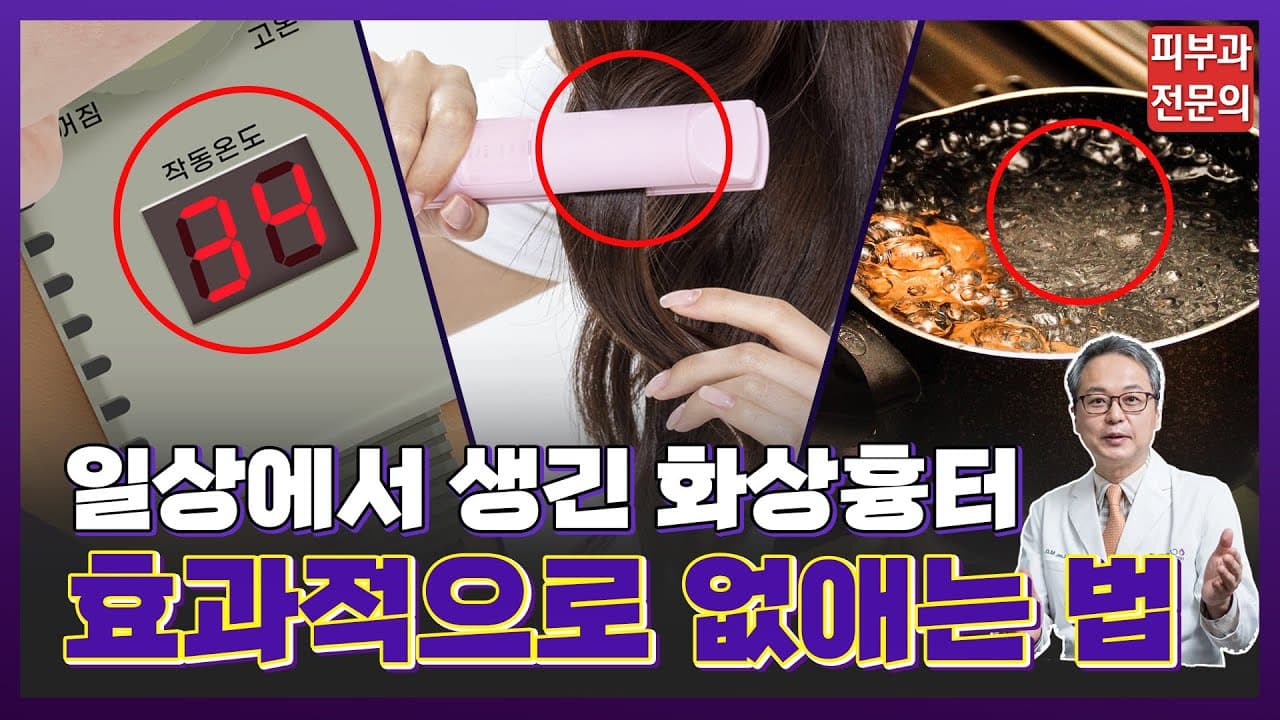
In winter, as the use of heating products like electric blankets and hot packs increases, so does the risk of burns in daily life. It's easy to misunderstand that burn scars only result from major accidents. Surprisingly, many people are concerned about red, white, or brown scars from burns sustained in everyday situations. Today, we will explore the risks of burns in daily life that you might unknowingly be exposed to, prevention, coping methods, and effective ways to treat existing burn scars.
Our bodies instinctively pull away from hot objects. However, at low temperatures above 40 degrees Celsius, we may not feel it as intensely hot, making it easy to suffer low-temperature burns if exposed for a long time. Low-temperature burns often don't show severe external injuries or symptoms immediately, so most people take them lightly and delay treatment. However, they can damage tissue deep into the dermis, leaving severe burn scars of 2nd degree, 3rd degree, or higher.
Low-temperature burn prevention and coping methods
- When using heating products: It is advisable to set a reservation timer for a low temperature when using underfloor heating or electric blankets before sleeping.
- Vulnerable groups: Special caution is needed for those deeply asleep after drinking alcohol or taking sleeping pills, children who have difficulty expressing themselves, and the elderly with dulled senses.
- Maintain distance: Keep electric heaters and warm air blowers at least 1 meter away.
- Avoid direct contact: It is advisable to use hot packs or찜질팩 (jjamjil-pack) without direct contact with the skin.
If you experience symptoms of low-temperature burns, such as itching or stinging skin, immediately remove the heat source and cool the skin with cold water or an ice pack wrapped in a towel. If the skin remains red afterward, it's a 1st-degree burn; if blisters form, it's a 2nd-degree burn or higher, making it crucial to seek active burn treatment at a nearby dermatology clinic.
Be cautious of burns from curling irons, moxibustion, and motorcycle mufflers
Many people are also concerned about scars or pigmentation from burns sustained while styling their hair with a curling iron. In particular, barrel curling irons, with the entire part except the handle exposed to hot temperatures of over 100 degrees Celsius, and in severe cases, close to 200 degrees, are more likely to cause burn scars. Curling iron burns typically appear on the neck or cheekbones and are characterized by brown pigmentation or long, red scars shaped like the curling iron.
In addition, burns from boiling water or oil, and moxibustion burns where mugwort or medication is placed directly on the skin, can also leave severe burn scars, so caution is advised.
Motorcycle mufflers maintain high temperatures of over 100 degrees Celsius, so even a slight brush can cause severe 2nd-degree burns or higher. This significantly increases the likelihood of burn scars, and many young women actually receive treatment for calf burns sustained while riding in the back seat of a motorcycle. Burn scars on the calves can cause significant stress, making it difficult to wear short pants or skirts during exposed seasons like spring or summer.
What kind of burn scars can remain?
Scars remaining after a burn vary greatly in shape and color.
- Hyperpigmentation: The skin color changes to brown or black due to inflammation after a burn.
- Hypopigmentation: Melanocytes in the skin are destroyed by severe 2nd-degree, 3rd-degree, or higher burns, causing the skin to turn white.
- Red burn scars: Scars that appear red due to excessively increased blood vessels.
- Thick burn scars (떡살): After a deep 2nd-degree burn that damages deep into the dermis, the burned area becomes thick and white.
- Wrinkled burn scars: Occur when skin tissue regenerates irregularly.
- Skin contracture: Burn scars form in joint areas, restricting movement.
Customized treatment for burn scars is important
Choosing the appropriate treatment method according to the type of burn scar is important for achieving satisfactory results.
- Hyperpigmented scars: It is advisable to treat the burn scar first, then proceed with treatments effective for pigment treatment, such as Pico Toning Laser.
- Hypopigmented scars: Fractional laser can be used to activate melanocytes, or the Pinhole Technique, which induces powerful skin regeneration, can be used to promote recovery similar to skin color.
- Red burn scars: Vascular laser can effectively improve excessively increased blood vessels.
- Thick or wrinkled scars, skin contracture: Most deep 2nd-degree burn scars show excellent improvement with the Pinhole Technique. The Pinhole Technique uses the high-output Ultrapulse Encore laser to create microscopic holes in the burn scar area, loosening clumped collagen tissue within the skin and inducing powerful skin regeneration. Through this, satisfactory results can be expected as skin elasticity and damaged skin tissue improve.
We have discussed post-burn pigmentation and burn scars that can occur in daily life. Rather than neglecting burn scars, they can be significantly improved through appropriate treatment tailored to their type.