
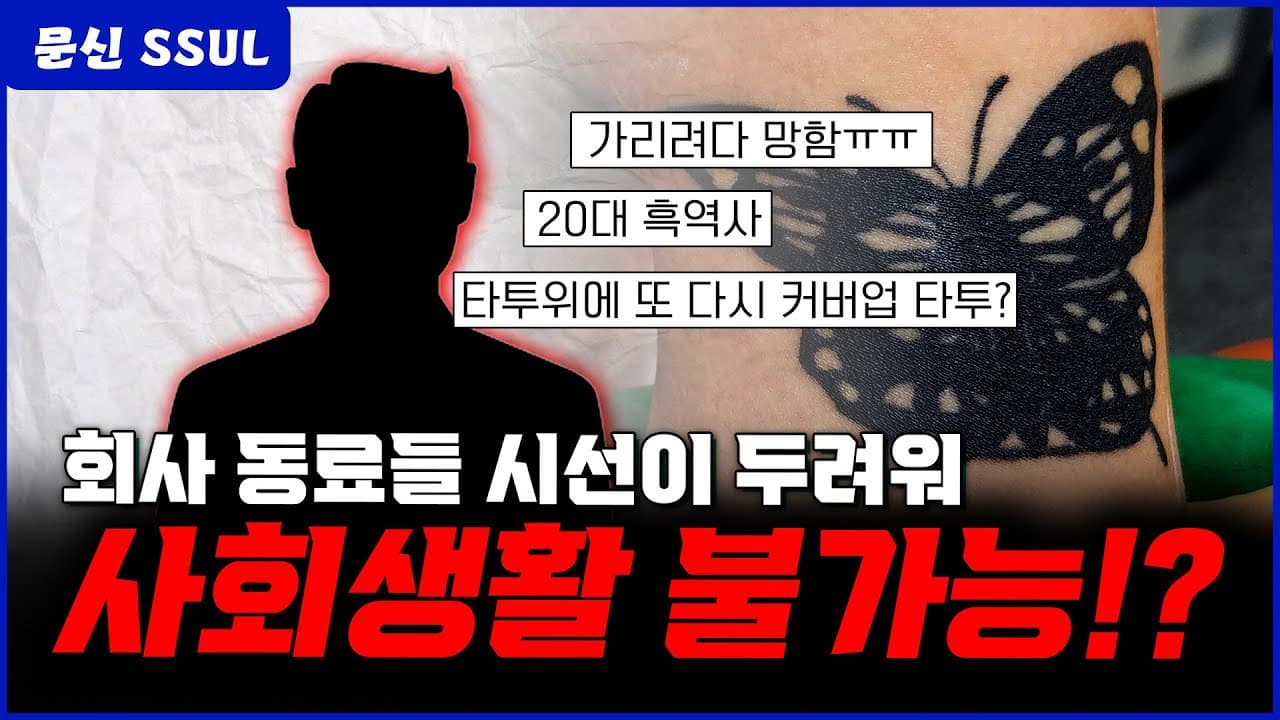
A cover-up tattoo, a impulsive choice made in the early 20s, or to hide a regrettable tattoo. Many people experience more stress because it ends up being larger and darker than the original. Like the stories of deep concern over tattoos that are bothersome in social life or family gatherings, can cover-up tattoos really be removed cleanly? We'll answer your questions about tattoo removal with Dr. Lee Sang-ju, a dermatology specialist.
Why Cover-Up Tattoos Are More Difficult to Remove Than Regular Tattoos
Cover-up tattoos are often more challenging to remove than regular tattoos. Regular tattoos typically use black or blue pigments, which respond relatively well to lasers and can be removed. However, cover-up tattoos often use various colors, skin-like shades, or very dark black to conceal the existing tattoo. In this process, the amount of tattoo ink used is often greater, and the variety of pigments can reduce the laser's effectiveness.
How Are Tattoos of Various Colors Removed?
Cover-up tattoos made up of skin tones or various colors can also be removed. If there are many types of tattoo pigments, various types of lasers can be used in combination to enhance the treatment effect. However, it is advisable to understand that the number of treatment sessions or the duration may be longer compared to monochromatic tattoos.
How Many Sessions Are Needed for Tattoo Removal?
Tattoo removal usually does not end with a single session. While relatively light tattoos, like eyebrow tattoos, may be removed in one session, it is generally advisable to expect 5 to 10 or more treatments for body tattoos, spaced one to two months apart. Recent advancements in laser technology have led to the development of various treatment methods that reduce side effects and enhance effectiveness compared to the past.
Is There a Concern About Scars During Tattoo Removal?
It is not possible to completely rule out the possibility of scarring during the tattoo removal process. However, if an experienced medical professional appropriately adjusts the laser intensity and the patient's skin type during treatment, the tattoo can be effectively removed while minimizing scars. Rather than being deterred by fear of scars or incomplete removal, it is important to receive consistent treatment at a trustworthy clinic.
Consistency Is Key for Tattoo Removal
Each individual's skin type, the depth at which the tattoo is etched, and the amount of pigment all vary. Just as it is difficult to accurately know the depth of deep water, tattoos are deeply embedded in the skin, making it challenging to determine the exact number of treatments in advance. However, you will clearly feel the tattoo gradually fading with each treatment session. If you consistently receive 5 to 10 or more treatments, you can expect the tattoo to disappear, much like reaching the finish line of a marathon.
Tattoo removal is like a marathon. Just as there is a finish line, if you receive consistent treatment, the tattoo will disappear. - Director Lee Sang-ju
Considerations for Tattoo Removal
- Individual skin type
- Type and amount of tattoo pigment
- Depth at which the tattoo is etched
Don't let your concerns about cover-up tattoos fester alone; it's wise to consult with a dermatology specialist to find a solution. We hope you can achieve satisfactory results through consistent treatment and communication with the medical team.