
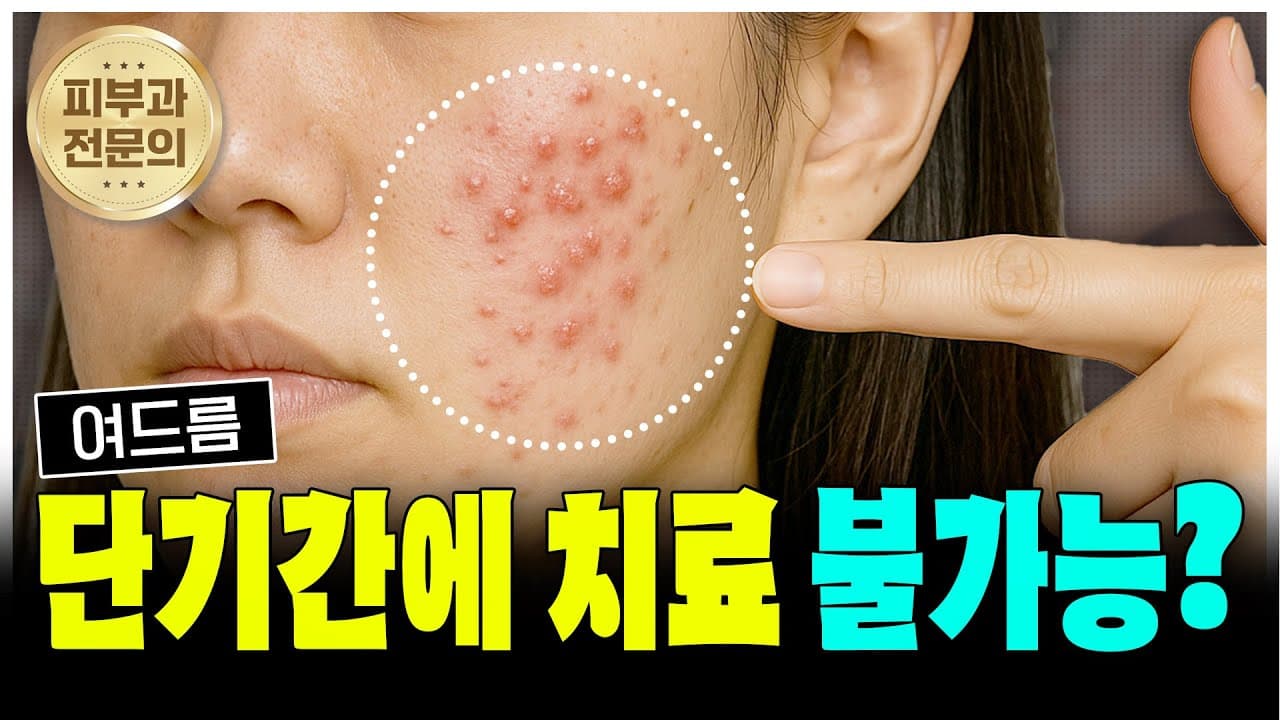
Hello. I am Lee Sang-ju, a dermatologist specializing in skin concerns.
Once acne appears, it is difficult to heal, and just when it seems to get better, it reappears, bothering many people. Despite hospital treatments and various product uses, the effects often vary. The reason acne treatment is difficult is that complex underlying causes are hidden, not just simple skin problems. Today, I will clearly explain why.
Why is acne so difficult to treat?
While it may seem like a simple rash on the skin, various factors interact to cause acne. Due to this complexity, acne is difficult to completely cure in the short term.
The complex process of acne formation
Let's look at the process of acne appearing on the skin step by step.
- Hormonal changes and sebaceous gland stimulation: During puberty, hormonal changes stimulate the sebaceous glands.
- Excessive sebum secretion: Hormonal stimulation causes the sebaceous glands to secrete sebum vigorously.
- Pore blockage: Although vigorously secreted sebum should exit the skin through the pores, if the pore opening is blocked, sebum accumulates.
- Comedo formation: The accumulated sebum becomes a lump of oil, commonly known as a 'comedo'.
- Acne bacteria proliferation and inflammation: Acne bacteria secondarily grow in the comedo, and the substances excreted by these bacteria irritate the surrounding skin, leading to inflammation.
- Red acne appearance: As inflammation worsens, it appears as the red acne we commonly see.
Acne with significant individual differences, what is my skin type?
Acne shows significant individual differences in its manifestation and treatment response. This is due to variations in various factors such as sebum secretion, pore condition, and stress response.
- Treatment effectiveness based on sebum secretion and pore condition: Some skin types have high sebum secretion and large pores, while others have narrowed pores. Even with treatments like skin scaling at a dermatology clinic, if the pores are narrowed, opening them can lead to quick improvement. However, for people with high sebum secretion and large pores, scaling treatment alone may be less effective. In such cases, treatments to reduce sebum secretion should be combined.
- Skin vulnerable to stress and hormonal changes: Some skin types are vulnerable to stress or experience hormonal changes and lack of sleep, which can lead to increased proliferation of acne bacteria due to specific hormones. In this case, antibiotic treatment may show a faster response to sudden acne bacteria proliferation.
Stress and lifestyle habits promote acne recurrence
Acne arises from various causes, and it is not easy to control all of them. It is often related to hormones. For example, when you don't sleep well, stress hormones are produced in the skin, which affects the entire body, increasing sebum secretion, damaging the skin barrier, and increasing acne bacteria proliferation.
Therefore, even if acne improves with intensive treatment, it is prone to recurrence if management is neglected, as various factors such as stress, lifestyle habits, a constitution with high sebum secretion, and abnormalities in the skin's stratum corneum interact.
The key to effective acne treatment is 'customized treatment'
Increased sebum production does not necessarily mean more acne. Some people have a lot of sebum on their skin but do not develop acne, because if sebum is well discharged through the pores, acne does not easily form.
Acne has various causes, including excessive sebum secretion, proliferation of acne bacteria, abnormalities in the skin barrier, and inflammation. Therefore, treating acne according to its cause and one's constitution is very important for enhancing treatment effectiveness.
It is most important to receive treatment that suits your skin. Generally, since sebum secretion has the greatest impact, treatments to reduce sebum secretion are primary. In addition, treatments that open up clogged pores and remove dead skin cells are important points in acne treatment.
Today, I have answered your questions about acne from a dermatologist's perspective.