
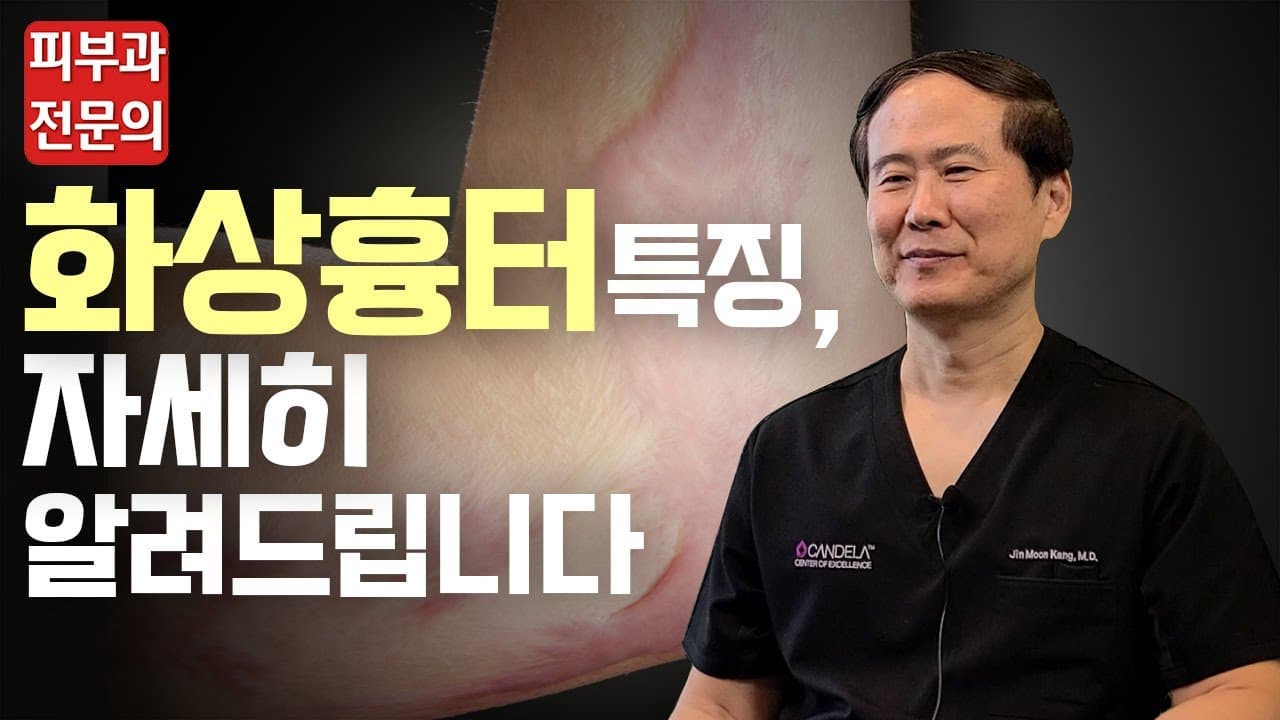
Unexpected burn accidents in daily life can easily leave scars as after-effects. In particular, if emergency treatment was insufficient or if the wound healing process was affected by skin characteristics, various types of scars can occur. Today, we will delve into the process of burn wounds becoming scars and their characteristics.
What is the difference between a burn wound and a burn scar?
A burn wound refers to the entire process from immediately after sustaining a burn until it fully settles into a scar. In contrast, a burn scar refers to the trace left on the skin as a result of the healing of such a wound.
You can understand a burn wound as the entire process from immediately after sustaining a burn until it settles into a burn scar, and a scar as the result of the wound's healing.
Why do burn scars form?
Looking at the skin structure, it is largely divided into the epidermis, dermis, and subcutaneous fat. Among these, scars are particularly likely to form when the dermis is damaged. Once a burn occurs, whether large or small, skin tissues such as sweat glands and hair follicles are destroyed, and abnormal collagen proliferation occurs, leading to changes in the skin's color, texture, and so on.
The extent of a burn scar is determined by the width and depth of the wound, the temperature of the causative agent, and the exposure time. The higher the temperature and the longer the exposure time, the deeper the skin damage, which can result in more significant scarring.
Main Types of Burn Scars
Burn scars can appear in various forms depending on the severity of the burn. The main types are as follows:
1. Hypertrophic Scar
This is the most common type of scar. It refers to a form where the skin protrudes and is mostly reddish due to excessive collagen growth during the healing process. After several years, it may turn into a white scar.
2. Hyperpigmentation
Hyperpigmentation is also a common type of scar. It refers to the skin color changing to brown or black due to the production of a large amount of melanin pigment during the recovery process. Melanin synthesis increases in the melanocytes of the epidermis, and the excessively produced melanin cells migrate to keratinocytes, appearing as pigmentation that makes the skin look dark.
3. Contracture Scar
Contracture scar is one of the most severe forms of burn scars. It occurs when collagen production is excessive during the skin regeneration process, and if the overproduced area is extensively wide, the collagen fibers themselves contract over time, pulling the surrounding skin. This can lead to deformation of the skin's shape, and in severe cases, it can restrict joint movement.
4. Skin Graft Scar
In cases of severe burns, skin grafting is performed for functional reasons. After grafting, a skin graft scar remains, which is a phenomenon where other scars, such as discoloration, pigmentation, and changes in skin texture, are left on the grafted area.
Where do scars tend to form easily?
A prolonged wound healing period means that the burn was severe or that the person's skin regenerative capacity is diminished, which can result in significant scarring. There are specific areas where scars tend to form easily:
- Joint areas
- Around the mouth
- Neck
- Areas with frequent movement
Mild first-degree burns may not leave scars, but second-degree or higher burns can cause functional impairment, especially in areas like the face, neck, and limbs, due to hypertrophic scars or contracture scars. If a scar does not improve and continuously appears red, itchy, and swollen, it can become significantly red, which may eventually lead to a severe hypertrophic scar.
Can burn scars be treated?
While it is impossible to perfectly restore burn scars to their original skin, appropriate treatment, such as the 'Pinhole Technique' we explained previously, can lead to scar improvement to a degree that allows for normal daily life.
Today, we learned about the characteristics of burn scars. If you have any further questions about scars, please inquire via comments below or KakaoTalk. This has been dermatologist Kang Jilmun. Thank you.