
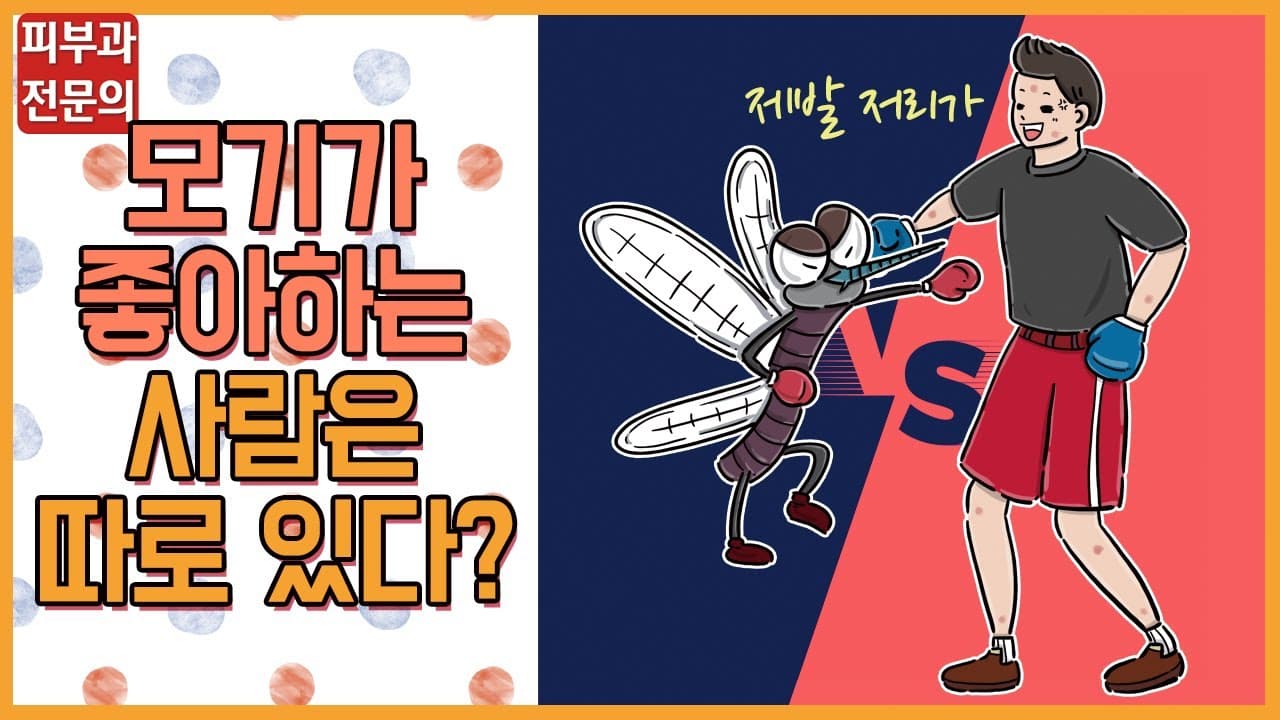
Hello. I am board-certified dermatologist Dr. Jung Ji-in. In humid and hot weather like today, many people lose sleep due to mosquitoes. Mosquitoes cause various discomforts, such as disturbing sleep and causing itching. Today, I would like to share my personal thoughts on how to get fewer mosquito bites and what treatment to pursue if you are bitten.
Mosquitoes: Not All Are the Same?
Most mosquitoes residing in South Korea are not dangerous. However, among domestic mosquitoes, there are also Anopheles mosquitoes that cause malaria and Culex mosquitoes that cause Japanese encephalitis. Mosquitoes are not all the same; there are various types such as Aedes (Aedes aegypti) and Culex (Culex pipiens), and their shapes and sizes differ.
Why Do Mosquitoes Like Me?
There are stories that mosquitoes prefer certain blood types, but mosquitoes cannot distinguish blood types. Mosquitoes have a well-developed sense of smell and can detect carbon dioxide and lactic acid emitted by humans from about 20 meters away.
Therefore, the following people are more likely to be targeted by mosquitoes:
- People who sweat a lot
- Young babies or pregnant women (because they sweat a lot)
- People with high body temperature
- People who wear certain perfumes (mosquitoes may prefer certain scents)
The reason why women are bitten more often than men is similar. Various factors such as body temperature, cosmetics, and perfumes can play a complex role.
Some sources suggest that mosquitoes prefer people with slightly darker skin, but this has not yet been confirmed.
Mosquito Repellent: What Methods Are There?
There are various ways to avoid mosquitoes. They can be broadly categorized as follows:
- Mosquito coils (smoke-emitting, plug-in)
- Topical or spray mosquito repellents
- Utilizing plant-based herbal ingredients
Mosquito Coils: How to Use Them Safely?
Mosquito coils are effective, but prolonged use in a completely sealed space can pose risks such as oxygen deficiency, vomiting, and headaches. This is not only psychological but also due to slight toxicity. While it may not significantly affect mammals, it could be unhealthy, so it is essential to use them with a window open for ventilation.
Especially in households with children under 6 years old, it is advisable to avoid products containing ingredients that the Ministry of Food and Drug Safety does not recommend for use. In addition, plant-based mosquito coil ingredients such as limonene and citronellol are known to be relatively safe, but it is important to note that contact dermatitis may occur.
Topical or Spray Mosquito Repellents: A Smart Choice?
Repellents that use ingredients mosquitoes dislike to ward them off are among the most practical and realistic products. For repellents containing DEET (diethyltoluamide), children should avoid ingesting it or spraying it directly on the skin. It is toxic and can cause rashes or dermatitis.
For plant-based ingredients, there are also sticker-type products containing citronella and limonene. While their toxicity is low, it may be better to attach them to clothing rather than directly to the skin. Natural ingredient mosquito repellents may not be as effective as expected, but they can provide some help. Citronella, lemon eucalyptus, peppermint, lavender, rosemary, and chamomile are ingredients that plants produce to protect themselves from pests. Burning scented candles using these herbal scents can also be helpful.
What Not to Do When Bitten by a Mosquito
When bitten by a mosquito, people often try to relieve itching by applying saliva, making a cross shape with their fingernails, or pressing with a ballpoint pen. However, these actions have no scientific basis and can actually be harmful.
- Applying saliva: While saliva may have some sterilizing and soothing effects, the mouth contains numerous bacteria comparable to E. coli. This is highly likely to worsen the wound.
- Scratching or pinching with fingernails: Fingernails carry many bacteria, posing a risk of infection, and scratching can further exacerbate itching and spread it.
Mosquito Bites: Proper Response
When bitten by a mosquito, it is recommended to respond with the following methods:
- Cooling the bitten area can be helpful.
- Using medication containing antihistamines or applying a weak corticosteroid can also be helpful.
- Covering the affected area to prevent scratching can also shorten the healing period.
When to See a Board-Certified Dermatologist
The degree of allergic reaction can vary depending on the type of mosquito. Sometimes, a more severe allergic reaction occurs after hiking or outdoor activities when bitten by a different type of mosquito than those you are usually exposed to. If the symptoms of a mosquito bite are too severe, do not just self-treat at home; it is advisable to visit a nearby dermatology clinic for an accurate diagnosis and treatment.
This has been board-certified dermatologist Dr. Jung Ji-in. Thank you.