
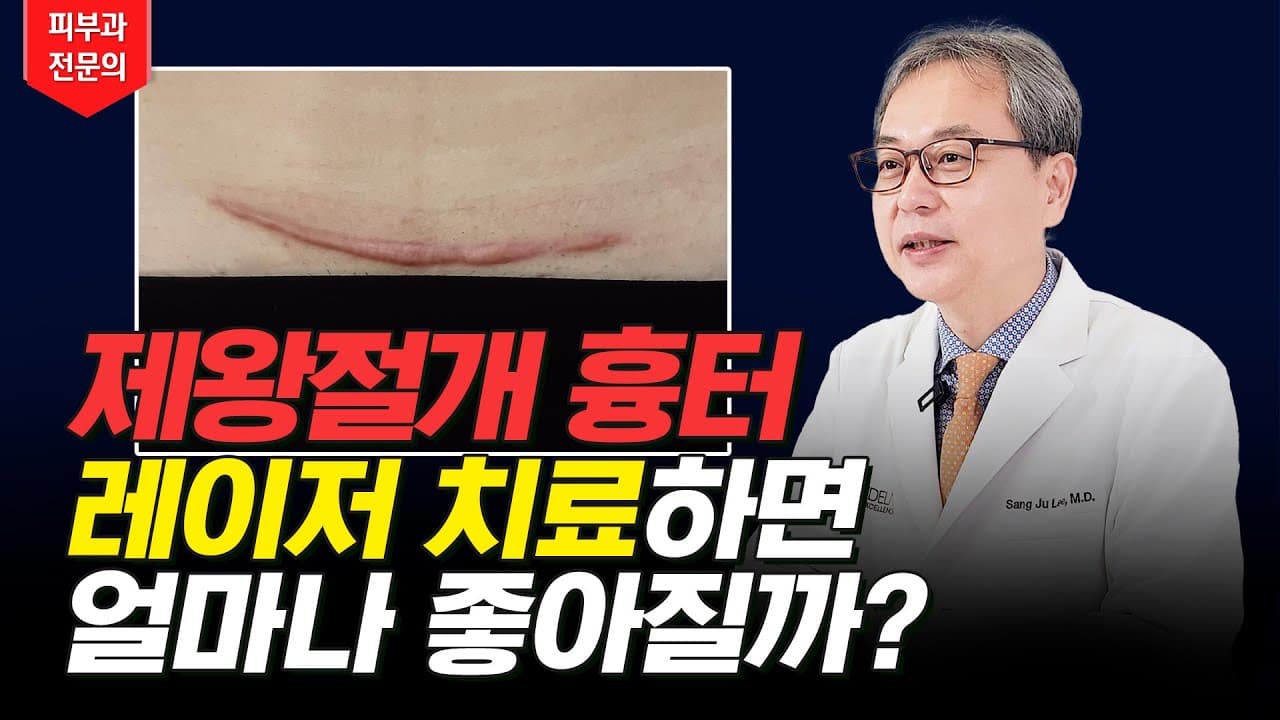
The joy of holding your child is a precious experience that cannot be exchanged for anything in the world. However, many who have given birth via C-section are often concerned about the scars left on their abdomen. Today, we will provide detailed information about C-section scars from a dermatologist's perspective, addressing common questions.
How can C-section scars be prevented?
Many people use silicone patches or ointments to prevent C-section scars. Given the characteristic long scar of a C-section, applying a silicone patch from the early stages to prevent the wound from widening can be helpful. However, silicone patches do not prevent scars 100%, and an approximate prevention effect of 5-10% can be expected.
After the wound has healed, it is advisable to consistently use ointment, and if you are prone to scarring due to your constitution, considering laser treatment alongside it can be a good method for early scar prevention.
What are the characteristics of C-section scars?
C-section scars often appear as a long line on the lower abdomen. Initially, they are typically red and then turn white over time.
Some patients may experience the scar area protruding above the skin surface, which can be accompanied by pain or itching. While it may be slightly itchy initially, if the itching is very severe, it is important to visit a dermatology clinic for professional consultation.
Customized Treatment Methods by Scar Type
In dermatology, various treatment methods are applied depending on the condition and type of the scar. Early red scars, late-stage white scars, and constitutionally raised keloid scars each require a different approach.
- Early Red Scars: In the early stages when the scar is red, lasers such as Vbeam Prima can be used to minimize scar formation.
- Late-Stage White Scars: For late-stage scars that have turned white from red, methods such as Pinhole Technique can be used to lighten the scar.
- Keloid Scars: Keloid scars that are red and raised are challenging to treat. While they were once considered difficult to treat, recent advancements allow for effective treatment by combining laser and injection therapy.
How long does scar treatment take, and how much improvement can be expected?
Generally, scar treatment is recommended to be performed once a month, for at least 5 sessions. While individual results may vary depending on the treatment progress, the following improvements can be expected:
- Early Red Scars: Over 70-80% improvement can be achieved with treatment.
- White Linear Scars: Over 50-80% improvement is possible.
C-section scars may naturally fade over time depending on individual constitution, but conversely, they can also become larger or more prominent. Therefore, it is advisable to carefully monitor changes in the scar for 3 to 6 months after childbirth.
Today, we have looked in detail at the prevention and treatment methods for C-section scars. We hope to alleviate your concerns about scars and help you return to a healthy daily life.