
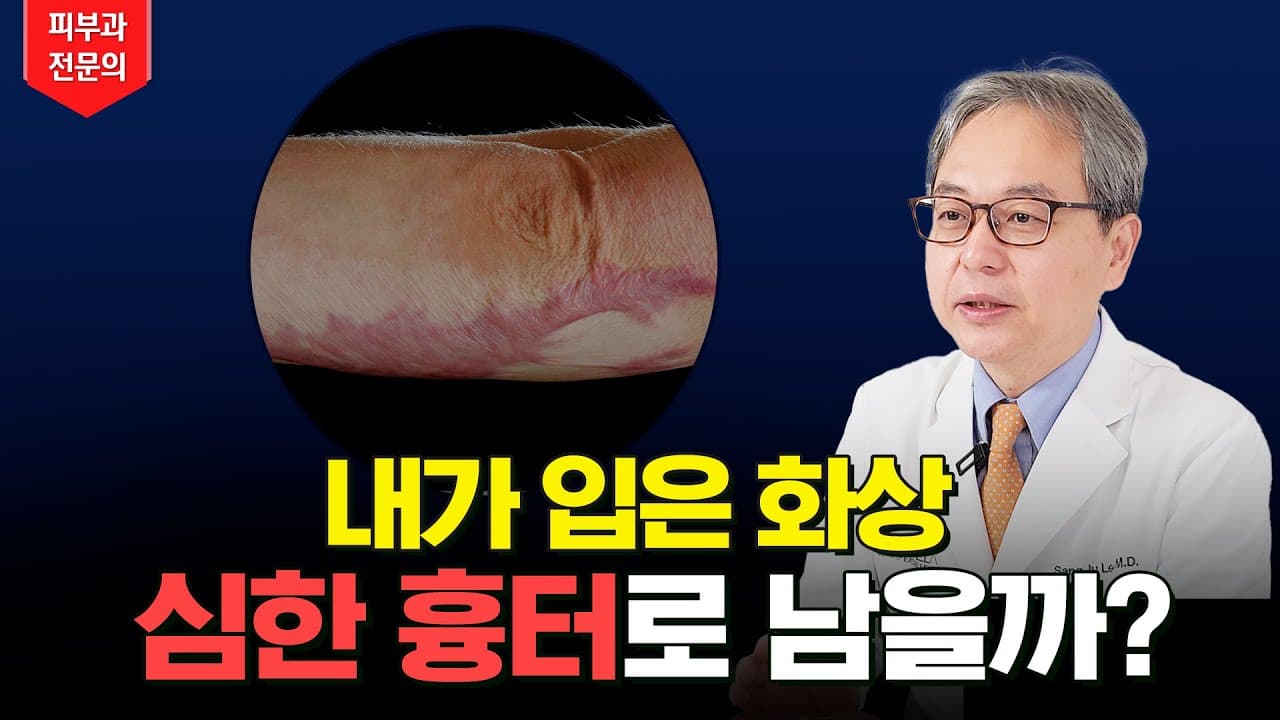
One of the most common concerns after a burn is, "Will it leave a scar?" Today, we will delve into cases where burn scars are likely to remain, initial response methods, and scar treatment options.
The depth of the burn most significantly affects scar formation
Burns are classified into 1st, 2nd, and 3rd-degree burns based on the extent of skin tissue damage. Among these, the depth of the burn has the greatest impact on scar formation.
- 1st-degree burn: The skin turns red, and there is heat and pain, but no blisters form. Scars generally do not remain.
- 2nd-degree burn: This burn damages the dermis layer and is characterized by the formation of blisters. Shallow 2nd-degree burns may have prolonged blistering and redness, while deep 2nd-degree burns can lead directly to scarring after blisters and scabs form. If blisters appear, it is advisable to assume there is a high possibility of scarring.
- 3rd-degree burn: This is a severe burn that damages all layers of the skin. Scars are inevitable and take more than a month to heal. Burns of 3rd degree or higher should be treated at a specialized burn hospital.
The area of the burn also affects scar formation
In addition to the depth of the burn, the larger the burn area, the more scars may form.
Initial treatment and management are key to scar prevention
Receiving appropriate treatment in the early stages of a burn can reduce scarring. However, if treatment is delayed or if scabs are forcibly removed inappropriately, it often leads to scarring.
Furthermore, if secondary bacterial infection occurs due to improper management of the burn area, there is a very high possibility of it leading to scarring. Therefore, it is crucial to ensure the wound heals well and to prevent infection from the outset.
If you have a keloid constitution, more proactive management is needed
Individual constitutional factors also influence scar formation. Especially if you have a keloid constitution, where scars tend to form easily, it is advisable not to disregard even minor burns and to actively pursue treatment from the beginning.
In case of a burn, follow these first aid steps
When a burn occurs, prompt first aid in the early stages is very important.
- Cooling the burn: Cooling the burn area is paramount. Use tap water, saline solution, or plain water to cool the burn area sufficiently for 10 to 20 minutes or more. Rapid cooling can minimize damage to surrounding tissues.
- Wound protection: The wound area is vulnerable to external bacteria, so it must be well protected using gauze or dressing materials available at pharmacies.
- Infection prevention: To prevent secondary bacterial infection, it is important to minimize bacterial invasion by using antibiotic ointments or creams.
By responding quickly and treating appropriately in the early stages, the wound can heal faster, reducing the likelihood of scar formation.
How can burn scars be treated?
Even after a burn wound has healed, efforts are needed to minimize scarring. Initially, burn ointments and laser treatments can be combined to manage scars.
Treatment methods for existing burn scars can largely be divided into two categories:
- Surgical methods: These are mainly recommended when burn scars occur in joint areas, making movement difficult (contracture), or around the nose or mouth on the face, causing functional problems such as breathing.
- Laser treatment: This treatment method offers high satisfaction for those seeking cosmetic improvement or who dislike the appearance of their scars.
In the past, there were no treatment options for functional problems that could not be addressed surgically, but recently, methods using lasers have been developed to improve even functional aspects such as breathing and mouth movement, which can enhance satisfaction.
Burn scars can be treated with various methods depending on the individual's condition, so it is important to consult with a dermatologist to establish the optimal treatment plan for you.