
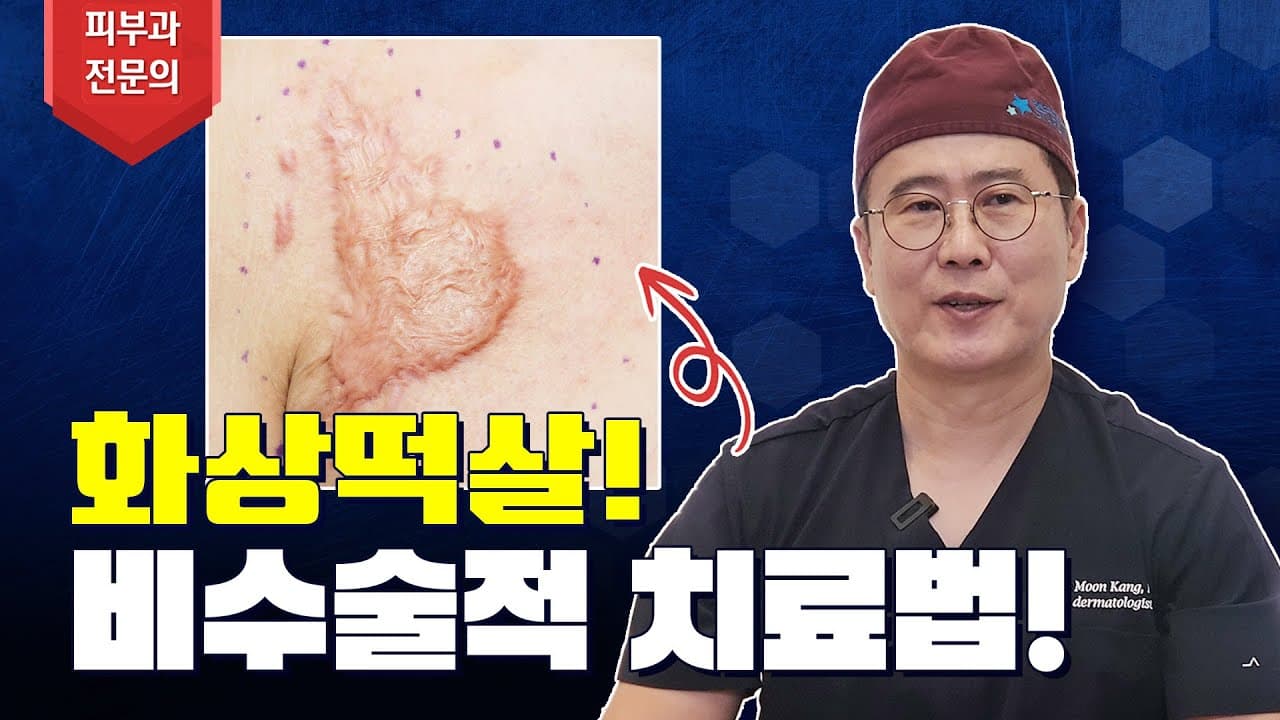
After a severe burn, when the skin thickens and protrudes in a lump, this hypertrophic response is called a burn scar. Burn scars are not only aesthetically unpleasing, but if left untreated, in severe cases, they can lead to skin contracture, causing joint deformation and difficulty in movement. Therefore, prompt treatment is paramount. Today, we will learn more about the process and symptoms of burn scars, and treatment methods that can lead to noticeable improvement.
Why do burn scars form?
When skin cells are damaged by a severe burn, our body excessively proliferates collagen and fibrous tissue to quickly heal it. These tissues abnormally intertwine and clump together, causing the scar to thicken, which is precisely a burn scar.
Symptoms and characteristics of burn scars
Burn scars occur from the early stages after severe skin damage, with symptoms beginning to appear as early as one month later.
- Redness: The redness in the scar area persists for a long time. This is a sign that blood vessels have proliferated and expanded significantly in the scar area.
- Gradual increase in size: The scar gradually grows larger. Persistent redness also means that the scar is continuously growing.
- Itching and pain: Itching and pain may accompany the scar area.
- Thickness: It usually grows for several years, and it is common to see the thickness exceed 1cm.
Why is early treatment important for burn scars?
Burn scars are problematic from an aesthetic perspective, but they can also cause impaired joint movement. Therefore, it is important to start active treatment early. Especially, if the scar is red, it means that vascular proliferation and expansion are active, so inhibiting its progression at this stage is effective.
How can burn scars be treated?
Treatment for burn scars may vary depending on the condition and timing of the scar.
"Burn scar treatment is not only difficult and challenging but also a long-term race that takes longer than general scar treatment. Desperation is very important."
-
Early burn scar treatment: In the early stages, it is helpful to quickly eliminate redness. The goal is to inhibit vascular proliferation and expansion in the scar area to prevent the progression of the scar.
- Vascular laser: Selectively treating blood vessels in red scars can help reduce redness and inhibit scar growth.
- Steroid injection: It can help reduce the inflammatory response of scar tissue and inhibit collagen proliferation, thereby reducing the volume of the scar.
-
Treatment for old burn scars: For old, already enlarged burn scars, the treatment approach may differ.
- Surgical treatment: If the scar causes severe impairment of joint movement, surgical treatment may be helpful.
- Laser and steroid injection: If it does not cause joint movement impairment, sufficient improvement can be expected with laser treatment and steroid injection alone.
Consistency is key in burn scar treatment
Severe burn scars can significantly help alleviate discomfort, but complete recovery to normal skin may be difficult. Burn scar treatment often takes longer than general scar treatment, and consistency is very important. As the number of treatments increases, the scar can gradually improve further, so those who earnestly desire change may receive treatment multiple times until they are satisfied. If you consult sufficiently with an experienced dermatologist in burn scar treatment and receive consistent treatment until it is effective, thick and unsightly burn scars may noticeably improve.
We have discussed the characteristics of burn scars and effective treatment methods. If you are concerned about burn scars, it is important to consult with an experienced dermatologist to establish a treatment plan tailored to you.