
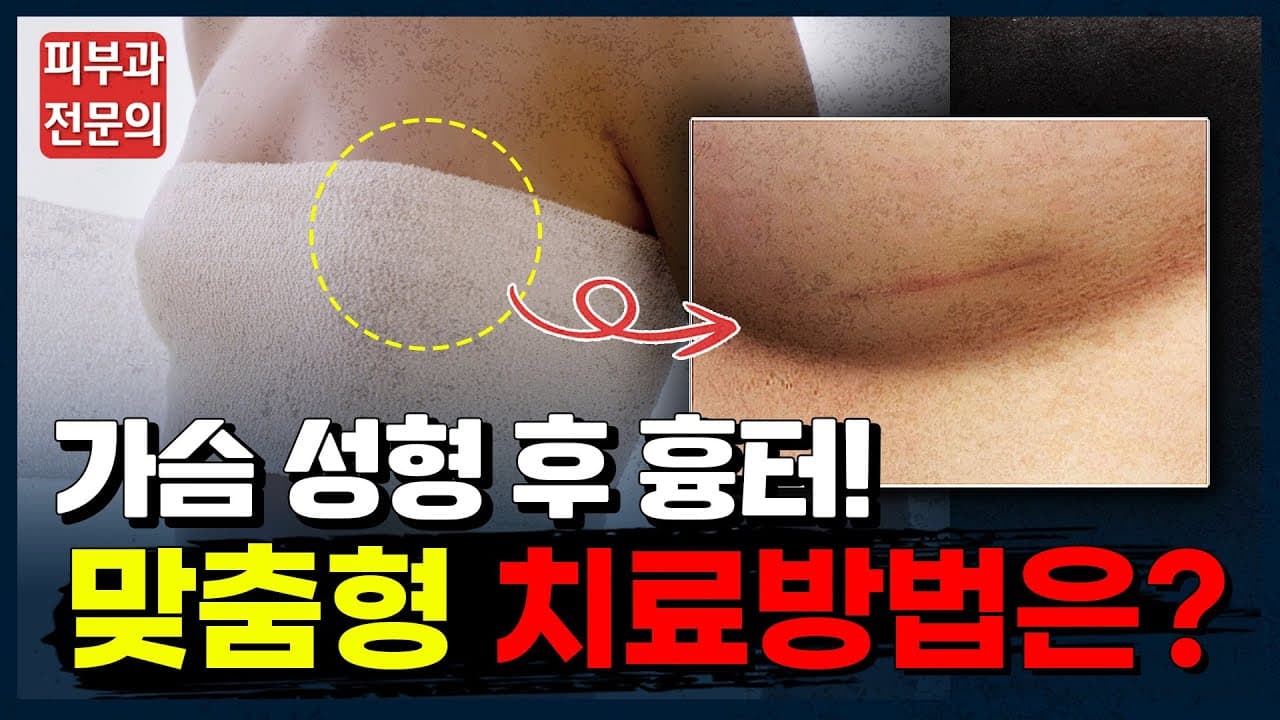
Hello, I am Dr. Sang-ju Lee, a dermatologist. Looking at the annual breast augmentation population in Korea, which approaches 15,000, it is clear that many people are choosing breast augmentation. However, as with all surgeries, skin damage occurs during the incision process for implant insertion, and it is not entirely possible to be free from the possibility of post-surgical scarring. Today, I will provide detailed information on how to effectively manage and prevent scars that may remain after breast augmentation.
Why do breast augmentation scars occur?
Breast augmentation scars occur during the process of incising the skin to insert implants during surgery. The incision site is often chosen from the armpit, inframammary fold, or areola area to make the scar relatively less visible. In particular, for breast augmentation, incisions are often made in the armpit or inframammary fold, and for breast reduction, incisions are often made around the areola. Young women often undergo surgery using the armpit or inframammary fold incision method, so a linear red or white scar tends to remain in these areas.
Factors influencing scar formation
More prominent scarring tends to occur in areas where the skin experiences a lot of tension or frequent movement. The armpit is an area with a lot of movement, so even if the incision is made along the line, scars are likely to form. In addition, during breast augmentation, the skin below is pulled, creating tension, and it is not uncommon for significant scarring to remain.
Incision site selection and scar prevention
When choosing an incision site for breast augmentation, a plastic surgeon determines the most appropriate method for implant insertion. When comparing the two sites from a scar prevention perspective, some opinions suggest that the armpit area may be slightly more advantageous than the inframammary fold incision in terms of scarring. The more tension the skin experiences, the larger the scar will be, so the more the breast size is increased, the more severe the skin pulling, making it difficult to avoid scars. If you can choose the incision site, selecting the armpit area may be helpful for scar prevention.
When is breast augmentation scar treatment most effective?
Scar treatment can be expected to yield better results the earlier it is started. At a dermatology clinic, laser treatment is recommended starting 1 to 2 weeks after suture removal, during the early stage when the scar is reddish. It is advisable to start treatment as soon as possible.
Various breast augmentation scar treatment methods
Various treatment methods can be applied depending on the shape, size, and height of the scar. Treatment is tailored to various types of scars, such as widely spread scars, raised scars like keloids, and red scars.
Laser Treatment
- Red linear scars: Vascular lasers are used to alleviate redness.
- Raised scars: Significant improvement can be expected with laser treatment.
- Linear incision scars: The Pinhole Technique can be used to transform linear incisions into dot-like forms, making them less noticeable.
Injection Treatment
Effective for raised scars or keloid scars, and recently, it is being used in combination with laser treatment for better results. Some scars may be difficult to treat due to their association with body constitution.
Ointments and Taping
- Scar ointment: Consistent application at home can be helpful. The scar improvement effect is known to be around 5%.
- Taping: It is very important for dispersing tension, one of the main causes of scar formation. Especially in areas with a lot of tension, taping can be much more effective than ointment.
Can old breast augmentation scars also be treated?
Old breast augmentation scars can also be treated. Scars are not completely erased; rather, treatment aims for 50-70% or more improvement from the current state, which can yield sufficiently good results.
Prevention to minimize breast augmentation scars
There are several ways to minimize scars after breast augmentation.
If you want to avoid scars, you wouldn't have surgery, but if breast augmentation is necessary, you can try methods to minimize scarring.
- Early laser treatment: It is important to start laser treatment early when the scar first appears red.
- Scar ointment use: Consistent application of scar ointment at home can be helpful.
- Taping method: Taping to disperse tension and prevent it from affecting the incision site is effective in preventing scars.