
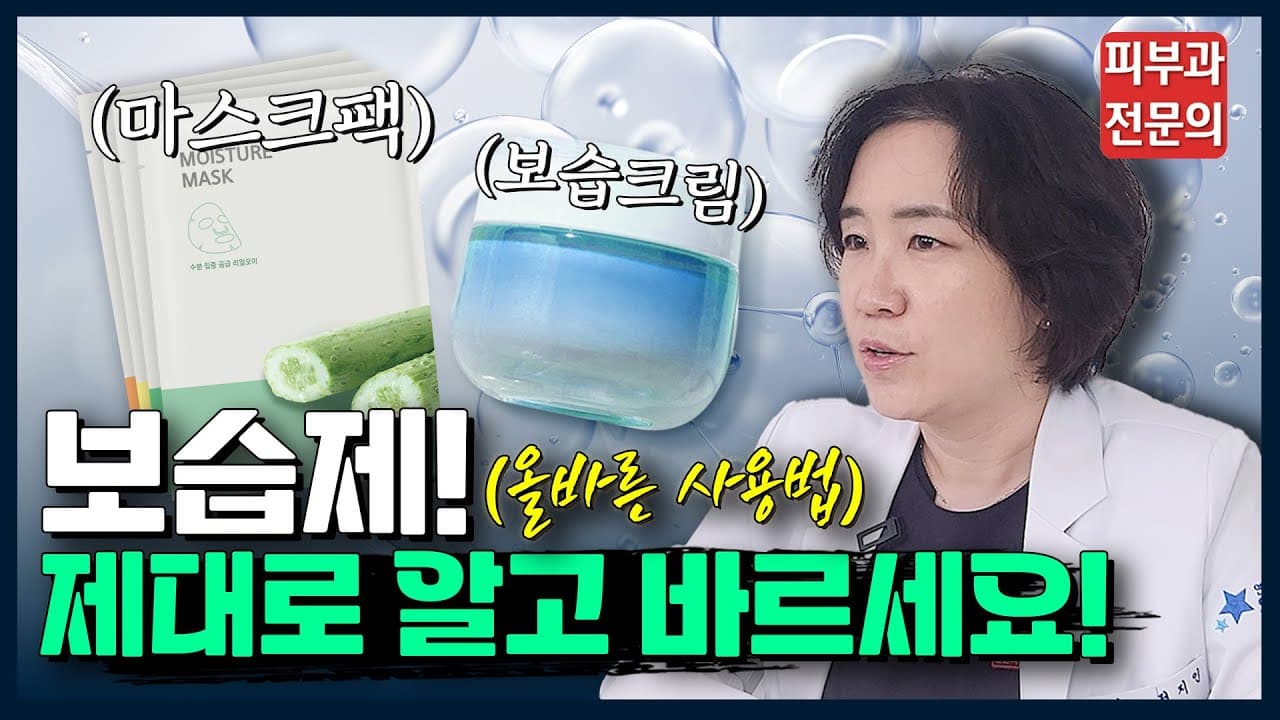
Hello, I am Dr. Jeong Jin-in, a dermatologist. What comes to mind when you think about how to improve your skin? I believe that the most fundamental aspect of skin health is moisturization.
Positive Effects of Moisturizing on Skin
Proper moisturization alone can fulfill many conditions for what is considered good skin. When the skin is sufficiently hydrated, it can appear brighter and more vibrant, the skin texture can become smoother, and the skin barrier can be strengthened, leading to healthy, elastic skin with fewer fine lines. While moisturization plays a very important role in skin health, surprisingly, many people do not use moisturizers correctly. From now on, I will review your moisturizer usage and provide tips to enhance its effectiveness.
Should Oily and Acne-Prone Skin Use Moisturizers?
Many people believe that acne-prone or oily skin should not use oil-based moisturizers, but this is a misconception. Moisturizer ingredients can be broadly divided into two categories:
- Humectants: Ingredients like hyaluronic acid, urea, and glycerin attract moisture to keep the skin hydrated. Aqua gels and aloe gels, often preferred by oily skin types, are typical humectants.
- Occlusives: Ingredients such as petrolatum, mineral oil, petroleum jelly, silicone oil, and dimethicone form an oil film to prevent moisture from evaporating from the skin, thus maintaining hydration.
Humectants alone can provide temporary hydration, but after a short while, the moisture can evaporate, potentially leaving the skin drier than before application by drawing out moisture from within. Furthermore, if the skin becomes too dry, it may produce more sebum to compensate. Even for acne-prone or oily skin, it is advisable to use a moisturizer that appropriately balances occlusives to prevent all moisture from escaping the skin.
Choosing a Moisturizer for Dry Skin
Conversely, if dry skin only uses moisturizers that create an oil film, there may not be enough moisture to attract, leading to insufficient hydration and a less appealing skin texture. Moisturizers for dry skin typically contain some oil, such as mineral oil or petrolatum, and depending on the type, may also include occlusives with a lighter feel, such as silicone oil or dimethicone.
Even among oil-based ingredients, products are being developed that include components like ceramide, which can help regenerate the skin barrier, rather than just providing a slight occlusive effect. It is a good idea to check the ingredient list of products to see if these components are appropriately balanced with humectants like hyaluronic acid, urea, and glycerin, which attract moisture.
Tips for Correct Moisturizer Application
Once you have chosen the right moisturizer for your skin, applying it correctly is also very important.
- Order of application: After cleansing, gently wipe your skin with a toner to remove any remaining impurities, then lightly spread the moisturizer over your entire face.
- Do not rub: Some people continuously rub the moisturizer with their hands or devices to increase absorption. However, this can irritate the skin, and more product may be absorbed by the device or your palms, so it is not recommended.
- Absorption time before makeup: Many people, due to busy mornings, apply moisturizer and immediately put on makeup. It is important to allow the moisturizer about 3 to 5 minutes to fully absorb into the skin for makeup to apply smoothly and not pill. However, I do think it's a good habit to mix a drop of essence with foundation when spreading it for a smoother application.
Is More Moisturizer Better?
Some people with severely dry skin say they apply several rich nourishing creams at once before bed. Is this effective for moisturizing dry skin? While it cannot be said to be completely ineffective, it is practically difficult for all the ingredients from multiple nourishing creams to be absorbed into the skin.
Ultimately, applying multiple layers of oil film can result in excess cream sitting on the surface, which can clog pores and lead to acne. Therefore, if you are not wearing makeup, rather than applying various rich moisturizers all at once, I would recommend choosing just one moisturizer that suits your skin type and applying it frequently whenever your skin feels dry.
If Moisturizer Alone Is Not Enough? Skin Booster Treatments
Occasionally, for those with severely dry skin, moisturizers alone may not be sufficient. In such cases, you can seek help from skin booster treatments like Rejuran to improve skin dryness. Rejuran involves directly injecting polynucleotide components extracted from salmon into the skin to improve damaged skin tissue and barriers, thereby making the tissue itself strong and healthy and balancing oil and moisture. This is why it is sometimes called the 'skin booster that tackles inner dryness'.
While the term 'inner dryness' might not be entirely appropriate for simply a problem of dryness, Rejuran is known to be effective among existing skin boosters for making the skin healthy and hydrated.
We have now addressed common questions related to the correct use of moisturizers. If you have any further questions, please do not hesitate to contact us.