
Hello, I am Dr. Sang-ju Lee, a board-certified dermatologist. In summer, when temperatures and humidity rise, many diseases become more prevalent. Among them, a representative one is 'athlete's foot'. Every summer, the number of people visiting dermatology clinics due to recurrent or worsened athlete's foot significantly increases. In particular, athlete's foot on the feet, or tinea pedis, is the most common type and often occurs between the toes. Today, we will learn more about the symptoms and types of athlete's foot that trouble many people.
Why does athlete's foot get worse in summer?
Many people think that athlete's foot is caused by bacteria, but in fact, it is a disease caused by fungi. Just as mold grows black in bathrooms or shady places in summer, the high humidity and temperature in summer create an environment where fungi can easily multiply on our skin. It mainly appears on the soles of the feet, between the toes, and on the toenails, and is highly contagious. It is especially prone to developing in hot and humid environments, and when wearing shoes like dress shoes or boots that cause excessive sweating or poor ventilation for long periods.
If you experience these symptoms, suspect athlete's foot
Athlete's foot appears in various forms, but the typical symptoms are as follows:
- Severe itching: Once you start scratching, it can be difficult to stop, and excessive scratching may cause a burning or stinging sensation.
- Scaling: There are also forms where a lot of dead skin cells, like calluses, appear on the soles of the feet.
- Blisters: Small blisters (vesicles) may suddenly appear on the feet.
- Unpleasant odor: It often occurs with other bacteria, which can cause an unpleasant odor.
How are eczema and athlete's foot different?
Not all problems on the feet are athlete's foot. Eczema can also appear as blisters and be easily confused with athlete's foot, but athlete's foot and eczema are completely different diseases. Therefore, if you have a problem with your feet, it is important to visit a dermatologist to get an accurate diagnosis of what disease it is.
What type of athlete's foot do I have? Three types of athlete's foot
Athlete's foot can be broadly divided into three types:
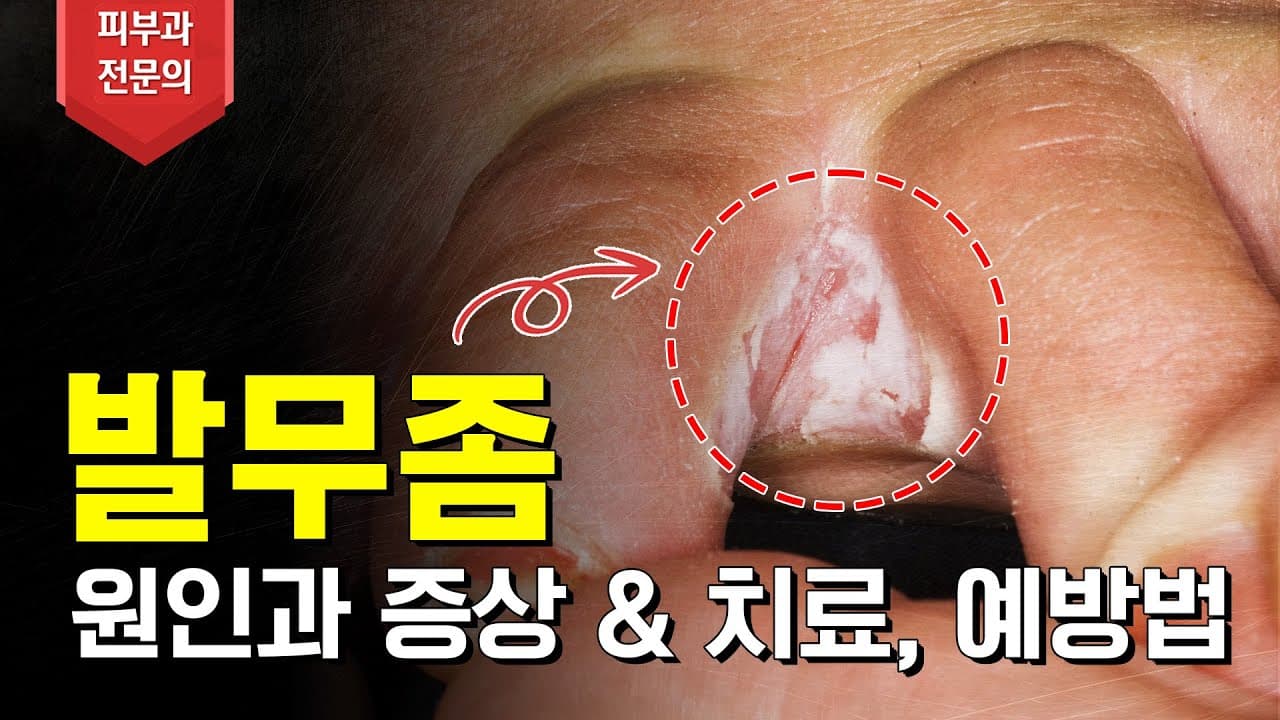
1. Interdigital type: If the skin between your toes is macerated and cracked
This form involves whitish maceration and cracking between the toes, especially between the fourth and fifth toes. It may look like the skin is swollen after visiting a public bath.
- Treatment: It is important to apply antifungal medication to eliminate the fungi, and wearing toe socks can also help prevent moisture buildup.
2. Vesicular type: Characterized by small blisters and severe itching
This is when small blisters appear on the soles or sides of the feet. When blisters appear, the itching is very severe, and if the blisters burst, it can be painful and ooze, increasing the risk of secondary infection.
- Treatment: It is best not to touch the blisters, wash them cleanly, and consistently apply athlete's foot ointment.
3. Hyperkeratotic type: If the soles of your feet become thick and scaly
This form involves thickening of the skin on the soles of the feet. It is easily confused with calluses, but athlete's foot usually occurs on only one side (though it can occur on both). If scaling on the sole of the foot appears on only one side, hyperkeratotic athlete's foot can be suspected.
- Treatment: Since the skin is thicker than normal, treatment can be somewhat tricky. In the early stages, using a combination of keratin-dissolving agents and antifungal agents can enhance treatment effectiveness.
How to effectively treat athlete's foot?
Athlete's foot is a chronic condition that requires consistent management, and topical ointments are generally effective. If diagnosed accurately in the early stages, it may improve with just 2-3 weeks of proper medication application. If topical medications do not show improvement, combining oral and topical medications can lead to more effective athlete's foot treatment.
Note: Unlike general athlete's foot, toenail fungus may have a lower treatment efficacy, so it is important to plan for long-term treatment from the start.
Persistent athlete's foot, prevention is key
Prevention is as important as treatment for athlete's foot. Follow these prevention guidelines:
- Wash your feet frequently and dry them thoroughly: After washing, it is very important to dry your feet well, creating an environment where fungi cannot easily multiply, meaning no moisture and low temperature. Pay special attention to drying between your toes.
- Wear toe socks and maintain hygiene: If you are prone to athlete's foot between your toes or on your feet, wearing toe socks can be helpful. It is also good to manage socks with a washing method that disinfects them well.
- Wear well-ventilated shoes: Using well-ventilated shoes is effective in preventing athlete's foot.
- If a family member has athlete's foot, treat it immediately: Since it is highly contagious, if a family member has athlete's foot, they must receive treatment quickly.