
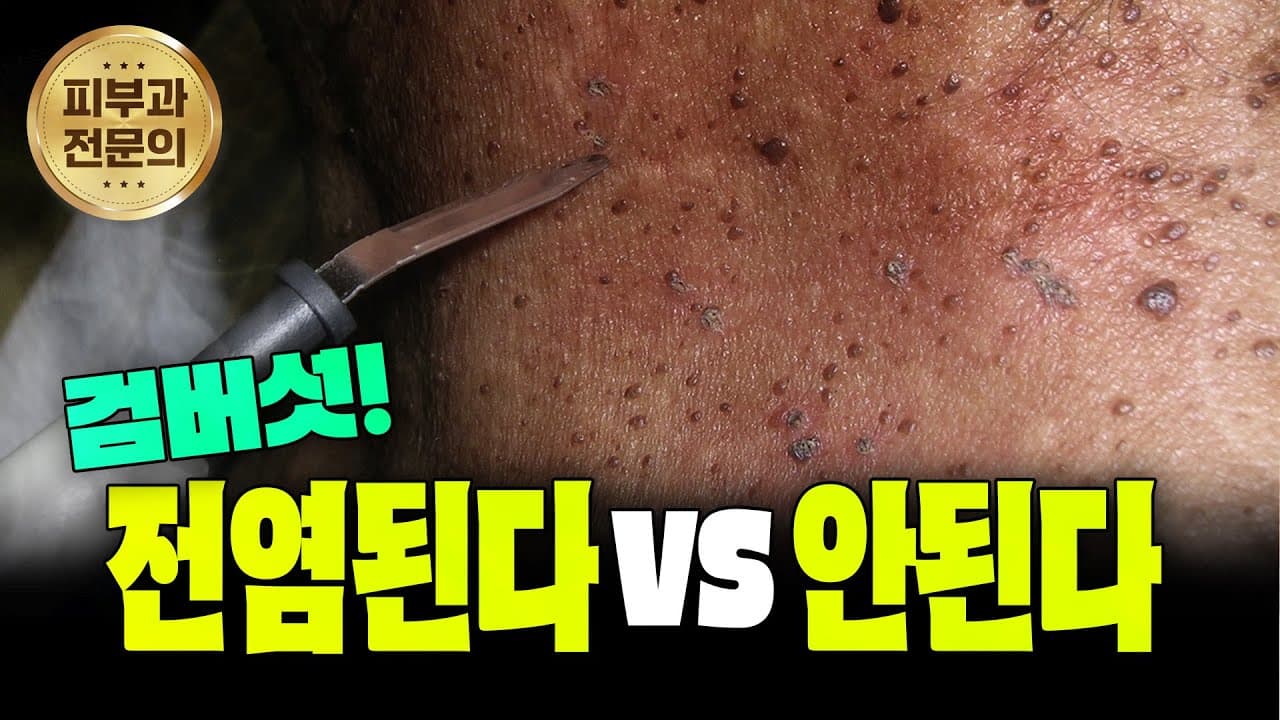
Hello. This is Dr. Lee Sang-ju, a dermatologist at the Skin Concern Counseling Center. Recently, patients visiting the clinic due to skin aging often ask, "Doctor, is this an age spot? Is it not skin cancer?" Age spots are one of the most common conditions that occur with age, along with lentigo, melasma, and freckles. While it is not always necessary to remove them, accurate diagnosis by a specialist is required as they often overlap with skin cancer. Today, we will take some time to answer your questions about age spots.
What exactly are age spots?
As we age, the regenerative capacity of our skin slows down, just like other organs in our body. When UV rays damage the skin, this damage accumulates, leading to the formation of brown spots. These brown spots are benign skin growths that look like mushrooms or warts on the skin, and are medically referred to as seborrheic keratosis, or age spots. They are commonly found in middle-aged and older adults, generally appearing after the age of 40. However, recently, we often see age spots in patients in their 20s in the clinic. Therefore, you can assume that anyone can develop age spots from their 20s onwards, when skin aging begins.
Can age spots progress to skin cancer?
There are benign and malignant tumors on the skin, and malignant tumors are skin cancer. Seborrheic keratosis, known as age spots, is a benign tumor, so it is extremely rare for it to progress to skin cancer. However, if the following changes occur, it may be skin cancer rather than an age spot, so it is advisable to consult a dermatologist for an accurate diagnosis:
- Sudden bleeding
- Sudden increase in size
Are age spots a contagious disease?
One disease that is often confused with age spots is warts. Warts are a viral disease, so they can spread to surrounding areas, moving from one to another. However, age spots are not contagious.
Then why do age spots appear to gather in multiple spots around one? This is because even when exposed to sunlight, age spots may appear first in some areas and later in others, occurring together in areas exposed to similar environmental conditions.
How are age spots treated?
Generally, age spots can be treated with lasers. They can usually be removed in a single treatment, but if they are too thick or widely scattered, one or two additional treatments may be necessary. Recently, the Reepot laser has become popular for age spot treatment. Reepot is a laser device that can achieve clean results with a single treatment due to its powerful energy.
Is post-treatment care important for age spots?
It can be said that age spots can last a lifetime unless one stops aging. However, the duration of maintenance after treatment depends on how well you protect yourself from UV rays. Results may vary depending on individual management and constitution.
Is Melanone Cream effective for age spots?
Melanone Cream is a whitening ointment often used for melasma treatment. Applying it to age spots may lighten the skin color slightly, but it does not make the age spots themselves disappear. However, in the early stages, for very thin, not thick, age spots, Melanone Cream may help improve skin color.
Melanone Cream helps to even out the overall skin tone by improving pigmentation in the surrounding skin rather than directly removing age spots.
Today, we took some time to learn about age spots. As age spots are considered a primary cause of aging, it is necessary to continuously check and manage their condition even after removal. This has been Dr. Lee Sang-ju, a dermatologist. Thank you.