
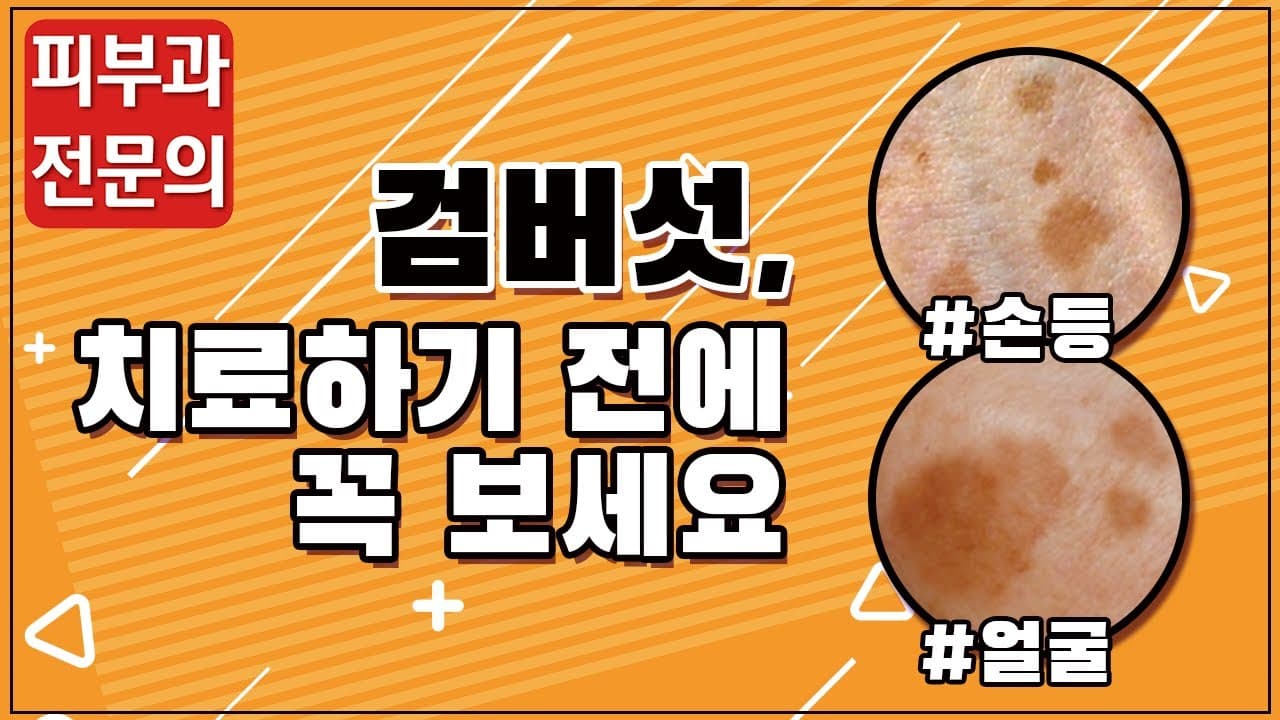
Hello. I am Lee Sang-ju, a dermatologist. I would like to talk about seborrheic keratosis, one of the common skin conditions that appear with age. Seborrheic keratosis is often confused with skin cancer and can affect almost everyone, making it a condition of great interest to many.
What is Seborrheic Keratosis?
Seborrheic keratosis is medically known as seborrheic keratosis and is a type of benign tumor that occurs on the skin. As the name suggests, it is characterized by the keratinization and hardening of the epidermis.
Initially, it appears as brown spots on the face, but over time, the color may darken, the stratum corneum may thicken, and it may feel firm and raised above the skin surface. While it primarily occurs on the face, it is also common in sun-exposed areas such as the back of the hands and arms. Additionally, it can occur on the torso or chest regardless of sun exposure.
What if you develop many seborrheic keratoses at a young age?
If you develop many seborrheic keratoses at a young age without a clear reason, it may be linked to other internal medical conditions, so it is advisable to consult a dermatologist.
Why does Seborrheic Keratosis occur?
The reasons for seborrheic keratosis are diverse.
- UV Exposure: Ultraviolet rays significantly influence the development of seborrheic keratosis.
- Aging: Seborrheic keratosis often develops with age.
- Genetic Factors: Some individuals have a genetic predisposition to developing seborrheic keratosis.
Generally, seborrheic keratosis that appears on sun-exposed areas like the face, arms, or hands is closely related to UV radiation. In contrast, seborrheic keratosis that develops on the inner parts of the body is often associated with constitution or genetic factors.
How to distinguish Seborrheic Keratosis from Skin Cancer?
Both seborrheic keratosis and skin cancer commonly occur in older age groups, making differentiation difficult in some cases.
Generally, seborrheic keratosis is a benign tumor that appears as hard, brown spots on the skin. In contrast, skin cancer is characterized by ulceration, oozing, bleeding, or severe redness and inflammation in the affected area.
However, in its early stages, skin cancer can be very difficult to distinguish from seborrheic keratosis. Therefore, rather than hastily assuming it's seborrheic keratosis and removing it with a laser, it is crucial to receive treatment under an accurate diagnosis. Especially if a suspected seborrheic keratosis has an unusual shape or form, or if there is bleeding or oozing, it could be skin cancer, and a dermatologist's examination is essential.
Recently, dermoscopy can be used in dermatology clinics to relatively easily diagnose seborrheic keratosis and skin cancer. We recommend visiting a dermatologist for a consultation first.
How is Seborrheic Keratosis treated?
Since seborrheic keratosis is a benign tumor, removing only the lesion usually poses no major problems. In the past, seborrheic keratosis was sometimes removed surgically, and 20-30 years ago, cryotherapy or electrocautery were primarily used.
However, with advancements in laser technology, laser treatment has become common. While carbon dioxide lasers are typically used, methods have recently been developed using lasers such as GentleMax to selectively treat only the affected areas with reduced side effects and minimal disruption to daily life.
Seborrheic Keratosis Prevention and Precautions
Seborrheic keratosis is closely linked to UV exposure. Therefore, consistently applying sunscreen not only to the face but also to the hands and arms to reduce skin exposure to UV rays can help prevent the occurrence of seborrheic keratosis.
If you have a lesion suspected to be seborrheic keratosis, it is advisable to seek diagnosis and treatment from a dermatologist rather than simply assuming it can be removed.