
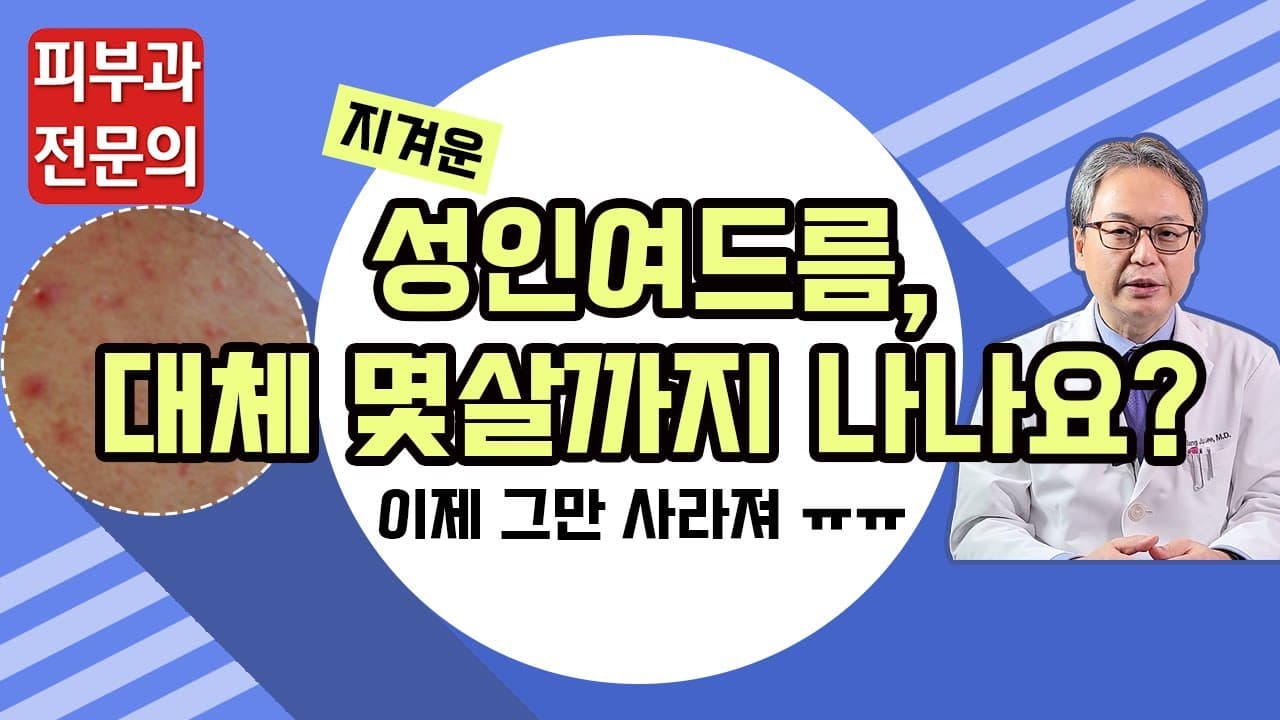
Hello, I am Dr. Sang-ju Lee, a dermatologist. While acne is commonly known to occur during adolescence, many people are recently struggling with adult acne. Generally, acne that occurs in individuals aged 25 or older is referred to as adult acne. The causes of adult acne are not significantly different from the general causes of acne.
How is adult acne different from adolescent acne?
Acne fundamentally occurs when sebum secretion increases, pores become blocked, and acne bacteria proliferate within, leading to inflammation. Adult acne largely follows the same process.
However, adult acne shows some differences from adolescent acne in terms of its location and characteristics. While adolescent acne often appears on the T-zone of the face, adult acne tends to occur around the mouth or along the jawline. Additionally, it tends to be more challenging to treat and may require a longer treatment period than adolescent acne.
Key causes of adult acne: hormones, stress, and lifestyle habits
The fundamental causes of adult acne are the same as adolescent acne, but the following factors play a more significant role in the development of adult acne:
- Hormonal Imbalance: Hormonal imbalance is one of the main causes of adult acne. Individuals with skin types where sebaceous glands are hypersensitive to male hormones may easily develop acne. This is often due to the sebaceous glands themselves being more sensitive to hormones, rather than an excessive amount of male hormones.
- Stress: Stress is a major factor that increases sebum secretion. Excessive stress can affect hormonal balance and worsen acne.
- Makeup Habits: Using unsuitable cosmetics or improper cleansing habits can block pores, leading to or worsening acne.
- Lack of Sleep and Irregular Lifestyle Habits: Insufficient sleep or a disrupted daily rhythm can lead to excessive sebum secretion, which can result in acne.
- Genetic Factors: If parents experienced severe acne, their children are more likely to develop severe acne. This is due to a genetic predisposition related to sebaceous gland development.
How is adult acne treated?
Adult acne treatment can be broadly divided into three methods.
Medication
This is the most basic method for acne treatment.
- Antibiotics: Have the effect of killing acne bacteria and reducing inflammation.
- Sebum Regulators: Suppress sebum secretion to control the root cause of acne.
Skincare (Scaling)
Helps to improve the causes of acne that result from blocked pores. Scaling is effective in improving acne by cleansing pores, reducing inflammation, and facilitating sebum secretion. Those who wish to see acne treatment effects in a short period may consider Scaling.
Laser Treatment
Lasers are generally effective in improving red marks caused by acne. Especially with methods like Gold PTT (Photothermal Therapy), it is possible to reduce the sebaceous glands, which are the cause of acne, thereby preventing acne recurrence and helping the improved acne treatment effect last longer.
How long does adult acne treatment take?
Acne treatment should be thought of like dieting. While it can be improved quickly, consistent effort is needed to maintain the effect for a long time.
Generally, a noticeable reduction in acne can be felt within 2-4 weeks of starting treatment. However, to sufficiently prevent recurrence, the acne-free state should persist for about one to two months to see a reduction in future breakouts.
Therefore, to see treatment effects, you should receive about a month of treatment, and thereafter, the duration of maintenance treatment to prevent recurrence may vary slightly depending on the individual's skin condition. Generally, significant improvement in acne can be observed around 3 months.
Lifestyle management to prevent adult acne recurrence
Adult acne is linked to hormones, stress, and lifestyle habits, making it more challenging to treat than temporary adolescent acne. Therefore, changing one's lifestyle habits is also very important.
- Stress Management: Sebum is secreted in large amounts when under stress. Therefore, efforts to reduce stress must be made concurrently.
- Sufficient Sleep: If you stay up all night studying during exam periods or experience sleep deprivation, sebum secretion will excessively increase. In such cases, acne can inevitably occur, so if your habits lead to high sebum secretion, correcting those habits can prevent acne recurrence.
- Proper Makeup Habits: Acne-specific cosmetics are effective in removing sebum from the skin, but they do not prevent sebum secretion itself, which is the cause of acne, so their effect in preventing recurrence is not significant. They can offer an auxiliary effect to temporarily improve acne more quickly.
Why early treatment of adult acne is important
As mentioned earlier, adult acne refers to acne present after the age of 25. That is, acne that has been present since adolescence is called adult acne, and acne that first appears after the age of 25 is also called adult acne. However, acne that first starts after the age of 25 is generally known to persist longer than acne that appeared during adolescence.
Some reports indicate that many people suffer from acne even in their 40s and 50s, and indeed, acne in individuals aged 40-50 has been increasing recently. Therefore, in the case of adult acne, early treatment can be considered a way to expect a better prognosis.
Today, we looked at adult acne. If you have any questions, please feel free to ask in the comments or via KakaoTalk. This was Dr. Sang-ju Lee, a dermatologist. Thank you.