
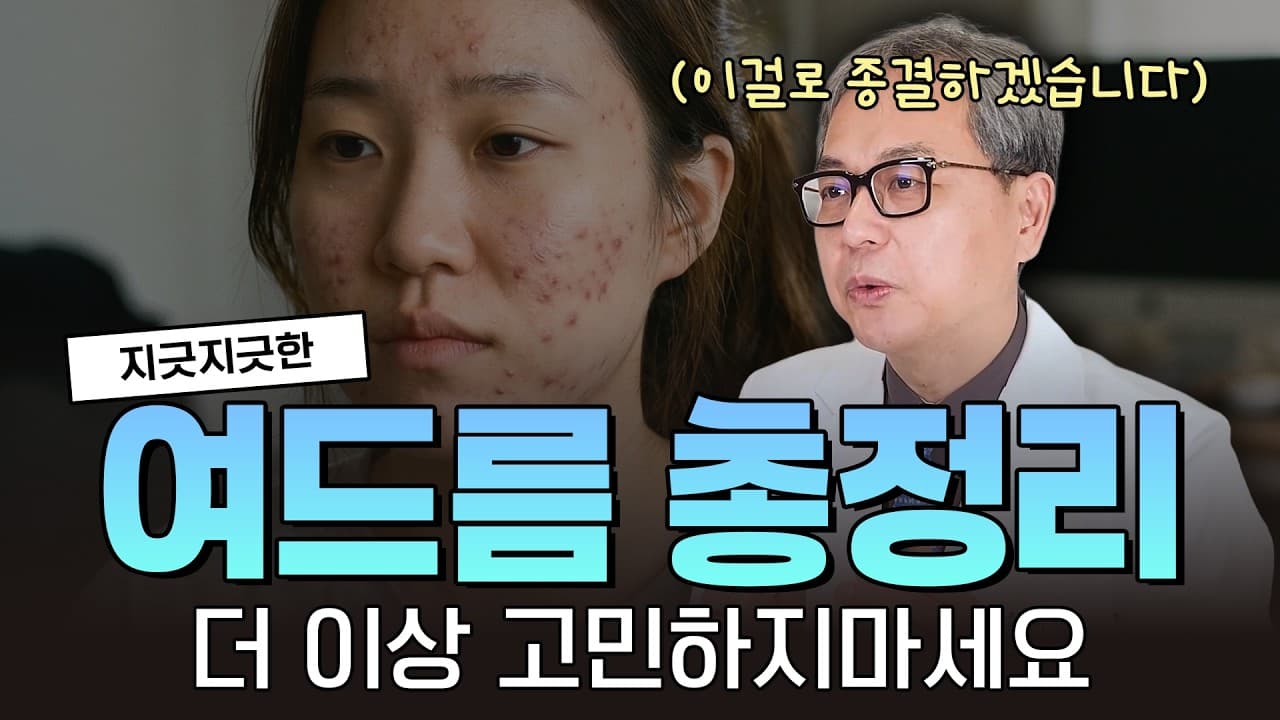
Adult acne is not just a problem for teenagers; it's a concern that continues into adulthood. Adult-type acne appearing after age 25 is increasing, and many people in their 30s, 40s, and beyond struggle with acne. Therefore, let's summarize why adult acne occurs, how to distinguish its locations and types, and how to manage it step-by-step.
Acne is a problem of hormones and sebaceous glands
Acne fundamentally occurs when hormones stimulate the sebaceous glands, leading to increased sebum secretion. The areas where acne commonly appears differ with age; it initially starts in the T-zone, where sebaceous glands are well-developed, and later shifts to the jawline or around the mouth. This is because the sebaceous glands' response to hormones changes with age.
Acne around the mouth and chin is not due to specific organs
Adult-type acne appearing around the chin and mouth is because these areas respond well at that age. While some online sources suggest that acne in these areas indicates problems with specific organs, this is not directly linked to any particular disease. However, if your acne is unusually severe compared to others, it is advisable to seek medical consultation to identify the exact cause.
Medication is the most basic treatment
Acne medications are broadly divided into antibiotics and sebum control agents. While antibiotics may lose effectiveness and lead to resistance issues with prolonged use, sebum control agents have a lower risk of resistance.
- Antibiotics: Reduce inflammation but may lead to resistance and decreased effectiveness with long-term use.
- Sebum control agents: Can be considered for preventing recurrence or when long-term management is needed.
Divided into non-inflammatory and inflammatory types
Acne is classified into non-inflammatory and inflammatory types based on its form. Non-inflammatory acne is in the comedone stage; open comedones, which are oxidized and appear black, are commonly called blackheads, while closed comedones, filled only with sebum, are referred to as milia or whiteheads.
Inflammatory acne is further subdivided by shape. It includes papular (red, raised bumps), pustular (yellow, pus-filled tips), cystic (soft, sac-like lumps beneath the skin), nodular (hard lumps), and conglobate (multiple interconnected lesions). Inflammatory acne often leaves scars and pigmented marks, requiring more aggressive treatment.
Step-by-step treatment prevents scarring
The goal of acne treatment is not just to reduce acne but to prevent it from leading to scars. For early non-inflammatory, comedonal acne, combining Scaling or light peeling to gently clear pores of waste and sebum can help prevent pore blockage.
Inflammatory acne requires a more proactive approach. Methods like Gold PTT, which involves penetrating the skin with microscopic gold particles and inducing a photothermal reaction to selectively reduce acne bacteria and sebaceous glands, address the root cause. After inflammation improves, it is advisable to manage red marks with vascular lasers to prevent them from progressing into scar marks.
Just as important as professional treatment is managing lifestyle factors that trigger acne, such as stress and hormonal changes, sleep, and diet.
Results may vary individually, and accurate diagnosis and treatment are determined after consultation.
Written by Dr. Sang-Joo Lee, Chief Director (Yonsei Star Dermatology) · Medical Staff Introduction · Last reviewed 2026-06-03