
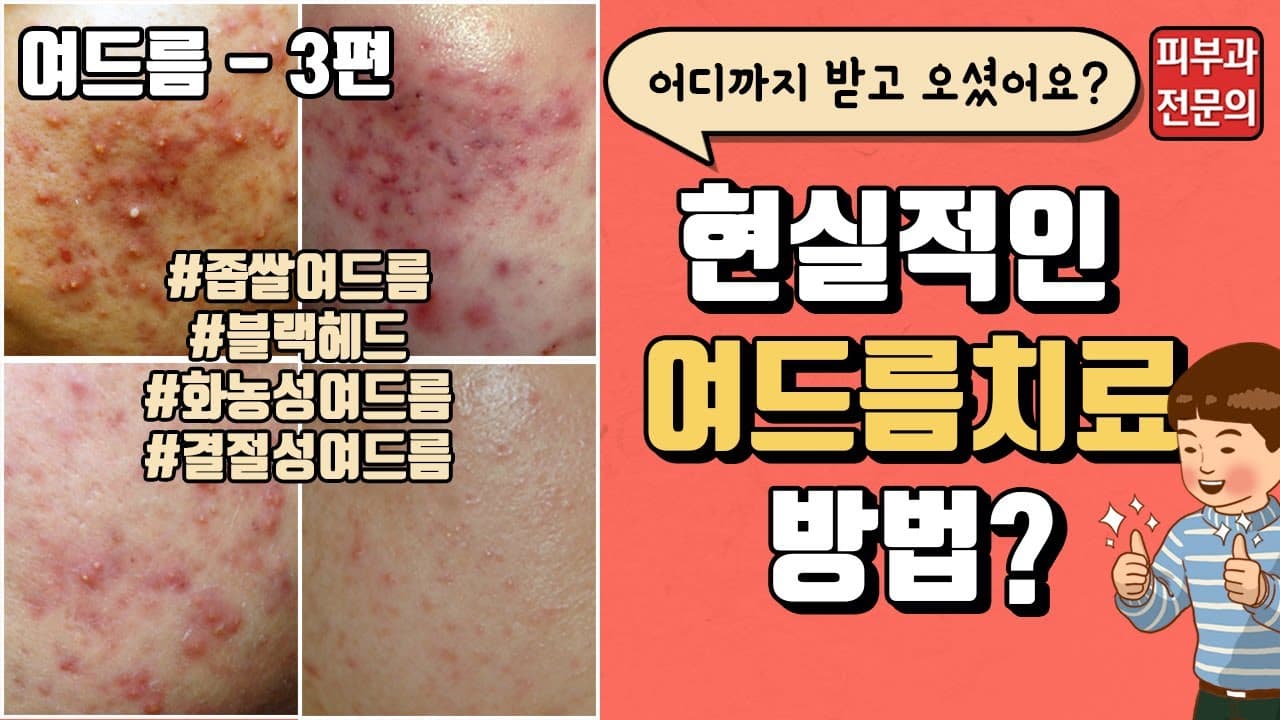
Hello, I am dermatologist Jung Ji-in. In the last session, I discussed the causes of acne and how to manage it with cosmetics. Today, we will take a closer look at acne treatments.
As I mentioned before, acne is primarily caused by four factors: excessive sebum production, hyperkeratinization of pores, proliferation of acne bacteria, and inflammation. Acne treatment focuses on fundamentally eliminating these pathogenic factors.
What are the available acne treatments?
Acne treatments can be broadly divided into medication and procedures such as laser therapy. Let's first look at medication.
Oral Medication: Addressing the Root Causes of Acne
Vitamin A Derivatives (Isotretinoin)
One of the most representative acne medications is Vitamin A derivatives. The main ingredient used is isotretinoin, which is available under brand names such as Roaccutane and Isotretinoin. This medication primarily works to reduce sebum secretion, which is a precursor to acne, and reverse acne exacerbation, also helping to suppress scarring.
However, due to the risk of birth defects, individuals who are pregnant or planning to become pregnant must consult thoroughly with a specialist and exercise caution before taking this medication. In addition, side effects such as dry lips or skin, elevated liver enzymes, or increased blood lipids (cholesterol) may occur, so caution is needed, and blood tests may be performed as necessary. It must be prescribed only after sufficient examination and consultation by a dermatologist.
The effects of the medication do not appear immediately. It may take anywhere from two weeks to one or two months for a noticeable sebum-suppressing effect to begin. Some patients who start taking the medication may even experience an initial worsening, with hidden acne emerging during the first one or two months. During this period, it is advisable to combine treatments such as scaling, injection therapy, or extraction procedures to remove the acne.
Antibiotics
Secondly, there are antibiotics. Antibiotics such as doxycycline, minocycline, erythromycin, and osaclenzing work to suppress acne formation and reduce acne bacteria. They are often prescribed instead of Vitamin A derivatives for individuals with dry skin. However, caution is needed regarding gastrointestinal issues and antibiotic resistance.
'Inflammation Injection' Effective for Inflammatory Acne
Those who suffer greatly from inflammatory acne are likely curious about the inflammation injection, which most have probably received at least once. The inflammation injection has the effect of calming inflammation with a single shot. The injection contains triamcinolone in crystalline steroid form or betamethasone. Unlike general steroids, it remains in the skin in crystalline form, slowly releasing the steroid and reducing only the inflammatory response.
It provides a quicker immediate effect compared to ointments or oral medications and is also widely used for other inflammatory conditions. However, it does not have a fundamental effect on reducing sebum or treating acne itself, so relying solely on this for acne treatment is not advisable. On the contrary, it may appear to recover temporarily, only for sebum to increase slightly afterward.
Procedures and Laser Treatment: Complement or Alternative to Medication
Depending on the acne condition, medication alone may require additional treatment. Procedures are especially recommended for women planning pregnancy or young students who find it difficult to take medication.
Extraction and Scaling
Comedonal acne that appears white takes a long time to resolve naturally. Extraction helps remove the 'seeds' before they progress to inflammatory stage 2 or 3 acne. Therefore, extraction or procedures like scaling, which remove old keratin and facilitate sebum excretion, can also be helpful.
The most important thing here is to thoroughly remove sebum and prevent it from spreading inward.
When removing sebum, you should not press inward; you need to open the pore to allow it to come out and extract it skillfully. Since this is difficult to do at home, we recommend receiving treatment at a dermatology clinic.
Laser Treatment
When there are side effects from medication or severe inflammatory acne, more aggressive treatment is recommended, and laser treatment is a prime example. It is known as a stable acne treatment method with a low risk of side effects and relatively fast results. Laser treatment focuses on suppressing sebaceous glands and reducing acne bacteria, which are fundamental mechanisms of acne development. Treatments such as SmoothBeam, Accure, Photona, IPL, and PDT fall into this category.
Latest Laser Treatment: Gold PTT
Recently, treatments like Gold PTT are widely used, which, unlike PDT that causes photosensitivity, have fewer side effects such as the need to block sunlight or severe peeling, reduced pain, and minimal disruption to daily life. Gold PTT is a method that uses ultrasound to penetrate gold nanoparticles into the pores of the skin, then irradiates them with a specific wavelength of laser light to selectively destroy the sebaceous glands.
Powerful sebaceous gland reduction and destruction occur within the skin, but because it does not affect the epidermis, there is almost no pain or post-procedure discomfort. The treatment effect lasts for a long time, and there are no restrictions on daily life, so it can be safely used even in summer, and students or office workers can comfortably receive satisfactory treatment.
What is the right acne treatment for me?
We have discussed various acne treatments so far. It is not possible to say that a specific method is the best for everyone. Appropriate treatment should be administered according to the type and condition of the acne. To achieve this, establishing a treatment plan after thorough consultation with a specialist helps increase treatment satisfaction.
If you have any further questions about acne, please leave them in the comments below. We will refer to them for video production. Thank you.