
![[ Yonsei Star Dermatology Sinchon ] Why is Yonsei Star Dermatology Sinchon the place for burn scar treatment?](/_next/image?url=https%3A%2F%2Fagqdgbuateknhwpocrgu.supabase.co%2Fstorage%2Fv1%2Fobject%2Fpublic%2Fsources%2Fbbf3bebe-45b6-4415-bd04-bda18b2cac0f%2Fblog-images%2F222675374284_00_f46ee55328de.jpg%3Ftype%3Dw966&w=3840&q=75)
Burn scars are often more than just a mark; they can cause the skin to become uneven, lumpy, and hardened, leading to feelings of self-consciousness in daily life. The first question that usually comes to mind is, "Can old burn scars also improve?" To answer directly, while there are individual differences depending on the depth, extent, and duration of the scar, cases of noticeable smoothing with appropriate treatment have been reported.

Why is burn scar treatment so challenging?
Burn scar treatment is considered one of the most difficult areas in dermatology. Burns often damage not only the epidermis but also deep layers of the dermis, and in this process, collagen tissues can abnormally intertwine and clump together, forming hard scar tissue.
Approaches that only refine the surface make it difficult to resolve deep-seated tissue changes. Therefore, burn scars often require a staged approach that assesses the scar's condition rather than a single, one-time procedure. This is why burn scars do not naturally flatten over time but tend to harden.
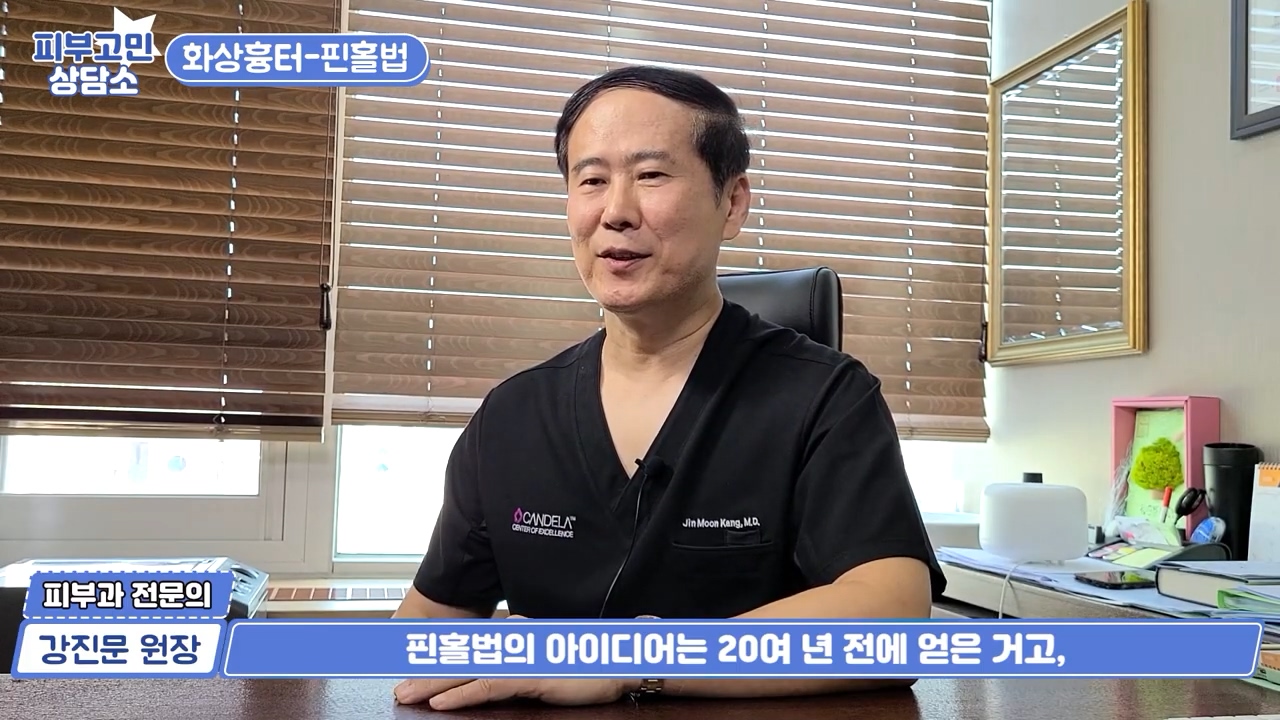
How does the Pinhole Technique work to release scars?
The Pinhole Technique, established by Yonsei Star Dermatology Sinchon in the early 2000s, is a relatively well-known method for burn scar treatment. Its principle is intuitive.

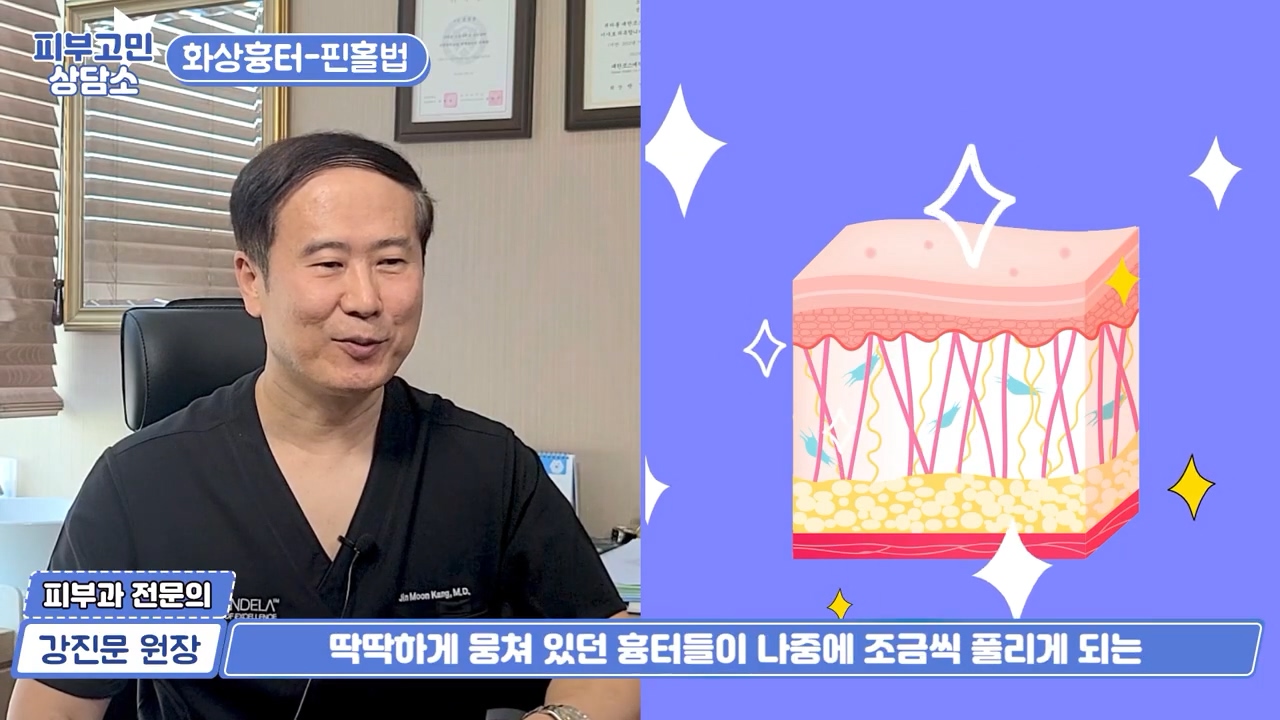
It involves creating precise, microscopic holes in the uneven and hardened scar tissue with a laser. By gradually releasing the scar in this way, new skin is encouraged to fill in, guiding the tissue to recover to a texture closer to normal skin. The key is that the focus is on releasing hardened tissue and promoting regeneration, rather than simply shaving it off.
Even with the same Pinhole Technique, results can vary significantly depending on the practitioner's experience and attention to detail.
While the method itself can be imitated, reading the depth of the scar and adjusting the subtle intensity and spacing requires accumulated clinical experience. Variations tailored to skin conditions, such as Mild Pinhole or Pinhole Alpha, are also utilized within the Pinhole family of treatments.
Is it too late for old burn scars?
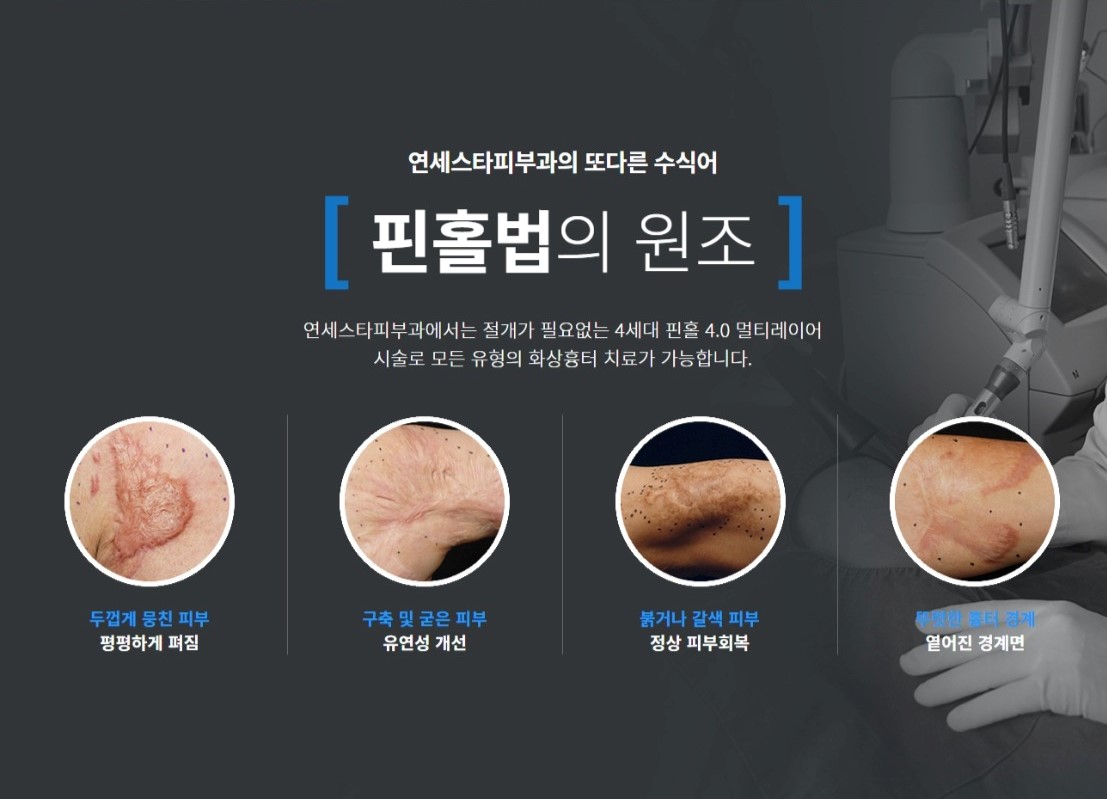
Many individuals visit for treatment of burn scars that are decades old. While older scars are not necessarily easier to treat, inducing new skin growth with the Pinhole Technique has been reported to lead to improvement.

However, rather than delaying treatment with the thought that "the scar is too old to do anything about it," we recommend having the current scar condition checked first. For deep or hardened scars, in addition to the Pinhole Technique, Surgical Scar Revision or Triamcinolone Scar Injection for raised scars may also be considered.
For any questions, you can comfortably inquire through chat consultation about burn scar treatment directions.

Pinhole 4.0 Multi-Layer: What's different?
Sinchon has continuously refined the Pinhole Technique over the past 20 years, and it has now reached the Pinhole 4.0 Multi-Layer stage.
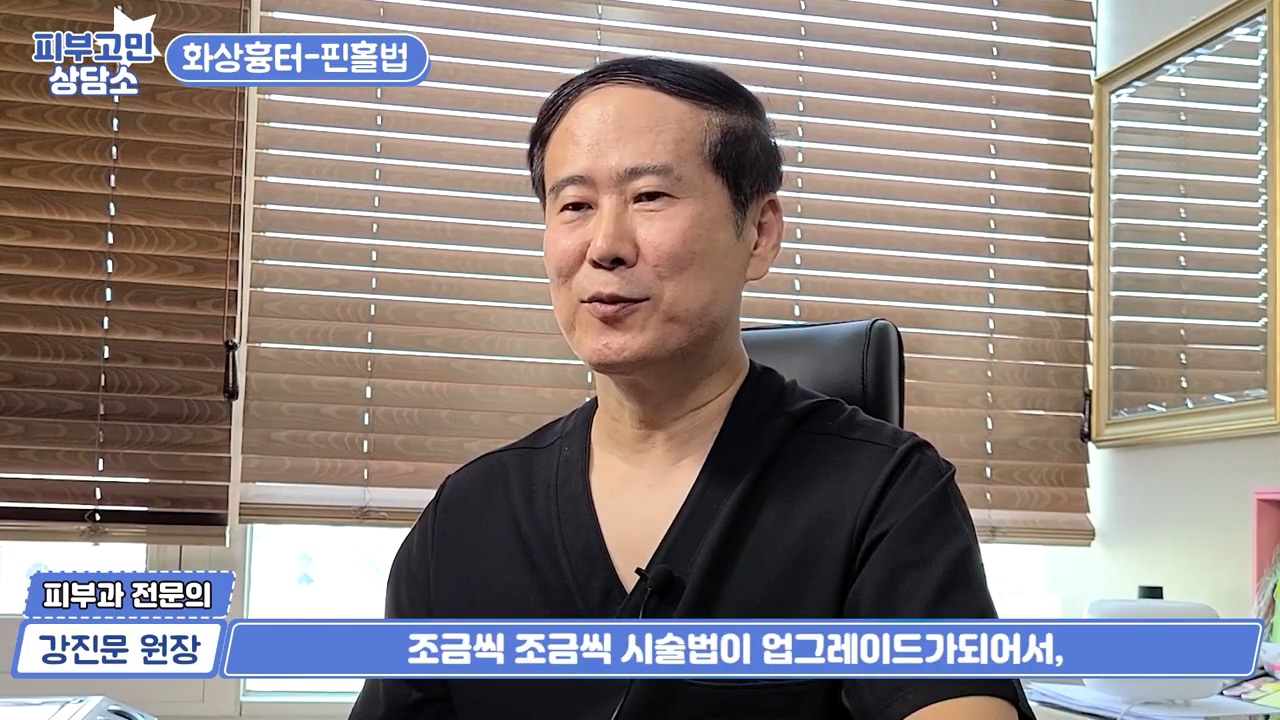

Pinhole 4.0 is designed with a 3-stage multi-layer technique. It combines the advantages of various lasers used in burn scar treatment in stages, releasing and rearranging tangled collagen tissue from the epidermis to the dermis, thereby inducing regeneration layer by layer. This layered approach allows for more precise control over the recovery process compared to the 1st generation Pinhole Technique.

Here's a simple summary of the generational differences:
| Category | Approach | Features |
|---|---|---|
| 1st Gen Pinhole Technique | Single-layer micro-perforation | Releases hardened scar tissue to induce regeneration |
| Pinhole 4.0 Multi-Layer | 3-stage multi-layer | Staged rearrangement from epidermis to dermis |
Why the practitioner matters even for the same Pinhole Technique
In the consultation room, we realize that for those who have suffered from burn scars for a long time, "how it's designed" rather than "what equipment is used" determines the outcome. Burn scar treatment is a highly complex procedure, so rather than choosing a hospital based on whether they offer the Pinhole Technique, we recommend checking the following:
- Whether they have sufficient experience in burn scar treatment
- Whether the medical staff has a high understanding of skin structure and scar tissue
- Whether they propose a staged design according to the scar condition
- Whether they provide specific guidance on the recovery process and precautions after the procedure
- Whether they present a plan tailored to the progress rather than an unreasonable one-time completion
It is safest to consult sufficiently with a dermatologist to determine the appropriate direction for your scar.

What to know before treatment
Burn scar treatment often proceeds in stages, with progress monitored, rather than being completed in a single session. Depending on individual characteristics, temporary swelling, redness, scabs, or exfoliation may occur after the procedure, so it is advisable to monitor the recovery process with the medical staff.
If you are unsure about the stage of your scar or which method is right for you, you can first assess your condition by inquiring about burn scar treatment consultation via chat.
Chief Director Lee Sang-joo (MD, PhD, Yonsei University College of Medicine and Graduate School, completed dermatology residency at Severance Hospital, President of the Korean Dermatological Association) Chief Director Lee Sang-joo's Profile First published 2022-03-17 / Last reviewed 2026-06-16
This content is for general information purposes only. Treatment results and recovery patterns may vary by individual, and accurate diagnosis and treatment direction must be determined through consultation with medical professionals.