
![[Yonsei Star Dermatology Sinchon] R-Zero Tattoo Removal and Pico-Frectat / Sinchon Station Dermatology](/_next/image?url=https%3A%2F%2Fagqdgbuateknhwpocrgu.supabase.co%2Fstorage%2Fv1%2Fobject%2Fpublic%2Fsources%2Fbbf3bebe-45b6-4415-bd04-bda18b2cac0f%2Fblog-images%2F222836327967_00_799cc550afd4.jpg%3Ftype%3Dw1&w=3840&q=75)
Once a tattoo is etched, it doesn't disappear on its own. The pigment is deeply embedded in the dermis, so even with time, it often only fades to a certain extent. The first question people ask when looking into tattoo removal is, "How many sessions does it take to remove?" The core of the matter lies in how many times the laser can be repeatedly applied in a single session.
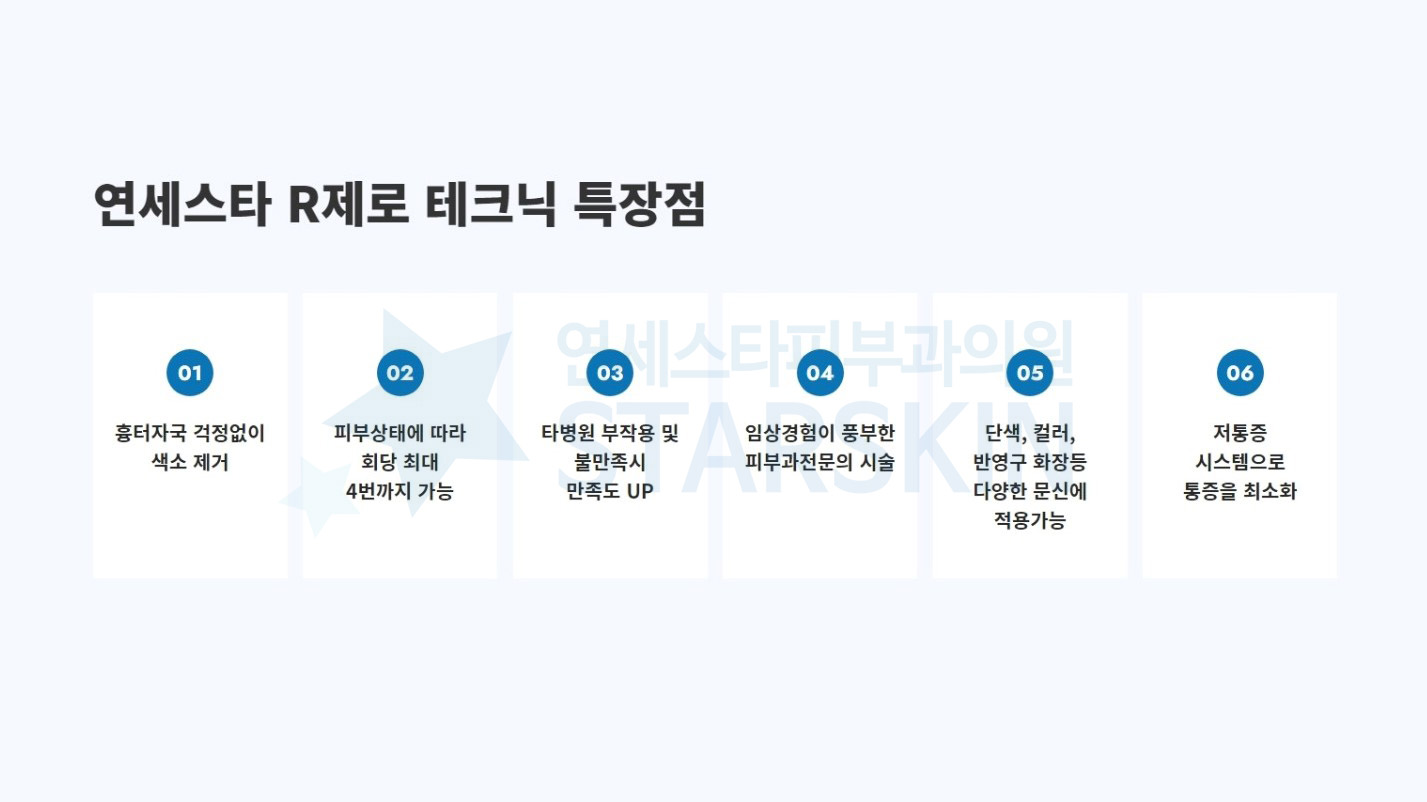
There are two main tattoo removal methods offered at Yonsei Star Dermatology Sinchon: R-Zero Tattoo Removal and Pico-Frectat. Both methods are designed to allow multiple laser repetitions in a single visit, aiming to reduce the overall duration of the removal process.
The Era of R20: Only One Shot Per Session
The traditional laser tattoo removal method, R20, creates white bubbles on the skin surface when the laser is applied. These bubbles obstruct the subsequent laser application, making it possible to perform only one treatment per session. To apply the laser again, one had to wait at least 20 minutes for the bubbles to subside.
Due to the long waiting time, there was a limit to the number of sessions that could be performed in one visit, which in turn prolonged the overall removal period.

Beyond the Bubble: Frectat and R-Zero
To compensate for the shortcomings of R20, the Frectat technique emerged. By first creating microscopic spaces for bubbles to escape with a fractional beam, it became possible to perform two treatments in one session.
Taking this a step further is the R-Zero Technique. R-Zero is a method designed to allow up to four repeated treatments in a single session.
As the number of laser repetitions possible in a single session increases, the number of visits required to achieve the same result tends to decrease.
The differences between the three methods are summarized as follows:
| Method | Repeated Treatments Per Session | Features |
|---|---|---|
| R20 | 1 session | Requires 20-minute wait due to bubbles |
| Frectat | 2 sessions | Fractional beam secures space for bubble discharge |
| R-Zero | Up to 4 sessions | PFD special medication rapidly removes bubbles |
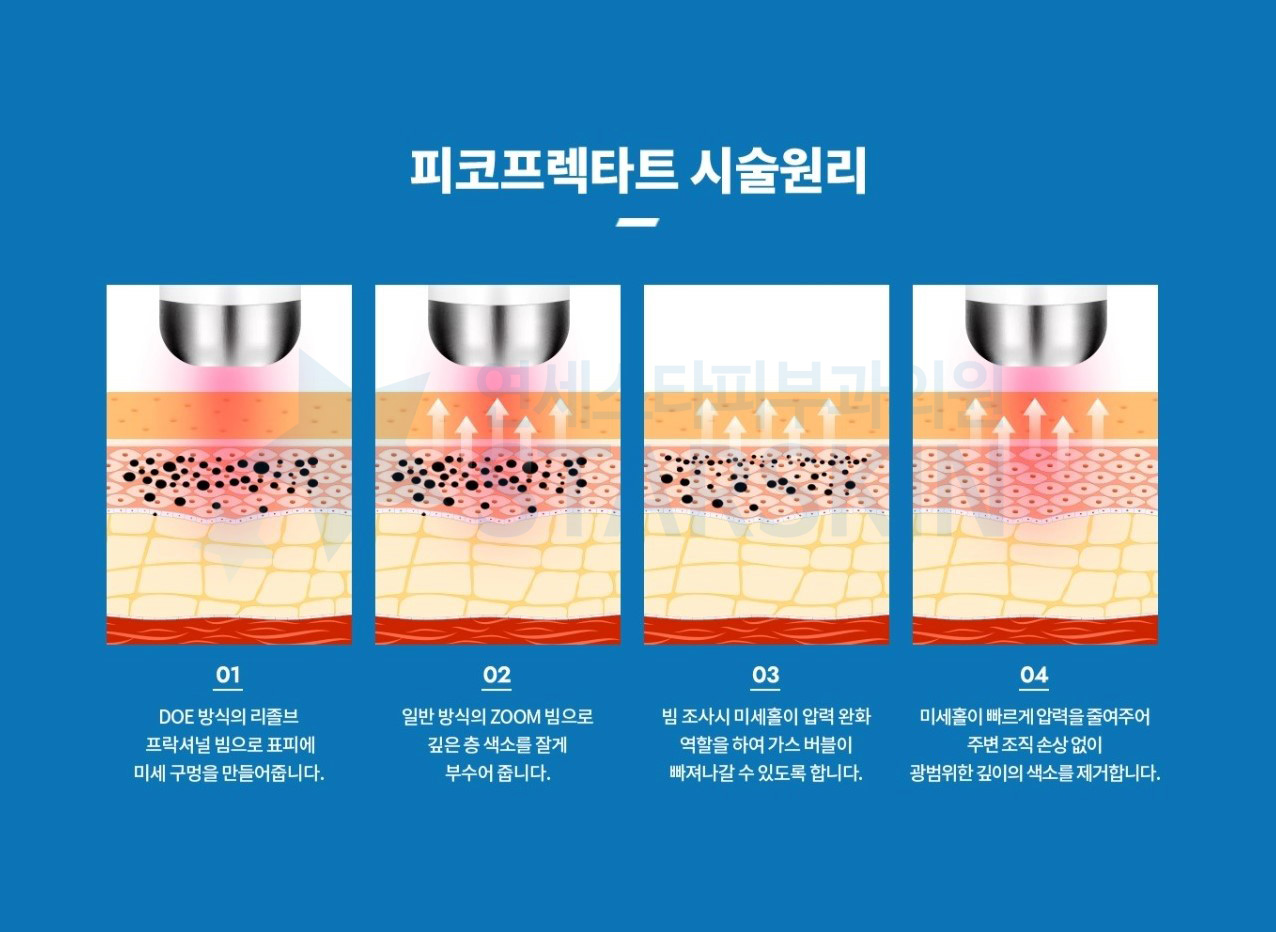
What's Different About Pico-Frectat?
Pico-Frectat at Yonsei Star Dermatology Sinchon can be understood as a combination of the PicoWay Laser and the Frectat technique.
Previously, Frectat used a nanosecond laser to create microscopic holes for bubbles to escape, followed by tattoo removal treatment, allowing for two sessions in one visit. Pico-Frectat uses a picosecond laser, specifically the PicoWay Laser, which is faster than a nanosecond laser. While maintaining the possibility of two sessions per visit, it aims to enhance the precision of pigment breakdown.
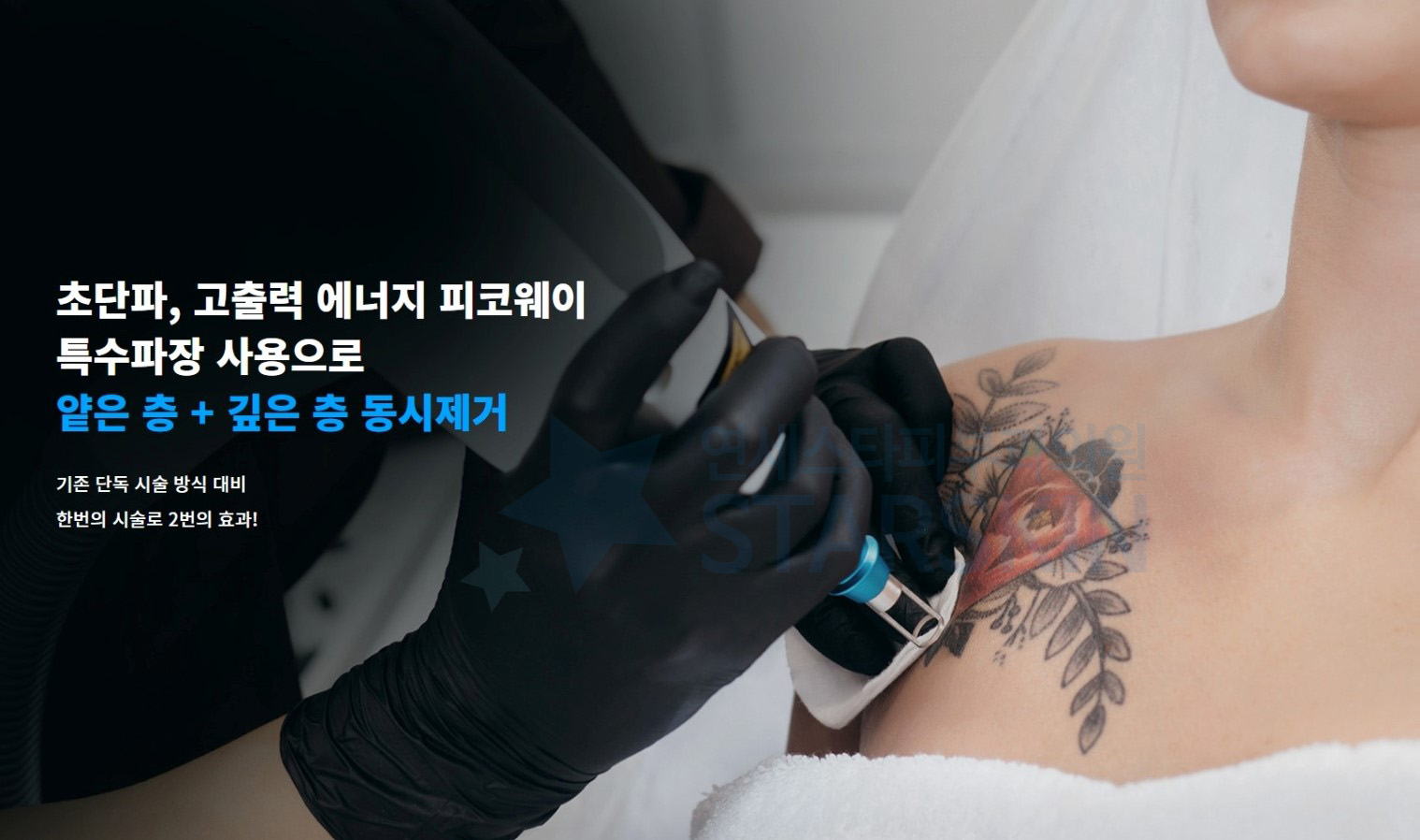
Picosecond lasers are reported to act on pigment particles for a very short time, reducing thermal stimulation to surrounding tissues while effectively breaking down pigment into smaller fragments.
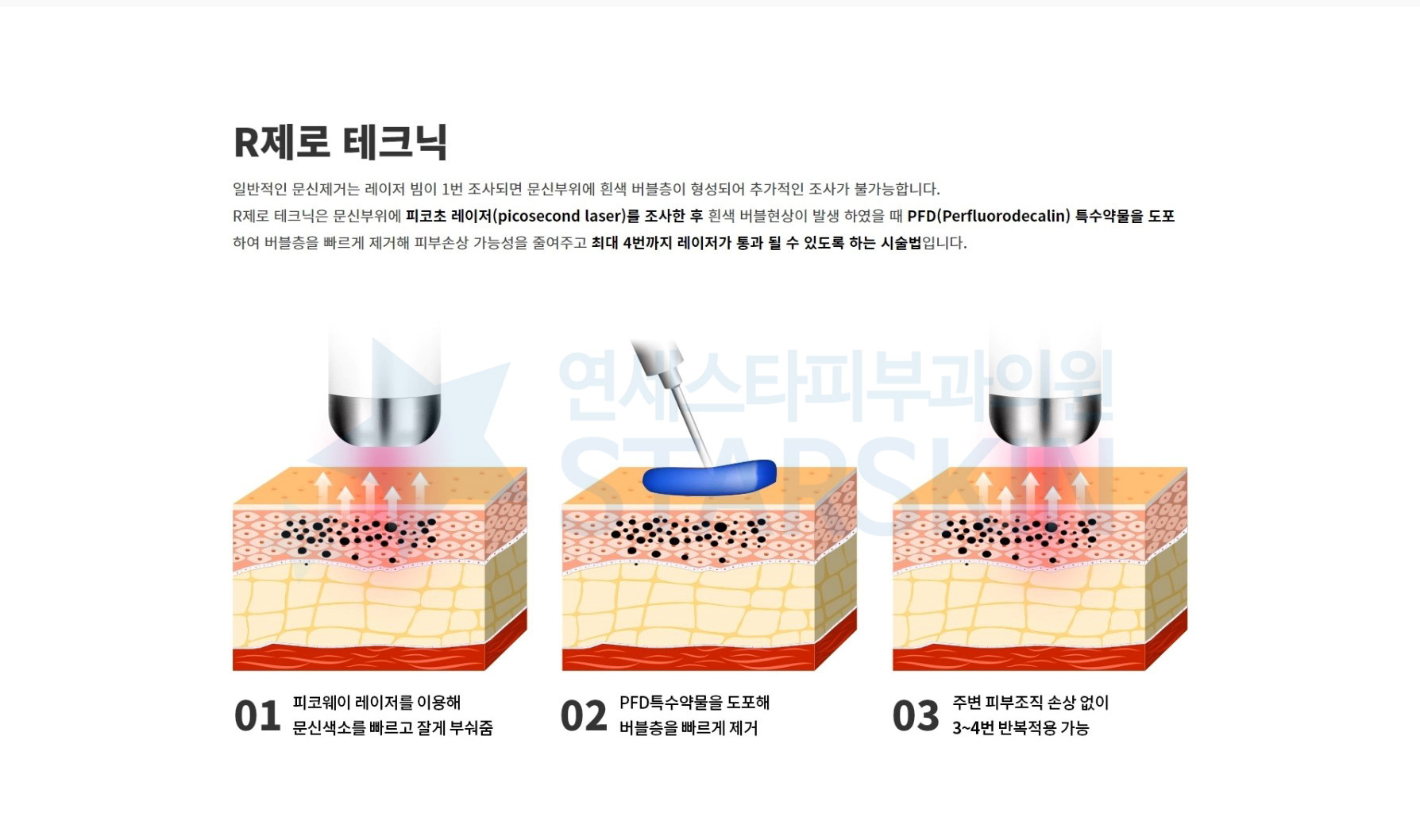
How R-Zero Tattoo Removal Works
R-Zero Tattoo Removal is a method that rapidly removes bubbles that may occur during laser application by applying a special PFD medication. Since the bubbles disappear quickly, repeated laser application up to 4 times is possible in a single treatment session.
As the number of repetitions increases, the amount of work that can be done in one visit increases, which tends to shorten the overall duration required for the removal process. However, the total number of sessions and duration required for removal may vary depending on the type of tattoo pigment, depth, area, and individual skin condition.

If you are new to tattoo removal, you may find it helpful to first review Tattoo Removal Symptoms and Treatment Direction and also refer to RePott Laser Information if you are curious about the equipment used.
For any questions, inquire via chat consultation for tattoo removal methods comparison
Considering Scars and Safety Together
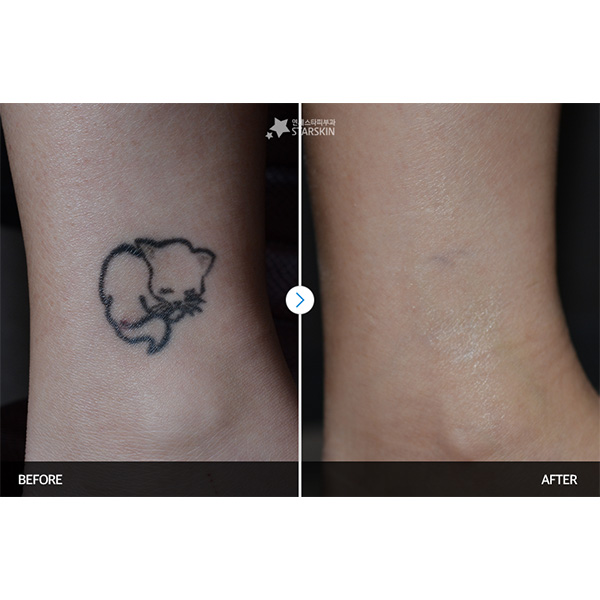
An unavoidable aspect of tattoo removal is the potential for scars after removal. In the examination room, even with the same tattoo, skin types and recovery patterns vary from person to person, making it often difficult to apply uniform settings across the board.
Yonsei Star Dermatology Sinchon designs treatments to minimize potential scarring after tattoo removal, taking into account the individual's skin condition.
Checking the following before and after treatment can aid in recovery:
- Avoid irritation to the treated area and apply prescribed ointment as directed.
- If a scab forms, do not forcibly remove it; wait for it to fall off naturally.
- Reduce exposure to UV rays and use sunscreen when outdoors.
- Adhere to the recommended intervals between sessions and avoid excessive repeated treatments.
- If unusual pain or inflammatory reactions are observed, consult with medical staff.
How to Choose Between the Two Methods
Yonsei Star Dermatology Sinchon offers both the R-Zero Technique and Pico-Frectat. The suitability of these two methods may vary depending on the type and depth of the pigment, the treatment area, and the skin condition.
It is natural to decide which method is right for you after directly examining the condition of your tattoo. The treatment plan will vary depending on conditions such as dense pigment, mixed colors, or areas where scarring is a concern.

A dermatologist specializing in skin treatment will directly examine the tattoo's condition and propose a treatment direction. If you wish to confirm which method is suitable for your tattoo, please consult with us.
💬 Chat for consultation now
Chief Director Lee Sang-joo (MD, PhD, Yonsei University College of Medicine and Graduate School; Completed Dermatology Residency at Severance Hospital; President of the Korean Dermatological Association) Chief Director Lee Sang-joo's Profile First published 2022-08-01 / Last reviewed 2026-06-16
Treatment results and recovery patterns may vary by individual, and the appropriate tattoo removal method for you should be confirmed through consultation with medical staff.