
![[Yonsei Star Dermatology Sinchon] Old Burn Scars: Why You Shouldn't Leave Them Untreated, Even After Time Passes](/_next/image?url=https%3A%2F%2Fagqdgbuateknhwpocrgu.supabase.co%2Fstorage%2Fv1%2Fobject%2Fpublic%2Fsources%2Fbbf3bebe-45b6-4415-bd04-bda18b2cac0f%2Fblog-images%2F224239758462_00_95b34dc12227.jpg%3Ftype%3Dw966&w=3840&q=75)
Burn scars are often easy to forget once the initial pain subsides. Many people feel that the scars are naturally improving as the redness, which was initially prominent, gradually fades over time. However, the first question patients usually ask is this: "My scar is already old, but would management still be meaningful now?" To answer directly, the visible color and the condition of the underlying skin tissue can be different.
Has everything improved just because it faded?
Just because the redness has subsided doesn't mean the scar has fully recovered. Over time, burn scars typically undergo these changes: the redness gradually decreases, and the skin may feel hardened or the surface may remain uneven.
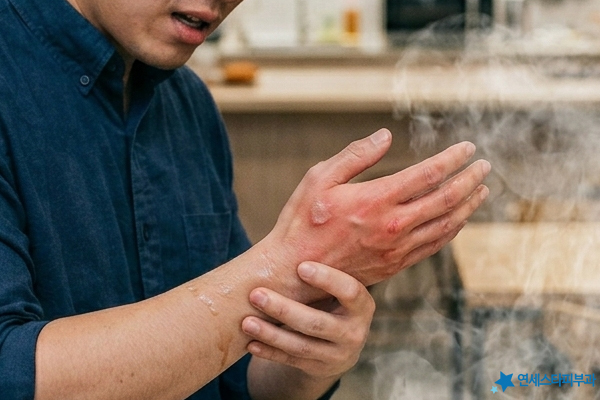
Even if it looks improved on the surface, the underlying skin tissue might actually be hardened. When the tissue is in this altered state, it can become more challenging to determine the treatment direction.

That's why we believe management is more important than neglect for older burn scars. Since the progression of burn scars varies from person to person, the first step is to determine which stage your scar is in.
Why is the timing of scar formation important?
One of the most crucial criteria in scar treatment is when the scar was formed.


Even for the same burn scar, the treatment approach may differ depending on when it occurred. A comparison can be summarized as follows:
| Category | Relatively Recent Scar | Old Scar |
|---|---|---|
| Skin Tissue Condition | Often less deformed | Often hardened |
| Approach | May consider surface stimulation primarily | May consider energy delivery to deeper skin layers |
| Management Duration | May be relatively short | Tends to view recovery process as longer |
Scars do not all remain in the same state over time. For scars that appear faded on the surface, it is necessary to first check the condition of the underlying tissue.
What approach is needed for old scars?
Scars that have been present for a long time often have hardened skin tissue. In such cases, an approach that can deliver energy to the deeper layers of the skin may be necessary, rather than simply stimulating the skin surface.

Therefore, when choosing a burn scar laser, it's important to first confirm whether the method is suitable for the scar's condition, rather than just whether it's a well-known laser. Since the approach varies completely depending on the type of scar, here are the points to consider:
- Timing of scar formation and stage of progression
- Degree of tissue hardening
- Depth and surface morphology of the scar
- Condition of surrounding skin and presence of pigment changes
In the clinic, these factors vary slightly even for the same burn, making it difficult to apply the same equipment identically. This is similar to how approaches differ for cosmetic surgery scars or keloid scars with similar concerns, depending on their condition.
For questions, inquire via chat consultation about old scar management
What is the Ultrapulse Alpha laser method?
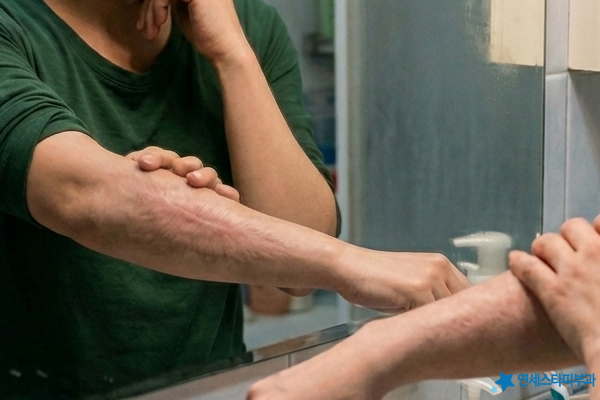
When researching treatment for old burn scars, you may encounter the name Ultrapulse Alpha laser. This laser is known for delivering energy to the skin in the form of microscopic dots. Simply put, it's a method that precisely stimulates the necessary areas rather than broadly ablating the skin.
Due to these characteristics, it may be considered in the following cases:
- When stimulation of deep skin layers is needed
- When aiming to induce changes in hardened tissue
- When seeking to improve uneven skin texture
Especially in cases of old burn scars where tissue changes have progressed, this type of approach may be utilized. However, since its applicability can vary depending on the scar's condition, an accurate individual diagnosis is paramount.
When researching burn scar treatments, you may hear that a particular device is better. However, in reality, the approach varies completely depending on the type of scar, and no single device is suitable for all scars. Therefore, the process of selecting a laser appropriate for the scar's condition is important.
How long does it take to see a change?
For older scars, it is generally more common to approach treatment by fully considering the skin's recovery process, rather than expecting significant changes in a short period. Since the speed and extent of recovery can vary individually, it is safer to proceed by checking the condition step by step rather than trying to resolve everything with a single treatment.
In summary

Old burn scars do not all remain in the same state over time. Even if they appear faded on the surface, the underlying skin tissue may be deformed, which can alter the direction of burn scar treatment.
Therefore, it is helpful to thoroughly investigate not only whether to treat, but also the timing of scar formation, the degree of skin tissue change, and the depth and shape of the scar, to determine which method and burn scar laser are appropriate. If you have similar concerns, we recommend referring to the management directions for surgical scars as well.

If it's difficult to gauge which stage your scar is in, we recommend having its condition checked rather than worrying alone.
💬 Consult NowChief Director Lee Sang-joo (MD, PhD, Yonsei University College of Medicine and Graduate School, completed dermatology residency at Severance Hospital, President of the Korean Dermatological Association) Chief Director Lee Sang-joo's Profile First published 2026-04-03 / Last reviewed 2026-06-16
This content is for general information purposes only, and results may vary depending on individual scar conditions. Please consult with medical staff for an accurate diagnosis and treatment plan.