
![[Yonsei Star Dermatology Sinchon] Mindset Needed for Self-Harm Scar Treatment and Removal](/_next/image?url=https%3A%2F%2Fagqdgbuateknhwpocrgu.supabase.co%2Fstorage%2Fv1%2Fobject%2Fpublic%2Fsources%2Fbbf3bebe-45b6-4415-bd04-bda18b2cac0f%2Fblog-images%2F224121573181_00_74e45881338d.jpg%3Ftype%3Dw966&w=3840&q=75)
Scars resulting from self-harm are often more challenging to treat than typical scars. Many people first ask, "Can this scar really fade?" The conclusion is that while it's difficult to erase them completely at once, a phased treatment approach to make them less noticeable is certainly possible.
Why Self-Harm Scars Are More Challenging Than Other Scars
They often appear as long linear marks on visible areas like wrists or arms, and repeated damage to the same area results in inconsistent scar depth. Because the depth and texture vary, it's difficult to treat them uniformly with a single method.
Another important point is that it's not just about treating the visible scar marks; an unstable psychological state must also be addressed to find stability. Therefore, rather than starting treatment immediately after the scar forms, it's often better to proceed after the marks have somewhat settled over time.

In this process, consistent attention from the individual with the scar, as well as family and others, plays a crucial role. A multifaceted effort, including building trust, the individual's will, and alleviating psychological burden, must come together for good results.
How to Set Expectations Before Treatment
In the clinic, the first step that determines the outcome is often setting expectations rather than choosing equipment. It is realistically difficult for all scars to completely disappear as if they never existed. Therefore, it is healthier to set the treatment goal not as "complete erasure" but as follows:
- Lightening scars to the point where they are not easily noticeable in daily life
- Helping to prevent psychological withdrawal due to the scar area
- Creating a natural flow of recovery
- Accepting cumulative changes rather than expecting a one-time fix
The goal of scar treatment is not to reduce traces to zero, but to gradually refine them so they do not hinder the recovery of daily life.
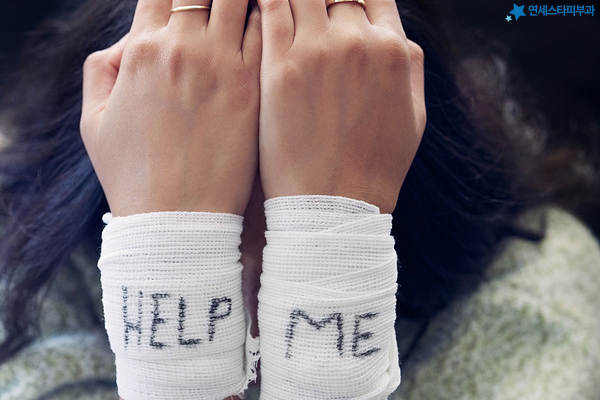
For self-harm scars, psychological stability is paramount. Setting realistic expectations can reduce impatience during the treatment process and help navigate periods where changes feel slow without wavering.
What Equipment Is Used?
Recently, equipment such as StarLux and Ultrapulse Alpha are being utilized according to the scar's condition. Since each case has a different texture, such as long linear scars or scars with inconsistent depth, an approach that combines devices tailored to the lesion is used rather than adhering to a single device.
| Scar Pattern | Approach |
|---|---|
| Long linear marks | Gently refine texture to soften boundaries |
| Scars with inconsistent depth | Gradual, cumulative improvement in stages |
| Scars with remaining color | Separate approach for pigment and surface |
The treatment aims to gradually fade self-harm scars without creating new marks. Similar approaches to scars can also be found in Surgical Scar Treatment Information or Cosmetic Surgery Scar Management.
For deeply incised lines, procedures that refine the texture itself, such as Surgical Scar Revision or Mild Pinhole, may also be considered.

If you have any questions, you can easily ask them through Chat Consultation for Self-Harm Scar Treatment.
Why Does Treatment Take Time?
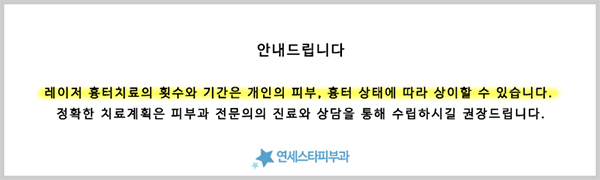
Self-harm scar treatment requires abundant regenerative capacity, so rather than expecting short-term, one-time effects, results accumulate as treatment progresses. Generally, phased treatment is performed 5 or more times, and depending on the condition of the lesion, the number of sessions or treatment intensity may vary, sometimes taking over a year. The effectiveness and satisfaction may vary from person to person.
As treatment needs to be carried out over a long period, choosing a clinic with extensive experience in scar treatment can be helpful.

Things to Check Before Starting Treatment
- Confirm that the scar has settled to some extent
- Set realistic goals together, not complete removal
- Proceed while also addressing psychological stability
- Understand that it is a cumulative treatment that does not end in one session
- Check if the clinic can help design a long-term plan
Mindset Creates Results
Fading self-harm scars requires a long-term plan. Since the process requires a certain amount of treatment time, it is best to set realistic expectations and, above all, proceed while also addressing psychological stability. We hope you complete this journey healthily without giving up a positive mindset.
If you need a chat consultation, you can easily inquire via the button below.
💬 Consult Now

Sang-Joo Lee, Chief Director (MD, PhD, Yonsei University College of Medicine and Graduate School; Resident, Severance Hospital Dermatology; President, Korean Dermatological Association) Chief Director Lee Sang-Joo Profile First Published 2025-12-24 / Last Reviewed 2026-06-16 The appearance of scars and recovery speed vary from person to person, so please consult with medical staff for an accurate diagnosis and treatment plan.