
![[Yonsei Star Dermatology Sinchon] Laser Toning 'GD Toning' Effective for Melasma and Blemishes / Sinchon Station Dermatology](/_next/image?url=https%3A%2F%2Fagqdgbuateknhwpocrgu.supabase.co%2Fstorage%2Fv1%2Fobject%2Fpublic%2Fsources%2Fbbf3bebe-45b6-4415-bd04-bda18b2cac0f%2Fblog-images%2F222863788359_00_799cc550afd4.jpg%3Ftype%3Dw1&w=3840&q=75)
#YonseiStarDermatology #YonseiStarDermatologySinchon #SinchonYonseiStarDermatology #SinchonStationDermatology
Melasma and blemishes are pigmented skin changes that spread across the face as light brown or dark brown spots. When facing pigmentation that can't be easily covered by makeup in front of a mirror, everyone immediately thinks, "Can this be removed with a laser, and how many sessions will it take?" To get straight to the point, pigmented disorders are much easier to treat if discovered early and managed consistently.
Prolonged exposure to ultraviolet rays during summer outdoor activities can stimulate melanin pigment in the skin, leading to a dull skin tone and causing pigmented skin conditions like melasma and blemishes. Therefore, today we've summarized and shared an interview with Dr. Lee Sang-joo, the chief director of Yonsei Star Dermatology Sinchon, with a medical media outlet about the treatment of pigmented skin conditions.
Why should melasma and blemishes be managed early?

Pigmented skin conditions are reported to darken over time once they appear. Since darkened pigmentation becomes more challenging to treat, it is advisable to start management as early as possible if melasma or blemishes are already visible.
Most importantly, prevention is key. UV radiation is the biggest factor stimulating melanin pigment, so it's essential to develop the habit of thoroughly applying sunscreen before outdoor activities.
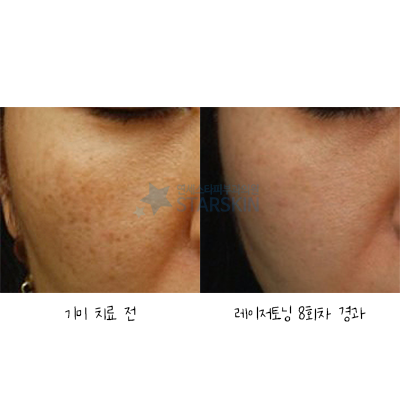
Here are some good management practices to help reduce pigmentation in daily life:
- Apply a sufficient amount of sunscreen before going out
- Reapply sunscreen every 2-3 hours
- Reduce direct sun exposure with hats, parasols, etc.
- If pigment changes are observed, seek consultation before they darken
The results of pigmented skin conditions are stably maintained when daily management, such as UV protection, accompanies treatment.
What are the concerns with laser toning?

Laser toning has been widely used for treating melasma and blemishes. While it is reported to clearly help improve skin tone, many people feel overwhelmed by the sheer number of types and diverse treatment methods, wondering "which toning to get and how many sessions."
Furthermore, to expect whitening effects, multiple sessions are usually required at 1-2 week intervals. During this process, many people feel burdened by the pain or the repeated number of visits. In the consultation room, many patients are more concerned about "how often and how painful" the treatment will be, rather than the toning itself.
If you have any questions, you can easily ask them through chat consultation regarding pigment treatment.
What is the principle of GD Toning?
GD Toning is a method introduced by Chief Director Lee Sang-joo to reduce the burden of treatment sessions and pain.

GD Toning involves applying an ampoule containing diamond crystal structures and gold particle ingredients to the skin surface, then irradiating it with a low-output laser. The ultrafine gold particles react with the laser to enhance the toning effect, and the diamond components, without being absorbed into the dermis, deliver energy to the skin surface, adding a peeling effect.
If you are concerned about pigmentation, it is advisable to explore options tailored to your skin condition, such as Epidermal Pigment Removal for blemishes, age spots, and freckles, or a Customized Whitening Solution.
Reasons to recommend GD Toning
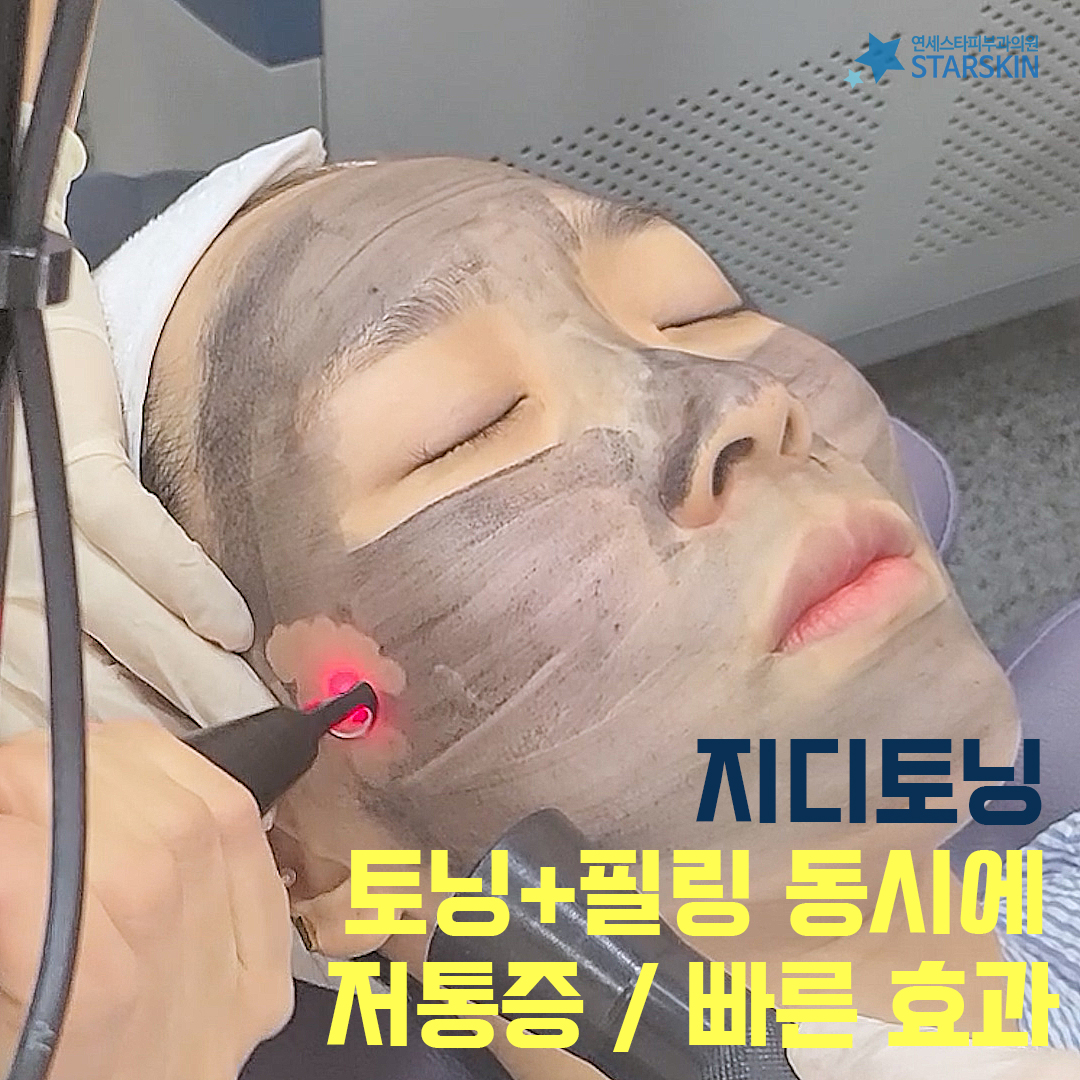
GD Toning is characterized by simultaneous peeling and toning. Thanks to this, satisfactory results are reported with relatively fewer sessions compared to general laser toning, and its low-pain method using a low-output laser that can be performed without anesthesia is also considered an advantage.
Here's a simple summary of the differences between general laser toning and GD Toning:
| Category | General Laser Toning | GD Toning |
|---|---|---|
| Method | Toning-focused | Simultaneous peeling and toning |
| Number of sessions | Tendency for multiple repetitions | Relatively fewer sessions reported |
| Pain | May vary by individual | Low-output, low-pain method |
| Anesthesia | May be required depending on the case | Can be performed without anesthesia |
However, even with the same procedure, the response may vary by individual depending on skin type and pigment depth, so it is necessary to first assess your skin condition.
What to look for after the procedure

Even with a low-pain method, temporary changes may appear after the procedure. Observing the following points can help manage the recovery process stably:
- Temporary swelling or redness may be visible
- Light scabs may form depending on the area
- Temporary hyperpigmentation, where pigmentation darkens, may occur
- Be more diligent with UV protection during the recovery period
These changes vary in degree depending on individual characteristics. As the pattern of pigmentation differs from person to person, it is advisable to establish a treatment plan tailored to your skin.
Where to start with pigment management?

Melasma and blemishes are not pigments that disappear overnight; they follow a process of slowly fading when daily UV management and treatment tailored to your skin condition go hand in hand. GD Toning is one of the options introduced to reduce the burden of pain and the number of sessions. If you feel your skin tone is dull or are considering water-luminous care, you can also explore Water-Luminous Injection.
The most accurate way to determine which treatment is right for you is to directly assess the type and depth of your pigmentation with medical staff.
💬 Chat with us nowChief Director Lee Sang-joo (MD, PhD, Yonsei University College of Medicine and Graduate School, completed dermatology residency at Severance Hospital, President of the Korean Society for Dermatology) Chief Director Lee Sang-joo's Profile First published 2022-09-01 / Last reviewed 2026-06-16
This article contains general information about pigmented skin conditions, and treatment responses may vary by individual. Therefore, please consult with medical staff for an accurate diagnosis and treatment plan.