
![[ Yonsei Star Dermatology Sinchon ] Laser Lesion Removal More Effective Than Agnes for Syringoma](/_next/image?url=https%3A%2F%2Fagqdgbuateknhwpocrgu.supabase.co%2Fstorage%2Fv1%2Fobject%2Fpublic%2Fsources%2Fbbf3bebe-45b6-4415-bd04-bda18b2cac0f%2Fblog-images%2F222655831327_00_f46ee55328de.jpg%3Ftype%3Dw966&w=3840&q=75)
Have you ever seen flesh-colored or yellowish bumps around your eyes, cheeks, or neck and thought, "Is this acne?" and tried to squeeze them? These small papules could be syringomas, which differ from common skin troubles in that they don't disappear by squeezing or covering them with makeup. To address the most frequently asked question, syringomas are lesions that require treatment considering their deep roots in the skin, not just surface removal.
What are Syringomas?
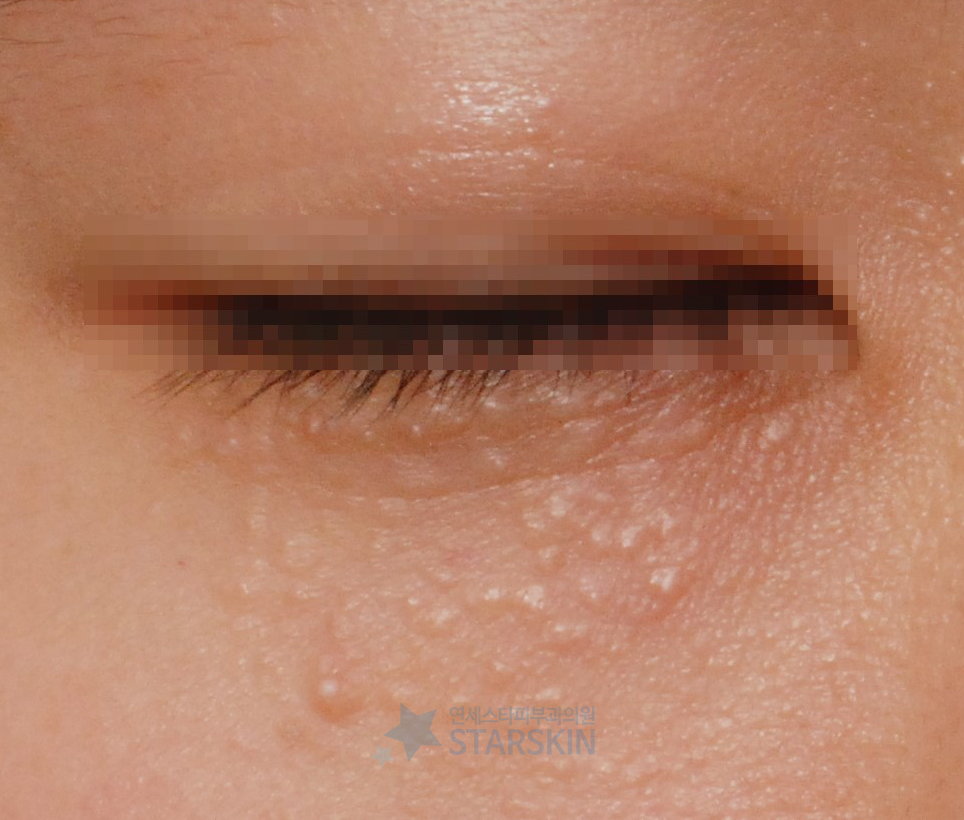
Within the dermis of our skin, there are sweat ducts, which are channels for sweat to be discharged. When a benign tumor forms in these sweat ducts, it is called a syringoma. Syringomas primarily appear around the eyes, cheeks, forehead, and neck, usually as small papules of about 2-3mm, appearing flesh-colored or yellowish.
The problem lies in their appearance. They are easily confused with similar-looking milia, skin tags, and flat warts, making self-diagnosis difficult. Therefore, accurate diagnosis is paramount.
Why Don't Syringomas Disappear When Squeezed?
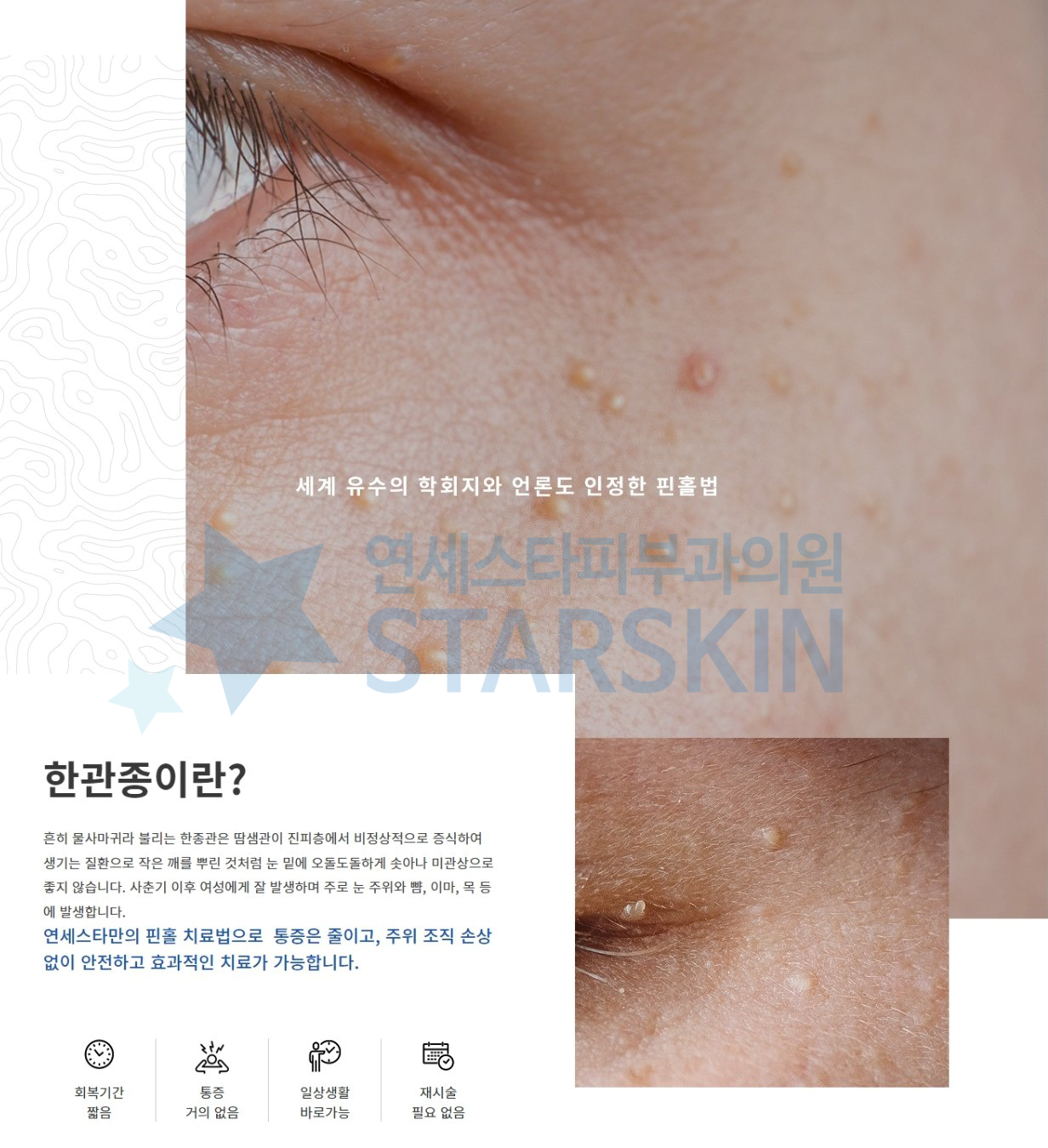
Syringomas are a condition caused by the abnormal proliferation of sweat ducts in the dermal layer. They are reported to occur frequently in women after puberty, especially in East Asians.
The key is their location. Syringomas, unlike their superficial appearance, are deeply rooted in the skin. If only the surface is treated, the root cause remains, increasing the possibility of recurrence. Therefore, it is important to address the root properly while avoiding scars.
The core of syringoma treatment is not surface removal, but treatment that considers the root. Unlike their appearance, they are deeply seated, and how they are approached affects both recurrence and scarring.
Traditional Syringoma Treatment Methods and Limitations
Traditionally, to remove syringomas, methods such as surgical excision, electrocautery, chemical peeling, erbium laser, CO2 laser, etc., were used to ablate the skin, or radiofrequency methods like Agnes and other radiofrequency treatments were used to partially destroy skin tissue.
The limitations often pointed out in these methods are as follows:
- Cases of recurrence are reported due to incomplete removal of the root.
- Scars may remain if the laser is applied too deeply in an attempt to remove the root.
- Recovery period changes such as erythema due to damage to surrounding healthy tissue.
- Repeated treatments may be necessary, as it may not be resolved in one session.
The approach of ablating the surface quickly reduces the visible part, but the difficulty in balancing deep roots and scarring remained a limitation.
In the clinic, it is not uncommon for patients to return with recurrence and marks after treating syringomas as simple blemishes and only addressing the surface.

How is the Pinhole Technique (Drilling Method) Different?
To compensate for these limitations, Yonsei Star Dermatology Sinchon removes syringomas using the Pinhole Technique (Drilling Method), which creates holes in the syringoma area to treat the deep parts of the lesion.
The differences are summarized in the table below:
| Category | Ablative Method (Excision·Cautery·Laser) | Pinhole Technique (Drilling Method) |
|---|---|---|
| Approach | Ablates the surface for removal | Creates holes to reach deep areas |
| Healthy Tissue | Damage range can be wide | Aims to minimize damage |
| Root Treatment | Scar burden increases with depth | Focuses on accessing deep areas |
The Pinhole Technique is an approach that minimizes damage to surrounding healthy tissue by creating small holes, rather than ablating the skin. This is designed to reduce changes such as erythema or scars that may occur during syringoma removal.
If you have any questions, you can easily ask them through chat consultation regarding syringoma Pinhole Technique treatment.
Considerations Along with Treatment Satisfaction
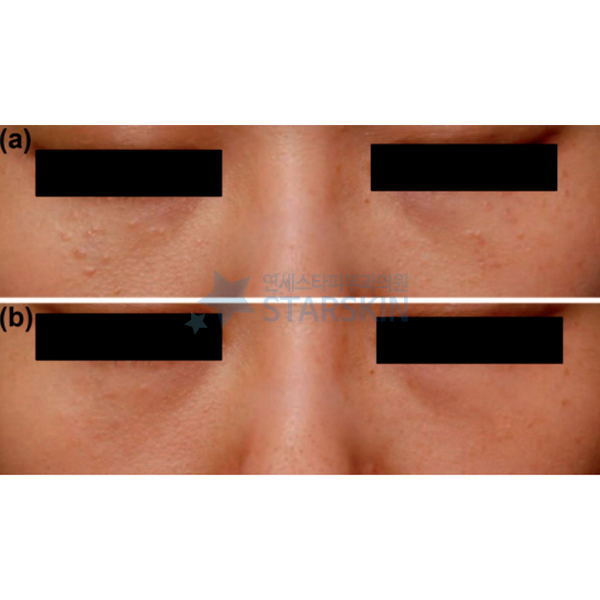
Syringoma removal using the Pinhole Technique (Drilling Method) at Yonsei Star Dermatology Sinchon minimizes damage to surrounding healthy tissue, with over 60% treatment satisfaction reported. However, satisfaction and results may vary individually depending on the depth, distribution, and skin condition of the lesion.
If you are also concerned about epidermal pigment or blemishes, it is recommended to get a diagnosis in the clinic along with Epidermal Pigment Removal or Pinhole Alpha used for other lesions besides syringomas.

How to Manage After Treatment
Temporary swelling, redness, scabs, and flaking may occur depending on individual characteristics. The following tips may be helpful during the recovery period:
- Do not forcibly remove scabs; let them fall off naturally.
- Pay attention to moisturizing the treated area and sun protection.
- Avoid irritating cosmetics when there is redness or flaking.
- If changes are unusual or persist, consult with medical staff.
Since there is significant individual variation in treatment method selection and recovery process, we recommend proceeding after sufficient consultation with medical staff rather than self-judgment.
If you have any questions, please check first through chat consultation for syringoma diagnosis and treatment methods.
Chief Director Lee Sang-Joo (MD, PhD, Yonsei University College of Medicine and Graduate School, Completed Dermatology Residency at Severance Hospital, President of the Korean Dermatological Association) Chief Director Lee Sang-Joo's Profile First published 2022-02-23 / Last reviewed 2026-06-16
This content is for general information purposes only, and even for the same lesion, the pattern may differ from person to person, resulting in individual variations. Please consult with medical staff for an accurate diagnosis and treatment plan.