
![[Yonsei Star Dermatology Sinchon] How to get effective semi-permanent tattoo removal? / Sinchon Station Dermatology](/_next/image?url=https%3A%2F%2Fagqdgbuateknhwpocrgu.supabase.co%2Fstorage%2Fv1%2Fobject%2Fpublic%2Fsources%2Fbbf3bebe-45b6-4415-bd04-bda18b2cac0f%2Fblog-images%2F222802490426_00_799cc550afd4.jpg%3Ftype%3Dw1&w=3840&q=75)
Semi-permanent makeup, initially done to reduce the hassle of drawing eyebrows every morning, can sometimes change color or become unsatisfactory in shape over time. Semi-permanent tattoos are difficult to remove cleanly in a single session and usually require multiple treatments.
Semi-permanent makeup for eyebrows and eyeliner was historically popular among women, but recently, it has become a procedure chosen by both men and women for managing their appearance. Consequently, the number of people who wish to remove it when the results are unsatisfactory has also increased.
Why Semi-Permanent Tattoos Cannot Be Removed in One Go
Semi-permanent makeup tattoos involve pigment substances settling relatively deeply into the dermal layer. Furthermore, even if they appear monochromatic on the surface, they are actually created by mixing various pigments, making it difficult to remove all pigments with a single treatment.
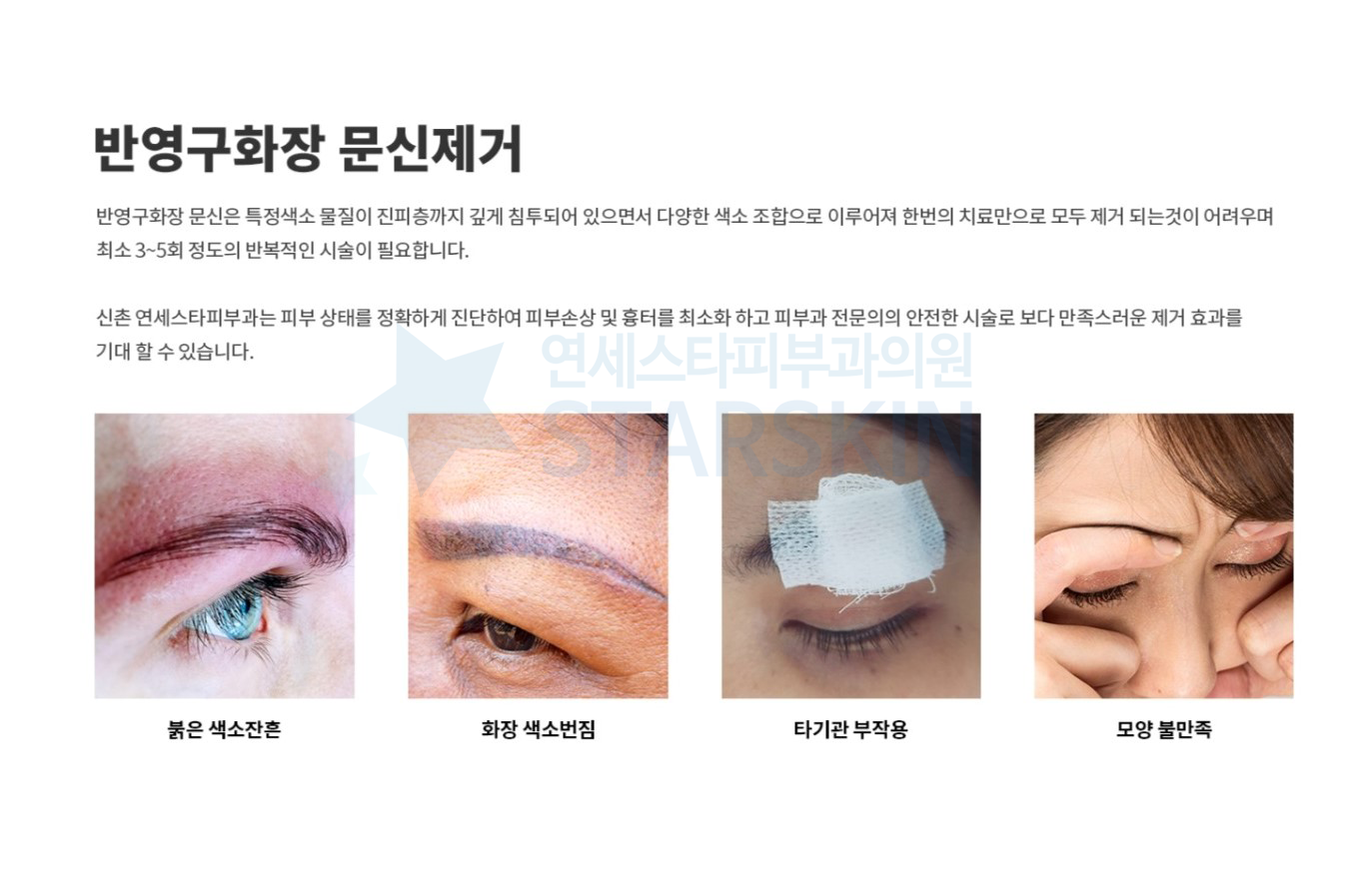
Therefore, typically a minimum of 3 to 5 repeated treatments are necessary. The number of sessions may vary individually depending on the type and depth of the pigment and the skin condition.
These are the cases where removal is considered
In the clinic, the reasons people seek semi-permanent makeup removal generally converge into a few similar categories:
- Red pigment residue remaining over time
- Blurred outlines due to makeup pigment bleeding
- Side effects from procedures received at other institutions
- Dissatisfaction with the shape of the eyebrows or eyeliner itself

If any of these apply, you might consider removal. Before the procedure, the skin condition is first diagnosed to create a plan that minimizes damage and the possibility of scarring. If you are curious about the detailed procedure, you can use inquiry via chat consultation about tattoo removal.
Eyeliner Tattoo Removal: Eye Protection Comes First
PicoWay equipment is used for eyeliner tattoo removal. This method uses short, strong energy to break down pigment into fine particles.
Especially for the sensitive eye area, safety measures are crucial. During the procedure, eye protection lenses are worn, and ophthalmic ointment and eye drops are used for anesthesia to protect the area around the eyes. The laser output is maintained within an appropriate range, aiming to selectively remove pigment while minimizing skin damage around the eyes.
R-Zero Technique Used for Eyebrow Tattoo Removal

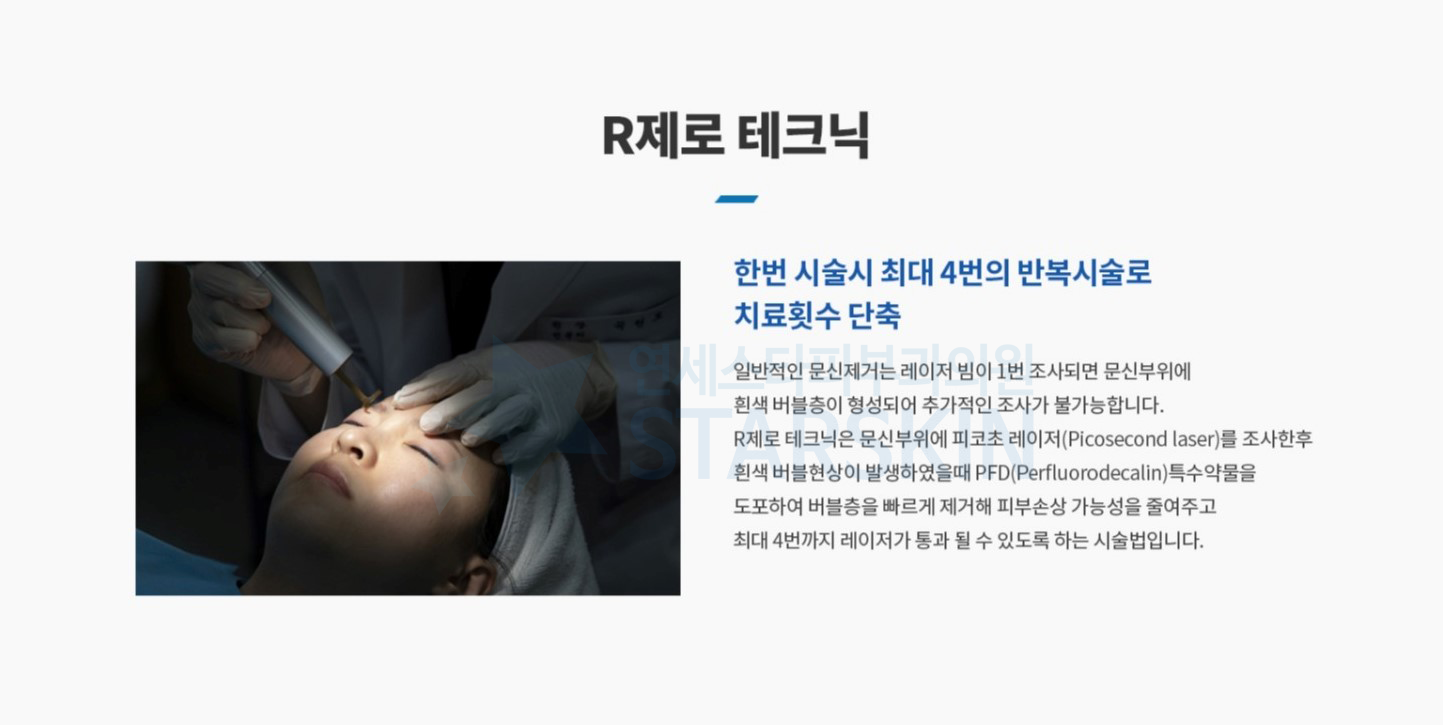
During typical laser eyebrow tattoo removal, white bubbles form as the pigment is removed. Due to these bubbles, it is often only possible to perform one treatment per visit.
The R-Zero Technique applies a special PFD medication when bubbles form to quickly subside them. This allows for up to 4 repeated treatments in a single visit while reducing damage to the skin tissue around the eyes. This can help speed up the overall removal process.

Difference Between Picosecond Laser and Nanosecond Laser
The two most commonly compared methods for tattoo removal are nanosecond lasers and picosecond lasers. The differences are summarized as follows:
| Category | Nanosecond Laser | Picosecond Laser |
|---|---|---|
| Pulse Duration | Nanosecond | Picosecond |
| Pain | Relatively higher | Relatively lower |
| Epidermal Damage | Relatively more | Relatively less |
| Pigment Breakdown | Relatively larger particles | Breaks down into finer particles |
Picosecond lasers are reported to deliver laser pulses in shorter durations, reducing epidermal damage while breaking down pigment more finely. Yonsei Star Dermatology Sinchon uses Candela's PicoWay Laser.
PicoWay is known as equipment designed to selectively treat various pigment colors using short beam speeds, strong peak power, and four wavelengths.

Treatment Principles to Minimize Scarring
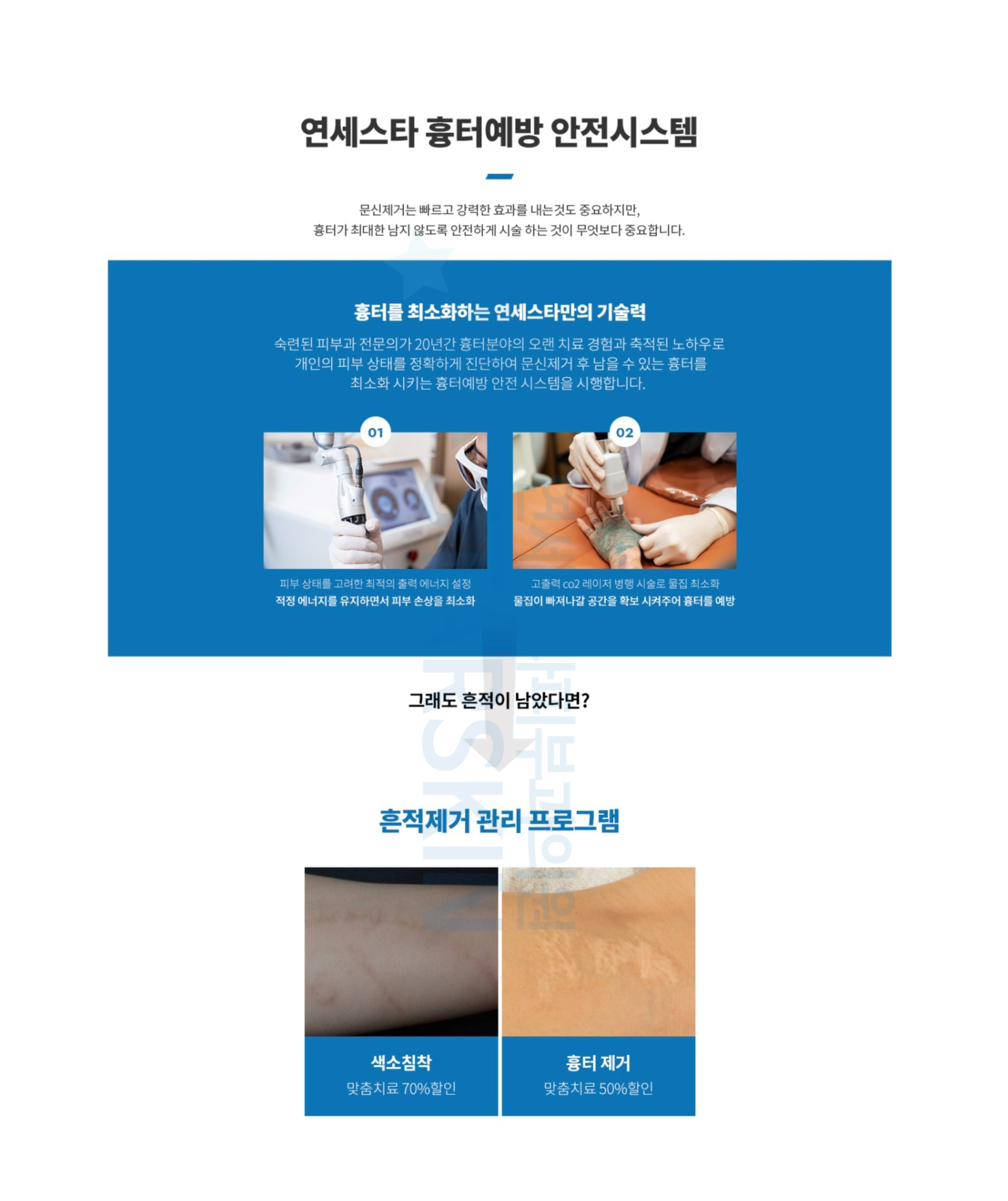
It is crucial to avoid scarring when removing tattoos. Yonsei Star Dermatology Sinchon applies treatment methods with scar prevention in mind.
- Minimizing damage with output energy considering skin condition
- Reducing blister formation by combining high-output CO2 laser
- Focusing on reducing blister formation itself, as blisters can lead to scars
- Providing guidance on the recovery process after the procedure

Since blister formation increases the likelihood of scarring, designing laser treatments to minimize blisters is important. If you have similar concerns and require scar management, you can also refer to Learn about Cosmetic Surgery Scar Management or Explore Surgical Scar Revision.
Things to Know Before the Procedure
If you are dissatisfied with semi-permanent makeup, including eyebrow tattoos and eyeliner tattoos, the first step is to create a removal plan tailored to your skin condition. Yonsei Star Dermatology Sinchon provides Detailed Information on Tattoo Removal Procedures based on diagnosis by a dermatologist.
Depending on individual characteristics, temporary swelling, redness, scabs, or exfoliation may occur after the procedure. We recommend consulting sufficiently with medical staff before proceeding.
If you have any questions, you can easily ask below.
💬 Consult Now
Chief Director Lee Sang-joo (MD, PhD, Yonsei University College of Medicine and Graduate School; Completed Dermatology Residency at Severance Hospital; President of the Korean Dermatological Association) Chief Director Lee Sang-joo's Profile First Published 2022-07-06 / Last Reviewed 2026-06-16
This article is for general informational purposes only, and individual results and recovery processes may vary. Therefore, accurate diagnosis and treatment plans should be determined through consultation with medical professionals.