
![[Yonsei Star Dermatology Sinchon] Guide to Properly Treating Burn Scars](/_next/image?url=https%3A%2F%2Fagqdgbuateknhwpocrgu.supabase.co%2Fstorage%2Fv1%2Fobject%2Fpublic%2Fsources%2Fbbf3bebe-45b6-4415-bd04-bda18b2cac0f%2Fblog-images%2F222596208738_00_f46ee55328de.jpg%3Ftype%3Dw966&w=3840&q=75)
Once a burn scar forms, it's difficult for it to fade naturally over time, leaving a persistent mark that can be bothersome in daily life. The first question that usually comes to mind after a burn is, "Will a scar remain, and if so, how can it be reversed?" To put it simply, the treatment approach for burn scars varies depending on their depth and location, so it's crucial to accurately identify the nature of the scar and approach it in stages.
Why You Should Be More Careful About Burn Scars in Winter
As the weather gets colder, the time spent near heat sources like heaters, hot water, and electric blankets increases. Coupled with the seasonal characteristic of dry skin, the healing environment for burn areas can easily worsen. Even small burns, if neglected, can leave lasting marks, requiring careful attention from the initial stages.

What Types of Burn Scars Are There?
Generally, scars are likely to form after second-degree burns or deeper. Burn scars can be categorized into several types based on changes in shape and color.
| Type | Characteristics |
|---|---|
| Hypertrophic Scar | Scar area is red and raised |
| Contracture Scar | Scar contracts, causing skin tightness and restricted movement |
| Hyperpigmentation | Color becomes darker than the surrounding skin |
| Hypopigmentation | Color becomes lighter than the surrounding skin |
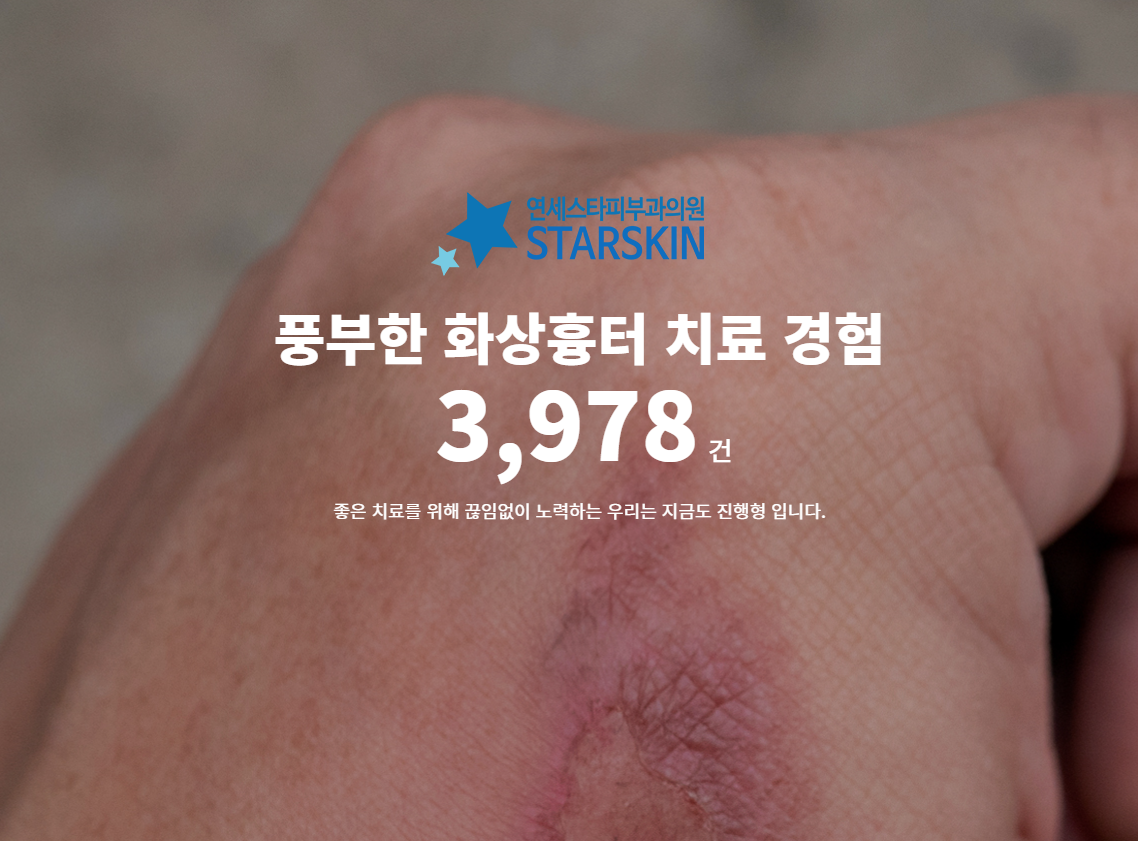
As such, burn scars do not appear in a single form. It's common for raised scars and pigment changes to appear together in the same area, necessitating an approach that distinguishes between types.
Why Burn Scar Treatment is Challenging
Burn scars are known to be more difficult to treat than other types of scars. This is often because not only the skin surface but also the collagen structure deep within the dermis can be deformed. Therefore, it is advisable to consult with a dermatologist who has a high understanding of skin and sufficient experience in burn scar treatment before planning the treatment.
In the examination room, even with burns of the same depth, the healing process and the nature of the scar vary from person to person, making it difficult to apply a uniform method from the outset.
If you have any questions, contact us for a chat consultation regarding burn scar treatment
How Does the Pinhole Technique Work?
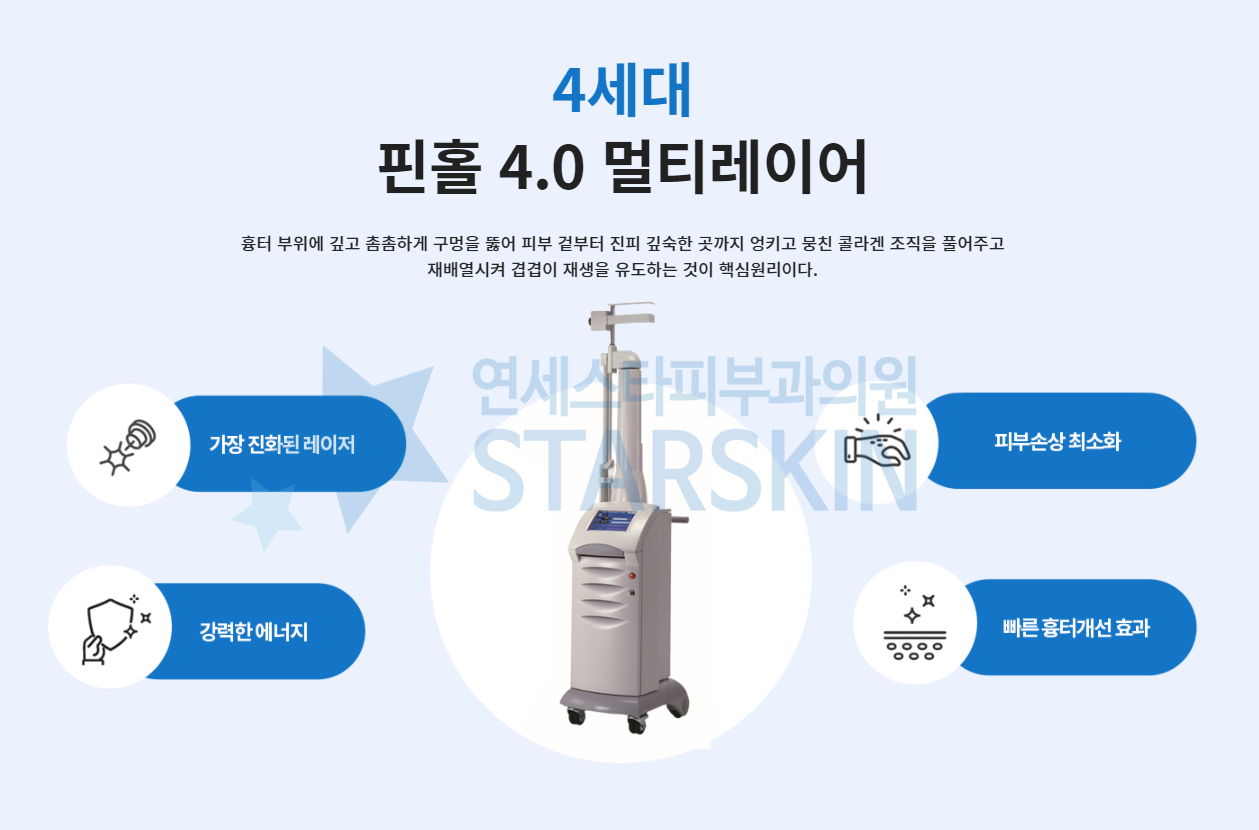
The Pinhole Technique creates deep, dense micro-holes in the scar area, loosening and rearranging tangled and clumped collagen tissue from the skin's surface to deep within the dermis. By inducing regeneration layer by layer, the goal is to restore the burn scar to be as close to normal skin as possible. The Pinhole Technique has been utilized in treating various scars, including burn scars.
The essence of burn scar treatment lies in refining both the surface color and texture, and the collagen structure within the dermis, to minimize the difference from normal skin.

We Approach with a 3-Step Multi-Layer Technique
Yonsei Star Dermatology addresses burn scars in stages with a 3-step multi-layer technique specialized for burn scars. This method approaches scars by dividing them into depths, from the surface to the dermal layer.
In the first step, fractional lasers are used to refine the skin's surface texture and color to resemble normal skin.

In the second step, Ultrafine FX penetrates thinly and deeply into the dermal layer, meticulously loosening clumped or contracted skin tissues.

In the final third step, the energy of Ultra CO2 is used to loosen tangled and clumped collagen, inducing its rearrangement. The three steps are structured to address the surface, middle, and deep layers, refining the scar three-dimensionally.
How to Manage Burn Scars in Daily Life
To maintain the treatment effect for a long time, regular daily care must accompany it. We recommend taking care of the following:
- Apply sunscreen when going out to reduce pigment changes.
- Consistently moisturize the scar area to prevent dryness.
- Do not forcibly remove scabs or dead skin that may occur after treatment.
- Avoid habits that scratch or irritate the scar.
- If you notice any changes, do not make arbitrary judgments; consult with medical staff.

Consultation is Also Needed for Old Burn Scars
Yonsei Star Dermatology has steadily accumulated treatment experience since starting burn scar treatment through the Pinhole Technique in 2002. Even if a burn scar has been present for a long time, improvement can be expected depending on its condition, so it is better to determine the direction after assessing the depth, color, and location of the scar with medical professionals rather than making a judgment alone. For other types of scars, such as surgical scars, cosmetic surgery scars, or keloid scars, the approach varies depending on the nature of the scar, so identifying your scar type first can be helpful.
Treatment methods may also include considering Surgical Scar Revision or Triamcinolone Scar Injection, so it is best to determine the appropriate combination for your scar condition through consultation.
💬 Consult Now
Temporary swelling, redness, scabs, or dead skin cells may appear depending on individual characteristics, so please proceed with treatment after sufficient consultation with medical staff.
Chief Director Lee Sang-joo (MD, PhD, Yonsei University College of Medicine and Graduate School, completed dermatology residency at Severance Hospital, President of the Korean Dermatological Association) Chief Director Lee Sang-joo's Profile First published 2021-12-15 / Last reviewed 2026-06-16 The recovery pattern and treatment response for burn scars may vary for each individual, and an accurate diagnosis and treatment direction should always be determined through consultation with medical staff.