
![[Yonsei Star Dermatology Sinchon] Burn Scar Pigmentation: Hospital Treatment Approaches and Laser Types](/_next/image?url=https%3A%2F%2Fagqdgbuateknhwpocrgu.supabase.co%2Fstorage%2Fv1%2Fobject%2Fpublic%2Fsources%2Fbbf3bebe-45b6-4415-bd04-bda18b2cac0f%2Fblog-images%2F224262669770_00_66c783466c78.jpg%3Ftype%3Dw966&w=3840&q=75)
Even after a burn has healed, the area may remain black or brown and be difficult to fade. This condition, where pigment is deeply settled in the burn area, is called burn scar pigmentation. The first question that usually comes to mind is this: Will it fade naturally over time? To answer directly, if the pigment has settled deep into the dermis, natural recovery is difficult to expect, and it tends to become fixed the longer it is left untreated.
Why does pigment remain dark after a burn?
Burns of second degree or higher, which damage the deeper skin layer (dermis), cause excessive activation of melanin cells during the healing process. In this process, pigment accumulates in the skin, leading to discoloration. First-degree burns, which only damage the epidermis, can heal naturally, but second-degree or higher burns often leave both pigmentation and scars, requiring a professional approach.
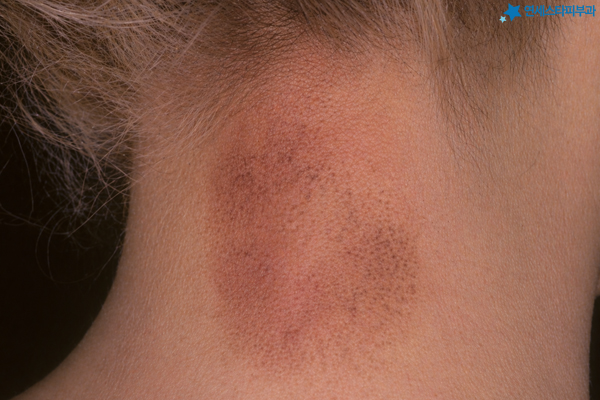
The nature of the remaining marks varies depending on the depth of the burn. Even for the same burn, the recovery pattern and treatment direction differ depending on which layer was damaged.

| Burn Depth | Damage Extent | Mark Characteristics |
|---|---|---|
| 1st Degree Burn | Epidermis | Generally natural recovery |
| 2nd Degree or Higher Burn | Up to Dermis | Pigmentation and scars are likely to remain together |
Why does it get harder if left untreated?
If pigmentation is deeply embedded in the dermal layer, it is difficult for it to disappear naturally. The longer it is left, the more fixed it can become, so it is advantageous to start treatment relatively early. In the clinic, it is not uncommon for patients to visit after the color has become darker and more solidified, having waited for the marks to fade.

Second-degree or higher burns often involve both pigmentation and scars, so the key is to determine the treatment direction after assessing both the depth of the pigment and the condition of the scar.
UV Protection is Half the Treatment
Even with laser treatment, neglecting UV protection can lead to repigmentation, reducing the effectiveness of the treatment. The basic management to follow throughout the treatment period is as follows:
- Use sunscreen with SPF 50+ or higher daily
- Physically cover the affected area with clothing or a hat when going out
- Do not scratch or irritate the scar area
- Maintain consistent moisturizing between treatment sessions
- Do not arbitrarily apply whitening creams based on self-diagnosis

Pigmentation often requires a gradual approach over multiple sessions rather than a single treatment. Therefore, consistent UV protection is essential to maintain the results.
If you are concerned about pigmentation or scars, you can first check your condition by inquiring via chat about burn scar pigmentation.
Laser Selection Varies by Condition
For pigmentation from second-degree or higher burn scars, the key is to consult with a dermatologist and select a laser appropriate for the depth of the pigment and the scar condition. No single device is the answer for all cases; the device changes depending on the nature of the concern.

PicoWay Laser is considered when prominent black or brown pigmentation is the main concern. It uses ultra-short pulse lasers in picosecond (one trillionth of a second) units to precisely target melanin pigment, allowing treatment of both epidermal and dermal layers while minimizing damage to surrounding skin.
- Relatively quick return to daily life after treatment
- Pigment gradually fades with repeated sessions
- Utilized for pigmentation deeply embedded in the dermis
Ultrapulse Alpha is considered when pigmentation is accompanied by scars (unevenness, thickened skin). This CO2 laser regenerates the damaged skin surface and induces collagen production in the dermal layer, treating both pigment removal and normalization of scar tissue itself.
- Expects both pigment improvement and scar regeneration
- Requires approximately 1-2 weeks of recovery time after treatment
- Utilized for deep and wide burn scars
StarLux is used when, in addition to pigmentation, there is a desire to improve skin texture and elasticity. It is a complex laser device that combines multiple wavelengths to perform both pigment treatment and skin regeneration, used for gradual improvement when the overall skin condition has deteriorated due to burn scars.
- Manages pigmentation, skin texture, and elasticity together
- Relatively less irritating, applicable to various skin types
- Often used in combination with other lasers

Combined Application is More Common Than a Single Device
Device selection varies depending on the depth and area of pigmentation, and whether scars are present. It is common to apply multiple methods in combination according to the condition, rather than sticking to just one laser. For areas with prominent pigmentation, a pigment-targeting laser is used, while for areas with unevenness, a regeneration-focused laser is approached.
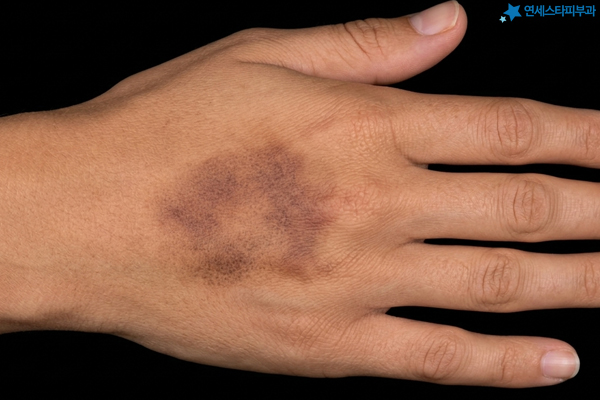
When pigment and scars are mixed in one area, it is important to first understand the approach to burn scar treatment. If epidermal pigmentation is prominent, laser treatment targeting epidermal pigment or, if the scar itself is deep, surgical scar revision may be considered. Scar Regeneration Solution to aid in the regeneration of damaged skin may also be used as an adjunct.

In Summary
Pigmentation from second-degree or higher burn scars is difficult to recover naturally. Rather than neglecting it with the thought that it will improve on its own over time, significant improvement can be expected by consulting with a dermatologist to determine the appropriate laser for the pigment and scar condition, and by consistently managing UV protection. The degree of improvement and the number of sessions may vary from person to person.
If you have any questions before receiving treatment, you can easily ask below.
💬 Inquire via chat now
Chief Director Dr. Sang-Joo Lee (MD, PhD, Yonsei University College of Medicine and Graduate School; completed dermatology residency at Severance Hospital; President of the Korean Dermatological Association) Chief Director Dr. Sang-Joo Lee's Profile First Published 2026-04-23 / Last Reviewed 2026-06-16
This article is for general informational purposes only. The condition of burn scars and pigment depth vary from person to person, so please confirm an accurate diagnosis and treatment plan through consultation with medical staff.