![[Yonsei Star Dermatology Sinchon] Burn Blister Management Precautions, Effective Treatment for Deep Second-Degree Burn Scars](/_next/image?url=https%3A%2F%2Fagqdgbuateknhwpocrgu.supabase.co%2Fstorage%2Fv1%2Fobject%2Fpublic%2Fsources%2Fbbf3bebe-45b6-4415-bd04-bda18b2cac0f%2Fblog-images%2F224270670140_00_333ebc42b8ff.jpg%3Ftype%3Dw966&w=3840&q=75)
Experiencing transparent, raised blisters on the skin after contact with hot water, oil, or fire is something that can happen to anyone at some point. When faced with these blisters, the first question that often comes to mind is, "Should I pop them?" To answer directly, the principle is not to burst blisters arbitrarily.
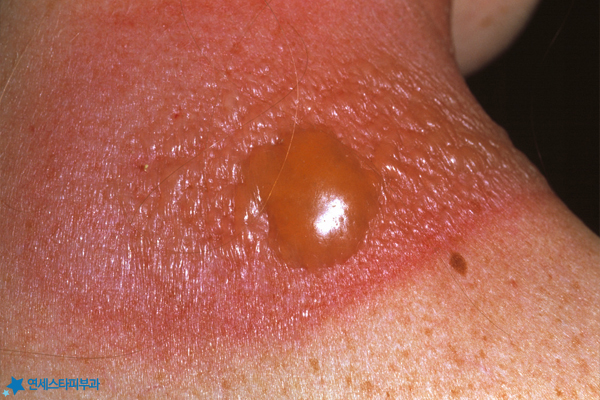
Why You Shouldn't Arbitrarily Burst Blisters
Blisters act as a kind of natural dressing, covering and protecting the damaged skin. If this membrane is removed carelessly, the wound is exposed to the external environment, which may add a burden to the healing process.


Problems that may arise when blisters are arbitrarily disturbed can be summarized as follows:
- Skin regeneration speed may slow down, and scars may become more prominent.
- If a secondary infection occurs, even superficial burns can worsen to deep burns.
- Oozing or pain may prolong, increasing the recovery period.
- It may lead to additional skin changes such as pigmentation.
It is advisable to let blisters absorb naturally or, if necessary, have them treated by medical staff in a sterile environment. The most important principle in burn blister management is "do not touch."

Emergency First Aid Immediately After a Burn: What to Do First
Immediately after a burn, rapidly cooling the remaining heat on the skin is paramount. Cool the area sufficiently with running cold water (1220℃) for about 2030 minutes. It is better to avoid applying ice directly, as it may irritate the skin.

After cooling, it is advisable to observe the condition of the blisters carefully and visit a specialized medical institution. Burns often reveal their true depth over time, rather than immediately, so it is safer to entrust the initial assessment to medical staff.
In the examination room, it is not uncommon for seemingly minor burns to deepen within a few days. The depth of a burn is difficult to determine solely by its appearance on the first day.


What's the Difference Between Superficial Second-Degree and Deep Second-Degree?
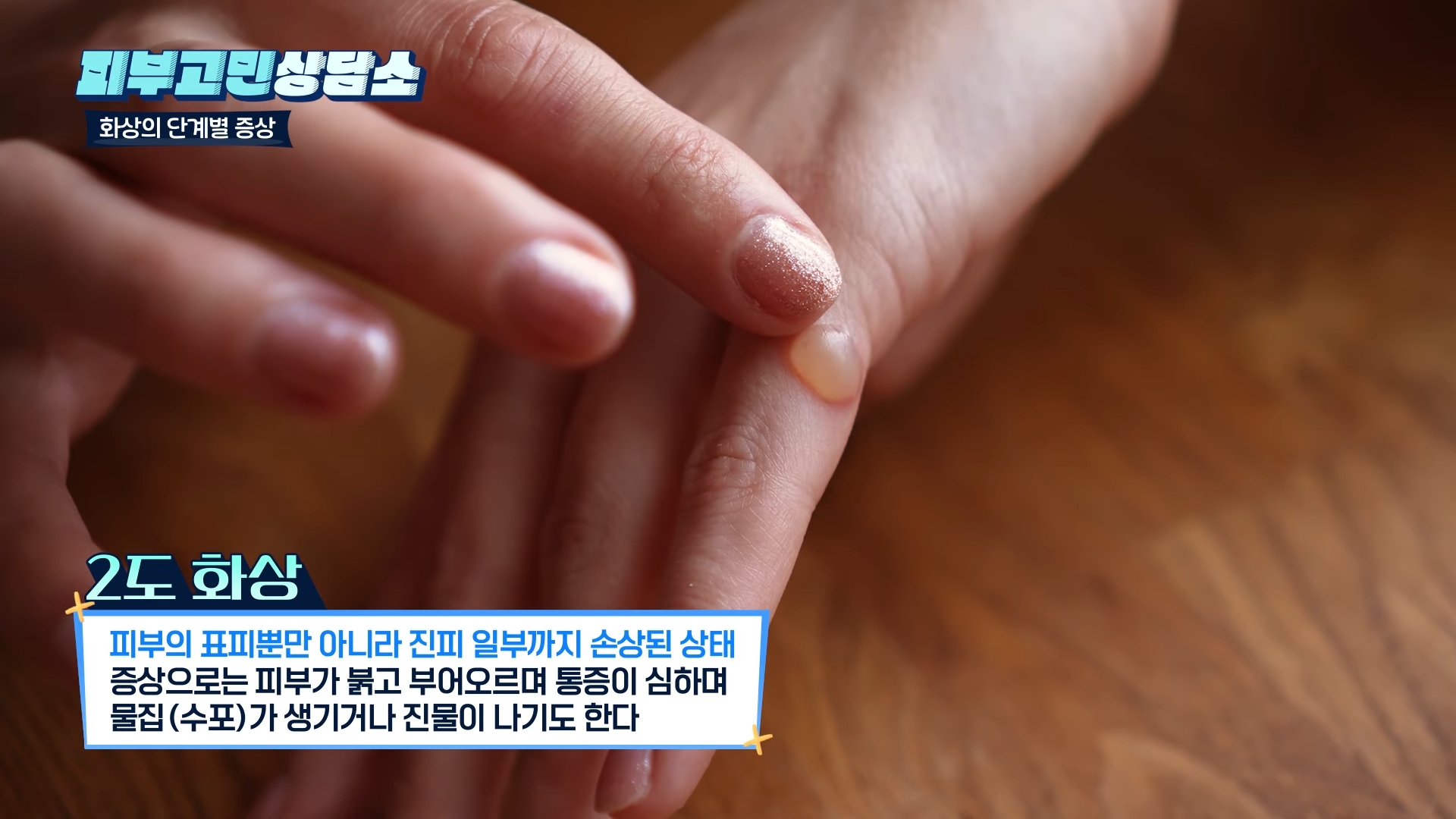
Second-degree burns are divided into superficial second-degree burns and deep second-degree burns depending on the depth of skin involvement. This distinction is a crucial criterion that determines not only the depth of the wound but also whether scars will remain and the direction of treatment.
| Category | Superficial Second-Degree Burn | Deep Second-Degree Burn |
|---|---|---|
| Depth of Damage | Partial damage to the dermis | Most of the dermis layer damaged |
| Blisters and Color | Large blisters and reddish color | Pale or mottled with red and white |
| Pain | Clearly felt | May be reduced due to nerve damage |
| Recovery Period | Usually within 10-14 days | 3 weeks or more |
| Scar Potential | Often no significant scarring | High likelihood of scarring |

Superficial second-degree burns involve partial damage to the dermis, with large blisters and a reddish color to the skin beneath the wound. Pain is also clearly felt. With proper management, recovery usually occurs within 10-14 days, and significant scarring often does not remain.
Deep second-degree burns are the starting point for deep second-degree burn scars, involving damage to most of the dermis layer. Paradoxically, pain may be reduced due to nerve damage, and the wound area may appear pale or mottled with red and white. Recovery takes more than 3 weeks, and in some cases, skin grafting may be necessary depending on the progress.
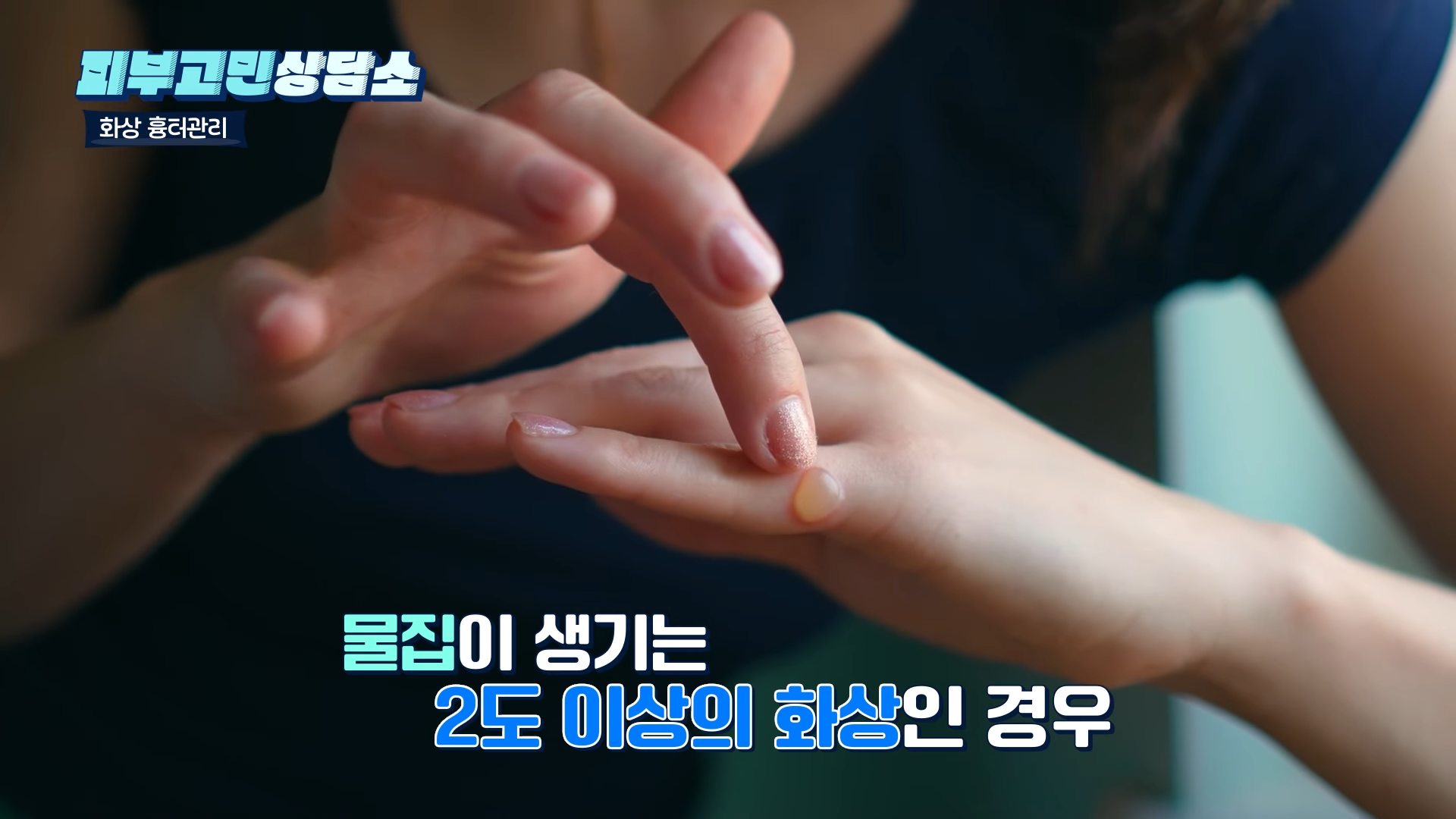

Why Do Deep Second-Degree Burns Often Scar?
Deep second-degree burns are prone to scarring such as hypertrophic scars (thick, raised scars), contractures (skin tightening), and pigment changes due to impaired skin regeneration. Especially if secondary problems like infection are involved, the scar can deepen, making professional management crucial from the outset.

For scars remaining after burns, especially burn scars or cosmetic surgery scars with dermal damage, it is safer to seek consultation with a specialist rather than self-diagnose.
If you feel overwhelmed by burn scar management, you can start by clarifying your questions through chat consultation for burn scar management without hesitation.
How Does the Pinhole Technique Improve Scars?
Among the methods for improving burn scars, one approach gaining attention in the medical community is the Pinhole Technique. The Pinhole Technique is known to use a laser to create deep, dense micro-holes in the scar area, loosening and rearranging clumped and tangled collagen tissue from the skin surface to the deep dermal layer.
In this process, the skin's natural regenerative power is stimulated, leading to the creation of new collagen, and an environment is created where hard and uneven scar tissue can become smoother and more flexible. It is also reported to help improve the color and texture of scars, making it a widely used method for burn scar management.


The Pinhole Technique has steadily evolved since its first application in burn scar treatment in the early 2000s. Initially, it was used exclusively for burn scars, but with accumulating clinical experience, its application has gradually expanded to various types of scars, including traumatic scars, surgical scars, and hypertrophic scars. Its efficacy is continuously discussed in related research and papers within domestic and international dermatology and plastic surgery academic circles. If an approach tailored to the scar type is needed, you can discuss treatments like Mild Pinhole with a specialist.
Scar management is not a one-time procedure but rather a process that should be planned in accordance with the skin's gradual regeneration.
Results May Vary Depending on Equipment
The results of the Pinhole Technique can vary depending on the laser equipment used. One of the devices currently gaining attention in the field of scar management is Ultrapulse Alpha. Ultrapulse Alpha is the latest CO₂ fractional laser released by the global medical device company Lumenis, and it is an upgraded version of the existing Ultrapulse Encore. It is a device certified by the US FDA and European CE, and it is used for various scar and skin regeneration indications both domestically and internationally.
Especially for scars with deep dermal damage, such as deep second-degree burns, an approach that normalizes the collagen structure not only on the skin surface but also in the deep layers is necessary. Ultrapulse Alpha is receiving attention from medical professionals because when used with the Pinhole Technique, it can be expected to provide staged regeneration from deep within the skin to the surface.

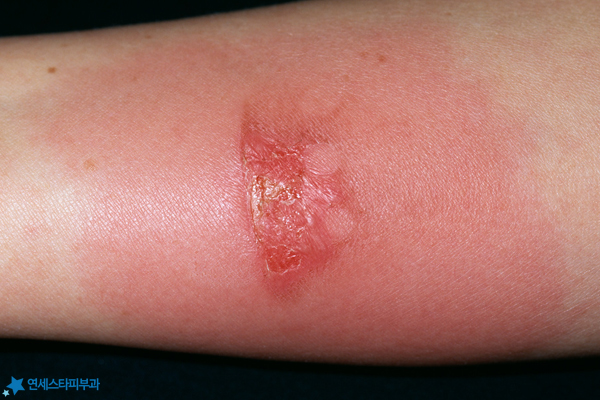
What to Prepare From Now On
Contrary to the perception that burn scars are something one must live with for life, it is reported that burn scars may be improved if professional management is started at the appropriate time. However, since the management approach and prognosis can vary depending on the type, depth, and duration of the scar, as well as individual skin characteristics, accurate diagnosis and consultation with a medical professional must precede any treatment.
Briefly, the stages of scar management are as follows:
- Immediately after a burn, focus on cooling and burn blister management.
- Do not arbitrarily burst blisters; follow the judgment of medical staff.
- Once the scar has formed, plan laser regeneration treatments like the Pinhole Technique and Ultrapulse Alpha with a specialist.
- For deep second-degree burn scars with deep dermal damage, prioritize professional consultation over self-treatment.
If you are concerned about scars remaining after a burn, do not endure it alone for too long; instead, inquire via chat for burn scar treatment consultation to first confirm the management approach suitable for you.
Chief Director Lee Sang-joo (MD, PhD, Yonsei University College of Medicine and Graduate School, completed dermatology residency at Severance Hospital, President of the Korean Dermatological Association)
Chief Director Lee Sang-joo's Profile
First published 2026-04-30 / Last reviewed 2026-06-16
This content is for general information purposes only, and results may vary depending on individual skin conditions. Please consult with medical staff for an accurate diagnosis and treatment plan.