
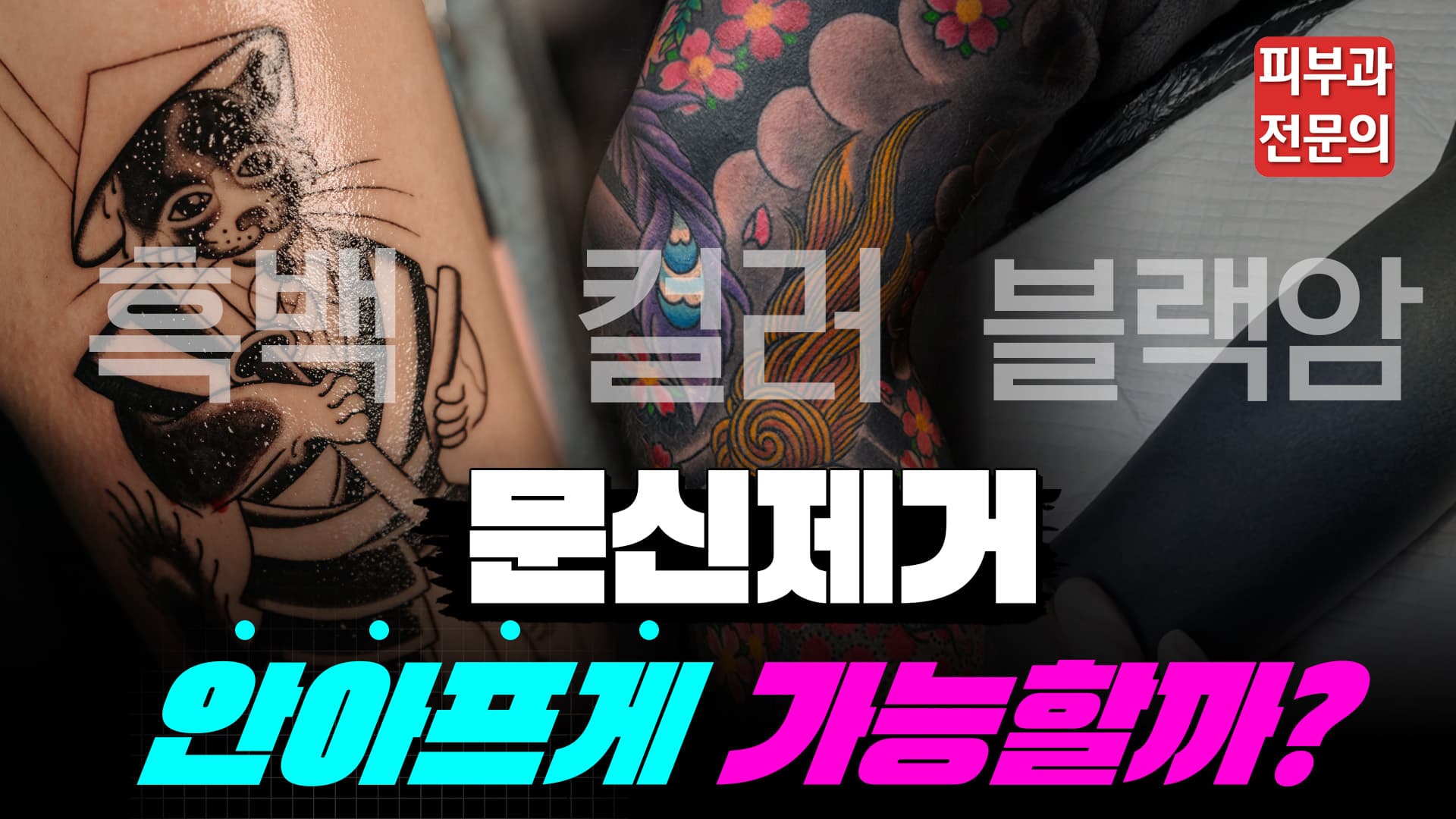
When asked what concerns them most about laser tattoo removal, many people cite the pain experienced during the procedure.
The degree of pain felt varies from person to person. Some receive the procedure without separate anesthesia, while others say it's much more painful than getting the tattoo itself. Let's look at why it hurts.
Three Sources of Pain
When a laser is applied to the tattooed area, the pigment is broken down into tiny particles, and macrophages in the body consume them. Pain can arise at these points during this process:
- As the tattoo particles burst, you may feel a slight tearing sensation around the skin where the pigment is located.
- Lasers use heat, so heat generated by light passing through the skin surface is known to be associated with pain.
- Micro-wounds can form inside, and the inflammatory response to these wounds can cause pain, swelling, or red rashes.
The principle of the procedure itself is summarized in the R-Zero Pico-Frectat Tattoo Removal guide.
Depth Beyond Anesthetic Cream's Reach
The most common method of anesthesia for tattoo removal is applying anesthetic cream to the skin surface.
Even with anesthetic cream, the upper skin is numbed, but it may not penetrate deep enough, so you might still feel pain in deeper areas.
Air cooling systems are a common method in the West. This involves blowing cold air onto the skin to reduce both pain and swelling in the area.
Comparing Sedation Anesthesia and Non-Sedation Anesthesia
Sedation anesthesia uses propofol to completely eliminate consciousness and induce sleep. While necessary for major surgeries, it can be a burden for minor procedures like laser treatments. This is because communication with medical staff is not possible during the procedure, posing safety concerns.
| Category | Sedation Anesthesia | Non-Sedation Low-Pain Nitrous Oxide Anesthesia |
|---|---|---|
| State of Consciousness | Unconscious sleep with propofol | Conscious state maintained |
| Communication during procedure | Difficult | Communication with medical staff possible |
| Fasting | Required | Not required |
| Recovery Time | Separately needed | Not separately needed, can drive on the same day |
Reasons to Choose Non-Sedation Anesthesia
Non-Sedation Low-Pain Nitrous Oxide Anesthesia is a method that delivers oxygen and nitrous oxide through respiration, significantly reducing pain while keeping the patient conscious, without inducing sleep. It is an FDA-approved anesthesia method, and even those who cannot undergo sedation anesthesia can receive it.
Since it reduces pain, fear, and anxiety while the patient is conscious, the procedure can be performed precisely with communication between the patient and medical staff. Fasting is not required, and no separate recovery time is needed.
Please Inform Us of Painful Areas in Advance
For methods that also consider scar prevention, please refer to the Pinhole for Burn & Surgical Scar procedure guide. For the overall treatment flow, please refer to the Tattoo Removal Treatment guide.
If you have questions about anesthesia methods, please inquire via chat now. Individual differences in pain perception and recovery progress may occur.

Authored · Medically Reviewed by Representative Director Dr. Kang Jin-Moon (Dermatologist) Graduated from Yonsei University College of Medicine · Resident in Dermatology at Severance Hospital Member of the Korean Dermatological Association · Korean Society for Aesthetic and Dermatologic Surgery · Author of Medical Body Care View Medical Staff Introduction
First Published 2023-12-13 · Last Reviewed 2026-07-29
This article contains general medical information and does not substitute for individual diagnosis and treatment. Results and recovery progress may vary individually.