
![When to Visit the Hospital for 2nd-Degree Burns & Recommended Treatments | [Yonsei Star Dermatology Sinchon]](/_next/image?url=https%3A%2F%2Fagqdgbuateknhwpocrgu.supabase.co%2Fstorage%2Fv1%2Fobject%2Fpublic%2Fsources%2Fbbf3bebe-45b6-4415-bd04-bda18b2cac0f%2Fblog-images%2F223718967741_00_aba06d381b2c.jpg%3Ftype%3Dw966&w=3840&q=75)
Burns are momentary accidents, but their lingering marks can be a significant concern. The questions people with burns often ask are similar: Will this leave a scar? And when should I go to the hospital? To answer directly, if you have 2nd-degree or deeper burns with blisters, or if the damaged area is extensive, it's safer to have a medical professional assess your condition rather than neglecting it in hopes of self-recovery.
In this article, we will outline the criteria for classifying burn depth, cases prone to scarring, and how hospitals approach burn scar treatment.
Burns are classified into 1st, 2nd, and 3rd degrees based on depth

When skin tissue is damaged by hot objects or heat, it is classified into 1st, 2nd, or 3rd degrees based on the extent of the damage. The depth of the damage is the most significant factor here.
| Classification | Damaged Area | Characteristics |
|---|---|---|
| 1st Degree | Epidermis | Skin is slightly red and painful, but rarely leads to scarring |
| 2nd Degree | Up to Dermis | Blisters form, increased likelihood of scarring |
| 3rd Degree | Up to Subcutaneous Tissue | Accompanied by scarring, recovery may take over 1 month |
1st-degree burns, which only affect the epidermis, may cause redness and stinging pain but often do not leave scars. The problem begins with 2nd-degree burns, where the damage extends beyond the epidermis into the dermis.
If blisters form, consider the possibility of 2nd-degree burns
The easiest way to distinguish between 1st and 2nd-degree burns is the presence of blisters. If blisters appear on the burn area, it's possible it's a 2nd-degree burn involving dermal damage. It's advisable to have a medical professional check the condition, keeping in mind the potential for scarring.
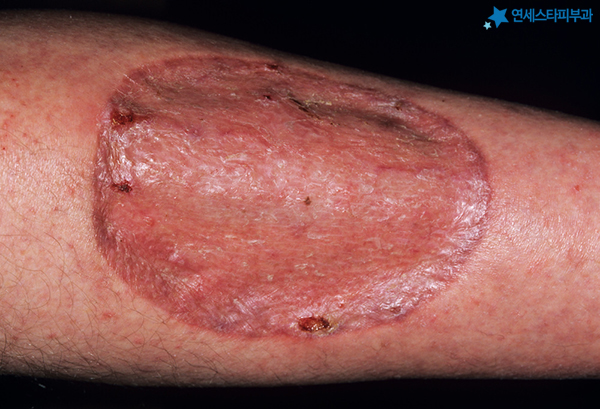
2nd-degree burns are further divided into superficial partial-thickness and deep partial-thickness. Deep partial-thickness burns, which affect deeper layers than superficial partial-thickness burns, are more likely to develop not only blisters but also scabs over time and progress into burn scars.
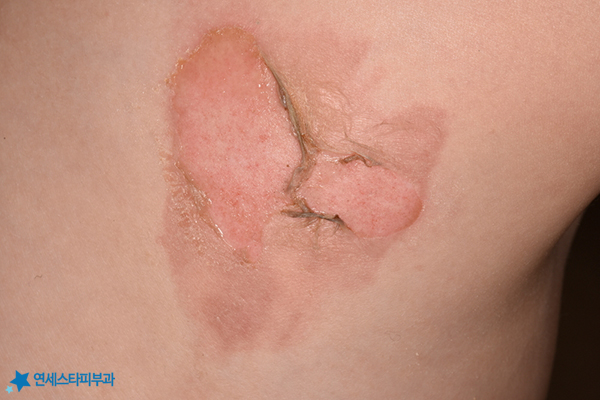
If the burn progresses to 3rd degree, it means the damage has reached the subcutaneous tissue. In this case, scarring is almost always accompanied, and recovery can take over a month, posing a significant burden. Burns of this severity require treatment at a specialized hospital.
In the examination room, the signal patients most often miss is blisters. Blisters are not just a simple change in appearance but can be a sign of dermal damage, so it's best not to take them lightly.
There's a reason why even minor-looking burns can leave scars
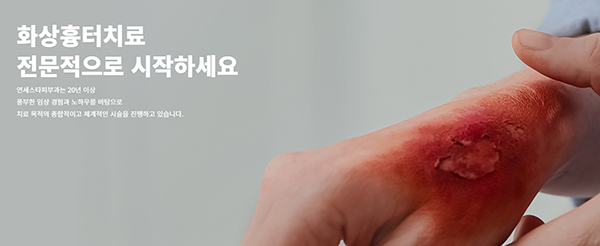

Even minor burns sustained in daily life can leave scars if the damaged area is extensive. Neglecting them, assuming they will heal naturally, or improper management such as forcibly removing scabs, can lead to secondary damage like bacterial infections, causing even relatively minor injuries to result in scars.
Situations that increase the risk of scarring generally include the following:
- If blisters formed and were popped or scabs were forcibly removed.
- If the damaged area is extensive, requiring a long recovery time.
- If the wound area was not kept clean, leading to infection.
- If you have a predisposition to keloid scars.
Sometimes scars can form even with proper initial care and management, a prime example being a keloid predisposition. If any of the above apply to you, it's advisable to visit a hospital without delay.
For questions, inquire via chat consultation about burn scar treatment
Emergency measures immediately after a burn determine the extent of damage
No one wants a large scar on their body. Therefore, before seeking medical attention, it's crucial to take quick emergency measures to minimize the extent of damage as much as possible.
- Cool the burn sufficiently for 10-20 minutes with running tap water, saline solution, or bottled water.
- Allow enough time for cooling to prevent residual heat in the body from damaging surrounding tissues.
- Protect the damaged area with ointment and dressing, as it is susceptible to infection.
- Do not arbitrarily pop blisters or remove scabs.
The reason for cooling is that residual heat in the body can damage surrounding tissues over time. The already damaged area is susceptible to various bacterial infections, so please protect the skin with ointment and dressing.
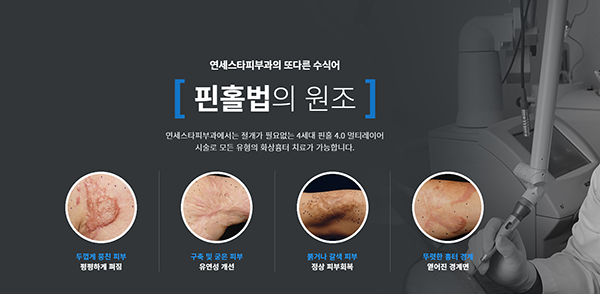

Hospitals approach treatment in two ways: surgery and laser

After a burn, hospitals generally address scars in two main ways: surgery and laser. If the uneven appearance is a cosmetic concern, laser treatment can be considered for improvement. Patients can immediately return to daily life after the procedure, and recovery effects have been reported even for raised or discolored scars, leading to high satisfaction.
If a facial burn scar has enlarged, making it difficult to breathe through the mouth or nose, functional improvement is also important. With recent advancements in laser technology, improvement may be possible in some cases without surgery. Depending on the depth and extent of the scar, Surgical Scar Revision or Triamcinolone Scar Injection may be considered, and Hyperbaric Oxygen Chamber treatment may be combined to aid the recovery environment.
Of course, if the scar causes contracture in a joint area, making movement difficult, a surgical approach might be more appropriate. Since the severity, location, shape of the scar, and resulting secondary difficulties vary for each person, it is advisable to visit a hospital for an accurate diagnosis and to start treatment promptly after a burn.
After a scar forms, prompt treatment is key
After a burn scar forms, prompt treatment is important. As scars stabilize over time, the management approach may change, so it's best not to delay the initial consultation. The degree and method of improvement may vary individually, so we recommend discussing the best approach for your condition with a medical professional.
For questions, 💬 Consult Now


Dr. Sang-Joo Lee, Chief Director (MD, PhD, Yonsei University College of Medicine and Graduate School, Completed Dermatology Residency at Severance Hospital, President of the Korean Dermatological Association) Dr. Sang-Joo Lee's Profile First Published 2025-01-08 / Last Reviewed 2026-06-16
This article contains general information about burns and scars. Even with the same burn, the course may vary depending on the depth and area, so please consult with a medical professional for an accurate diagnosis and treatment plan.