

Scars remaining on the wrist can continue to bother you, even when covered by sleeves. The first question we hear is almost always the same: "Can this scar be lightened with a laser?" To get straight to the point, wrist scars are a process of gradually fading them through different treatment approaches depending on their shape, depth, and pigment status, and there can be individual differences.
Reasons Why Wrist Scars Are Particularly Bothersome
The wrist is a part of the body that draws attention as frequently as the face. It is easily exposed during everyday hand movements, and due to its location, we often see people trying to cover and hide it more.
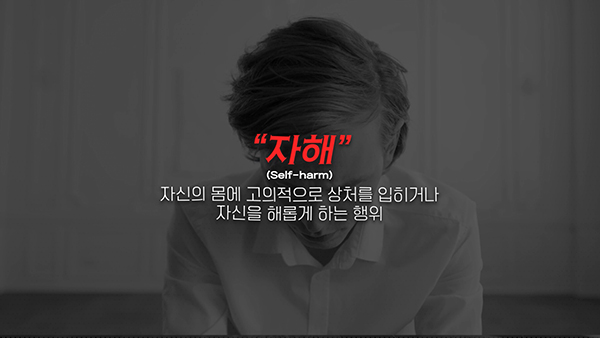
While some scars result from accidents, others are traces left during difficult emotional periods. Focusing on covering scars can lead to significant stress in daily life, such as feeling withdrawn in social situations and a loss of confidence.

What are the Characteristics of Self-Inflicted Scars?
Wrist scars caused by self-harm have several characteristics. They often appear as thin lines because they are made by sharp objects, and due to repetitive actions, injuries accumulate, resulting in overlapping lines or uneven depths.
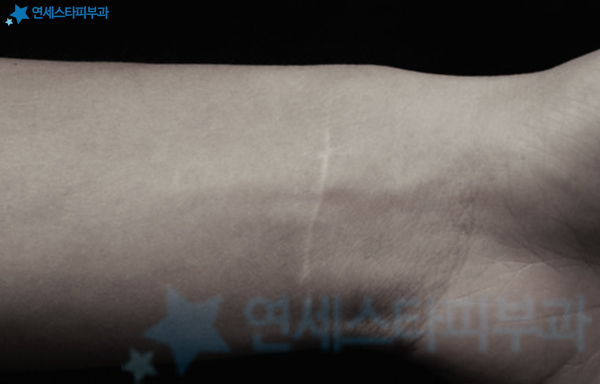
In particular, deep wounds can remain as sunken or raised forms over time, making them highly visible. Depending on one's constitution, they may appear as scars that remain in a keloid form, and sometimes brown pigmentation may also be present.
Examining the texture of the scars, they generally show a mix of the following patterns:
- Multiple thin lines overlapping
- Irregular cross-sections with uneven depths
- Sunken or prominently raised areas
- Marks accompanied by redness or brown pigmentation
The Principle of Treating Wrist Scars with Lasers
Scars rarely disappear on their own, thus requiring active treatment and management. Laser methods are frequently used for wrist scar treatment. When a laser is applied to the skin, its regenerative power is activated, which can fade the marks. Devices like StarLux and Ultrapulse Encore can deliver powerful energy and are often used for scar treatment.
The method of creating very fine wounds on the scar area with a laser to induce skin regeneration is called Pinhole for Burn & Surgical Scar. It can be applied to wrist scars with irregular shapes or deep indentations.

In the examination room, even for the same wrist, scars with strong pigmentation and deeply indented scars require different approaches. Rather than treating all scars identically with a single device, combining methods according to the condition is closer to natural recovery.
If you are considering treatment options, we recommend first having your scar condition checked through a chat consultation regarding scar treatment.
How to Combine Methods According to Scar Condition
The equipment used varies depending on the scar's condition, such as pigmentation, redness, or indented shape. The table below summarizes common wrist scar conditions and the methods considered for them.
| Scar Condition | Primarily Considered Method |
|---|---|
| Deep and irregular indentations | Pinhole Technique lasers |
| Accompanied by brown pigmentation | PicoWay Laser |
| Scars with remaining redness | Vbeam Prima |
| Deep, firmly adhered scars | Combined Subcision |
It is reported that combining several methods like this can lead to faster and better results. However, it is important to note that even if wrist scar treatment seems relatively simple, the duration required for treatment can vary greatly among individuals. If surgical scar revision is needed for deeper and wider scars, methods other than lasers may also be considered.

Why Does Treatment Require Length and Persistence?
Wrist scar treatment demands a longer commitment than expected, as there are cases where individuals re-injure themselves during treatment, reverting their condition.

This is a challenging problem that usually requires 10 to 20 treatment sessions for gradual improvement. It is a long process, taking anywhere from several months to several years, thus requiring a strong mindset, persistence, and patience.
It is a treatment that often requires the help of those around the patient, as some find it difficult to persevere alone. It is not uncommon for individuals, both adults and young students who visit with their parents, to create scars themselves due to depression stemming from academic stress, violence, or peer relationship issues.

Points to Consider Before Starting Treatment
Here are some important points to keep in mind when treating wrist scars:
- If the act of intentionally harming one's body is not addressed concurrently, the same problem may recur.
- It is important to combine mental health treatment to foster a comfortable and positive mindset.
- Since the shape and depth of scars vary from person to person, treatment plans must be customized for each individual.
- The support of family or close friends is a great strength in continuing treatment to the end.
As the approach varies depending on the type of scar, those who are also concerned about scars with different textures, like cosmetic surgery scars, or indented scars, should first confirm the appropriate direction for their condition.
This article addresses a very sensitive topic, and we have tried to deliver the most helpful information as carefully as possible. If you are curious about which method might be suitable for your scar, you can comfortably inquire through a chat consultation for wrist scar treatment.

We hope today's discussion offers a small measure of help to those struggling with wrist scars and to those close to them.

Chief Director Lee Sang-ju (MD, PhD, Yonsei University College of Medicine and Graduate School, Completed Dermatology Residency at Severance Hospital, President of the Korean Dermatological Association) Chief Director Lee Sang-ju's Profile First Published 2025-04-11 / Last Reviewed 2026-06-16
Since scar patterns and recovery speeds vary from person to person, please ensure an accurate diagnosis and treatment plan through consultation with medical staff.