
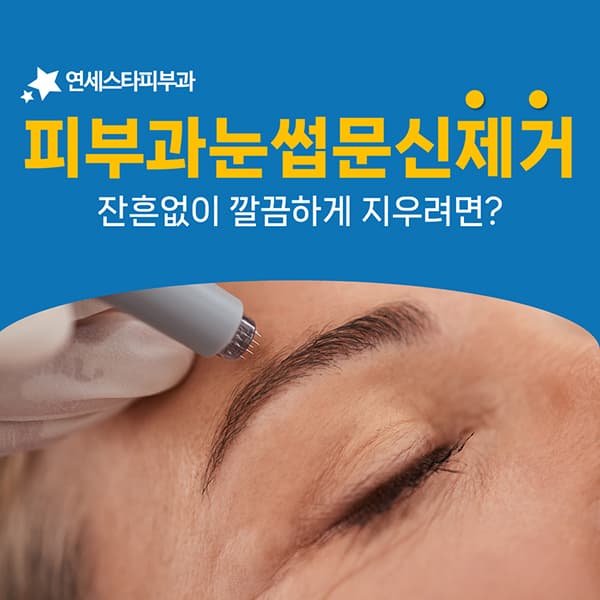
Many people get semi-permanent eyebrow tattoos to save time in the morning. Since the color and shape last a long time, they are mainly done on areas that are touched daily, such as eyebrows, eyeliners, and lips.
However, over time, the initial color may fade or leave reddish or dull marks. It is not uncommon for people to want to remove them when they are no longer as satisfied as before.
A Trendy Area
Eyebrows and eyeliners are strongly cosmetic, so their shape and color are highly subject to trends. There are cases where people are dissatisfied with the design or feel that it looks messy as it fades.
To create a new design, the existing pigment must be completely removed without any residue. Since the shape is already set by the tattoo, it is not easily removed with general home care.
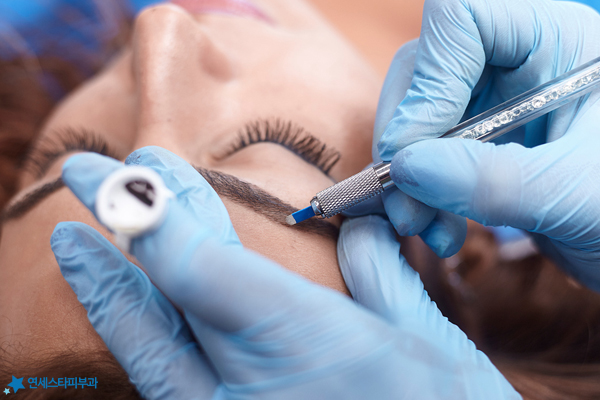
What to Understand Before Starting
At the dermatology clinic, various factors are considered before starting removal. While it is widely known that tattoos can be removed with lasers, they cannot be completely erased in one go.
- The patient's skin type
- Medical history or specific skin conditions
- Type of pigment used
- Depth at which the tattoo is located
A thorough understanding of how to remove it without burdening the skin is necessary before starting.
From Nanoseconds to Picoseconds
Equipment for pigment removal has also continuously evolved. Following the nanosecond lasers commonly used in the past, picosecond lasers have emerged, allowing laser irradiation in much shorter times. A picosecond refers to one trillionth of a second. PicoWay can be cited as a representative device.
With short and fast irradiation, pain is reduced, and damage to the epidermal layer of the skin is minimized. The aim is to maintain the laser's power while reducing the burden of pain and side effects.
Pico lasers are increasingly being used not only for tattoo removal but also for general skin pigmentation issues like melasma. Related equipment configurations can be seen in the Pico·Dual·Gold-Diamond Toning guide.
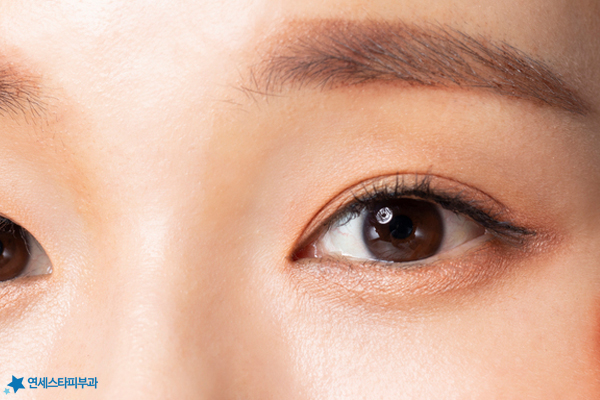
What Changes When Bubbles Are Removed
Once the equipment is in place, the next factor is the practitioner's skill in handling it. Removing residual eyebrow tattoos requires multiple repeated treatments.
When a laser is irradiated, white bubbles form on the treated area. These bubbles have been a critical factor in hindering continuous irradiation and prolonging the overall treatment period.
The R-Zero method applies a special medication to the white bubble layer to quickly remove it. This allows for up to 4 repeated irradiations in one spot.
This creates an environment where continuous passes are possible. The detailed procedure is outlined in R-Zero Pico-Frectat Tattoo Removal.
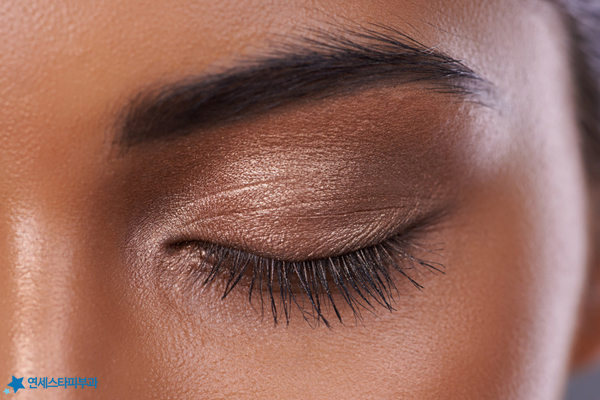
Items to Consider When Choosing a Clinic
You might wonder if multiple laser passes at once could increase the possibility of scarring. This is why choosing a place with accumulated experience is important.
| Check Item | What to Look For |
|---|---|
| Equipment | Which laser is used |
| Practitioner | Experience with repeated treatments |
| Scar Management | Is there a preventive system to reduce scarring during treatment |
| Intensity Control | Is the laser intensity adjusted appropriately for the situation |
When considering scar prevention, referring to the Pinhole for Burn & Surgical Scar guide can be helpful. If you have questions about the procedure, feel free to ask via Chat Inquiry Now.

It's Better to Proceed Without Rushing
Laser tattoo removal, whether for eyebrows or any other part of the skin, is a process of gradual improvement through repeated treatments. Results may vary individually.
It is better to choose a place where the procedure can be performed meticulously over time. The overall treatment flow can be found in the Tattoo Removal Treatment Guide.

Authored and Medically Reviewed by Chief Director Lee Sang-Joo (Dermatologist) Graduated from Yonsei University College of Medicine · Ph.D. in Medicine from Yonsei University Graduate School of Medicine · Resident in Dermatology at Severance Hospital Currently Adjunct Professor, Department of Dermatology, Yonsei University College of Medicine · President of the Korean Dermatological Association in 2026 View Medical Staff Profile
First Published 2026-03-03 · Last Reviewed 2026-07-29
This article contains general medical information and does not substitute for individual diagnosis and treatment. Results and recovery progress may vary individually.