


The wrist is an area with thin skin and visible blood vessels. Even small tattoos are noticeable, and many people consider removal depending on their social life or work environment.
When you decide to remove it, questions often arise: Is it okay for thin skin? Will it leave a scar? Can color tattoos be removed? We've summarized the factors that influence the duration of wrist tattoo removal and important considerations.

Conditions of the Wrist Area
The wrist has thin skin and fewer sebaceous glands, making it sensitive to external stimuli. It's also an area with a lot of movement in daily life, making friction or irritation after treatment common. This is why recovery care is even more important than for other areas.
If incorrect treatment leads to skin pigmentation, blisters, or scars, the psychological burden can be significant, as the area cannot be easily covered. It is advisable to receive treatment from experienced medical staff, with laser intensity and frequency adjusted to your skin condition.
| Wrist Characteristics | Considerations for Treatment |
|---|---|
| Thin skin | Adjust laser intensity to skin condition |
| Few sebaceous glands, sensitive to irritation | Moisturize and minimize irritation during recovery |
| Frequent movement | Manage to avoid friction |
| Not covered by clothing | Monitor for pigmentation and scarring reactions in advance |
Why Multiple Colors Take Longer
The speed of tattoo removal varies depending on the tattoo color. This is because each color absorbs different wavelengths. If various colors are present, it will naturally take more time.
Therefore, choosing equipment that can precisely combine multiple laser wavelengths is key.

Why We Use PicoWay
PicoWay is a picosecond laser device approved by the U.S. FDA. It breaks down ink particles more finely in picosecond time units, which are 1,000 times shorter than traditional nanosecond lasers.
- It can handle a wide range of colors by combining 4 wavelengths.
- It minimizes energy delivery time, selectively destroying only the necessary pigment particles.
- It can be applied to sensitive areas like the wrist.
Since the procedure aims to minimize skin damage, it can reduce the burden on thin skin. The equipment configuration is detailed in R-Zero Pico-Frectat Tattoo Removal.
Monitoring Skin Tone During Removal
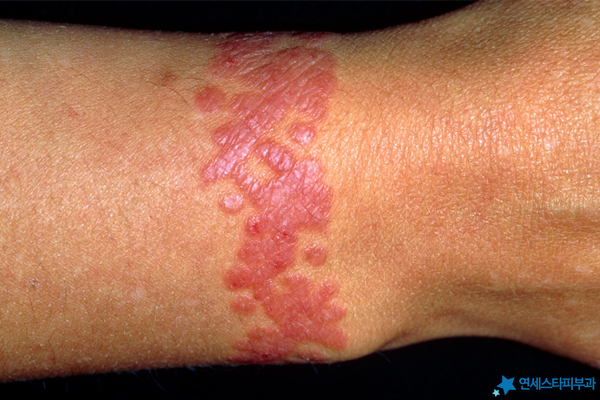
During the tattoo removal process, redness, pigmentation, and subtle scarring reactions may occur. If these reactions appear, vascular lasers like Vbeam Prima or Toning treatments can be combined to restore a smooth skin tone.
Wrist tattoo removal is less about erasing and more about naturally restoring the skin while minimizing damage.
It is advisable to check if the clinic can perform various complex procedures.

Techniques to Shorten the Duration
The skill of the practitioner is also a factor that determines the outcome. R0 is a prime example.
Unlike methods where the laser is applied only once per session, R0 allows for up to 4 applications, which can shorten the overall treatment period. When combined with care that maintains skin temperature during the procedure to reduce burns and scarring, the synergy with the equipment is enhanced.
What to Check Before Starting
We recommend choosing the right equipment from the start. For stable results, a thorough check of the clinic and equipment is necessary.
You can find the treatment flow in Tattoo Removal Treatment Guide. Recovery progress may vary individually.
If you are curious about the condition of your wrist tattoo, please use Chat with us now.


Authored and Medically Reviewed by Dr. Jinmoon Kang, Chief Director (Dermatologist) Graduated from Yonsei University College of Medicine · Dermatology Resident at Severance Hospital Member of the Korean Society for Medical Lasers · Member of the Korean Society for Aesthetic and Dermatologic Surgery · Current Adjunct Professor, Department of Dermatology, Yonsei University College of Medicine View Medical Staff Profile
First published 2025-10-14 · Last reviewed 2026-07-29
This article contains general medical information and does not substitute for individual diagnosis and treatment. Results and recovery progress may vary individually.