

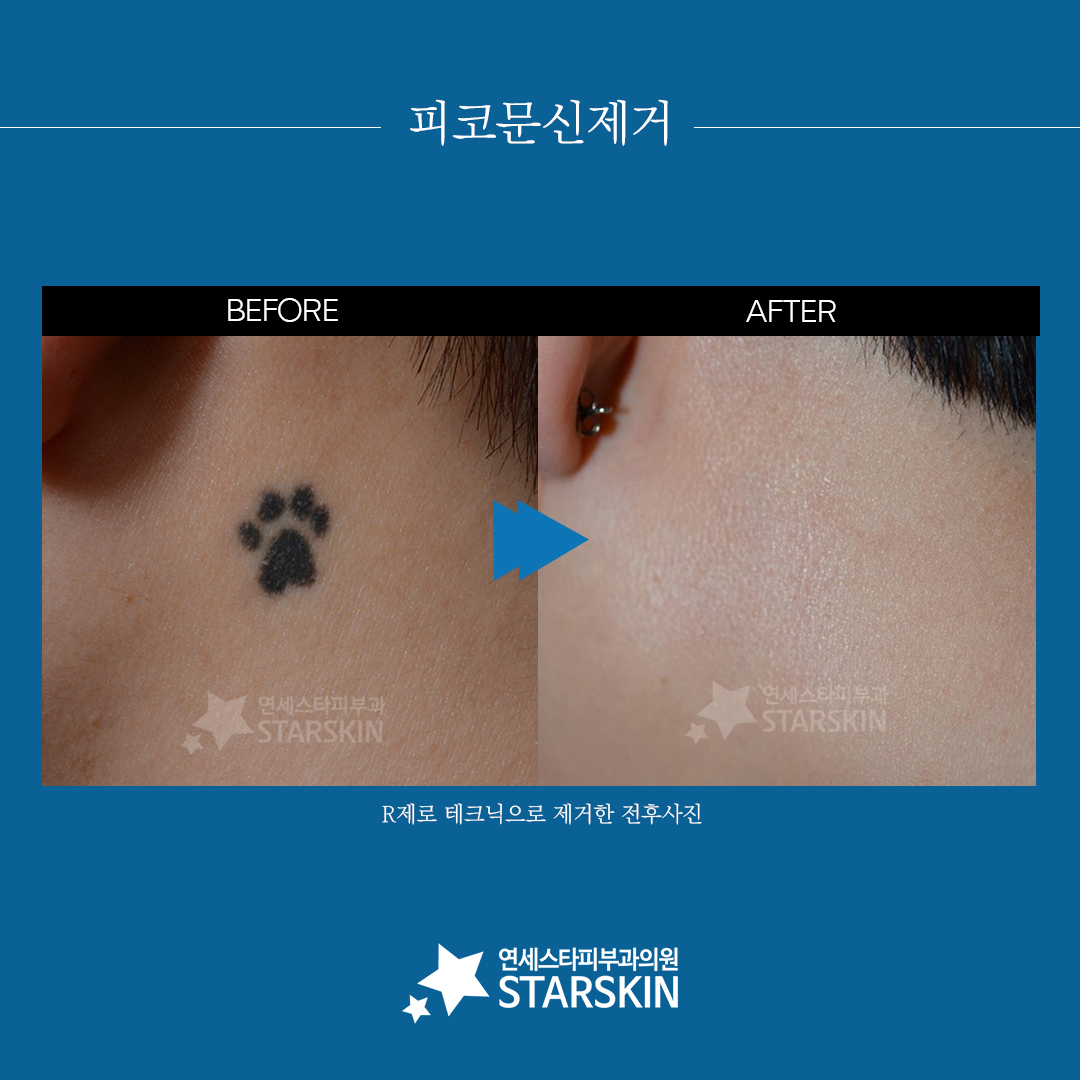
Many people hesitate to remove tattoos due to concerns like "Will it really be completely gone?" or "Will it leave a scar?" To put it simply, the outcome of tattoo removal depends as much on how the equipment is handled as on the equipment itself.
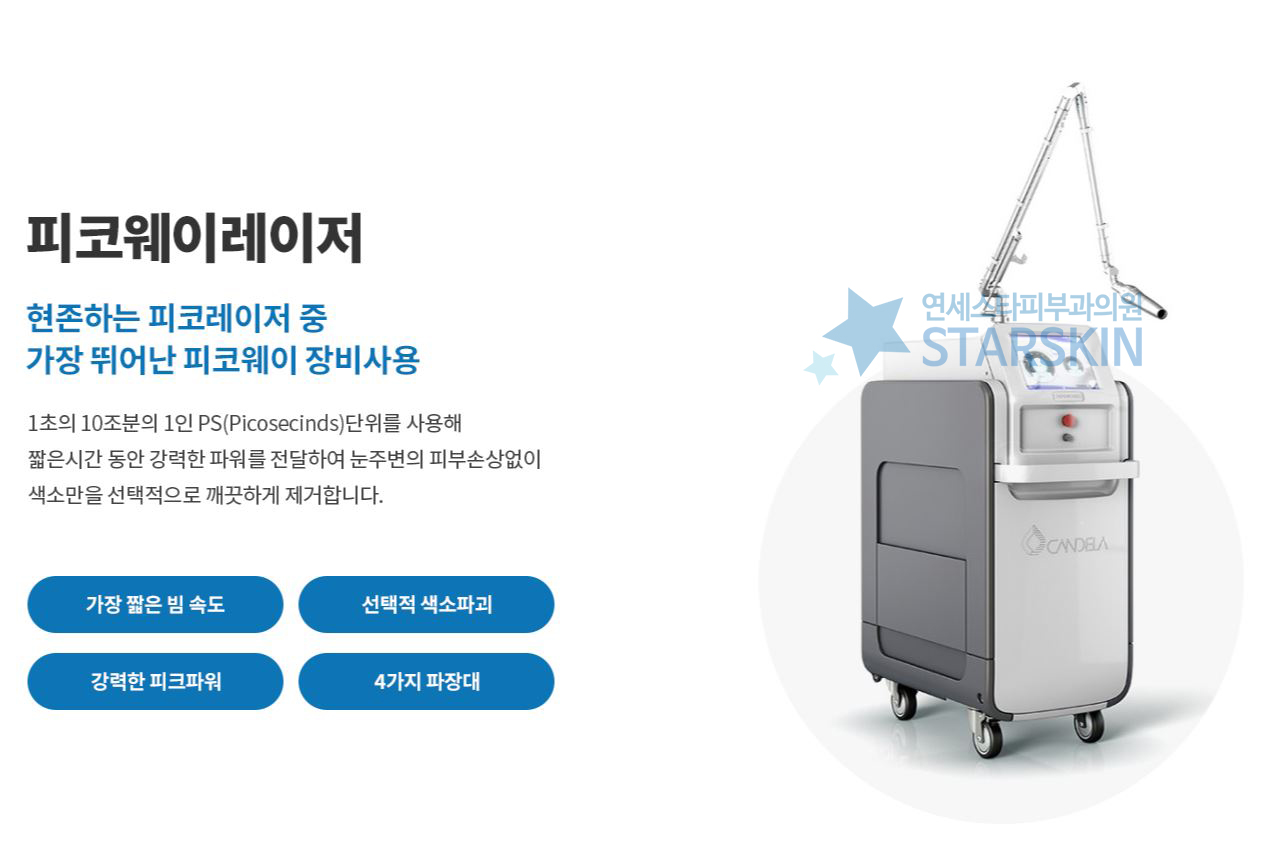
Yonsei Star Dermatology Sinchon uses the PicoWay picosecond laser for tattoo removal. Today, we will explain why this device is often chosen for tattoo removal, and outline the removal process and pain management methods applied at our clinic.
From Nanoseconds to Picoseconds: What Has Changed?
In the past, lasers primarily used nanosecond (one-billionth of a second) pulse durations. With technological advancements, picosecond (one-trillionth of a second) lasers emerged.
This shorter pulse duration is known to be effective not only for tattoos but also for removing epidermal pigment such as melasma and freckles. Among picosecond lasers, our clinic uses the PicoWay device from Candela.
It is reported that for the same pigment, shorter pulse durations result in less thermal damage to the surrounding skin and more effective fragmentation of the pigment.
PicoWay is also known as a melasma laser. Rapidly irradiating the lesion with picosecond pulses helps break down melanin pigment while minimizing damage to surrounding skin. However, results may vary individually.
Customized Approach by Color with Four Wavelengths
The PicoWay device has multiple wavelengths. While most pico lasers operate with 2-3 wavelengths, PicoWay can deliver four different wavelengths.
| Wavelength | Primarily responsive colors |
|---|---|
| 532nm | Red, Orange |
| 730nm | Blue, Purple |
| 785nm | Sky Blue, Green |
| 1064nm | Black, Brown |
For multi-colored tattoos, a color-specific approach can be taken. The specific wavelengths and intensity required depend on the tattoo's color and depth, so the actual application is determined through a consultation.
The Principle of Tattoo Removal
The basic principle of tattoo removal is as follows: when a laser is applied, the tattoo ink in the dermal layer is fragmented by strong energy. These smaller pigment particles are then transported by the body's immune cells and expelled from the body.
The more finely the pigment is fragmented, the easier it is to expel. However, after a laser passes, a bubble layer forms over the tattoo. Managing this bubble layer is a crucial part of the removal process. This also means that even with the same equipment, the outcome can vary depending on how it is handled.
In the consultation room, many people are more curious about how this bubble layer is managed than about the equipment itself.
R-Zero Technique for Managing the Bubble Layer
The method applied at our clinic is the R-Zero Technique. The procedure is as follows:
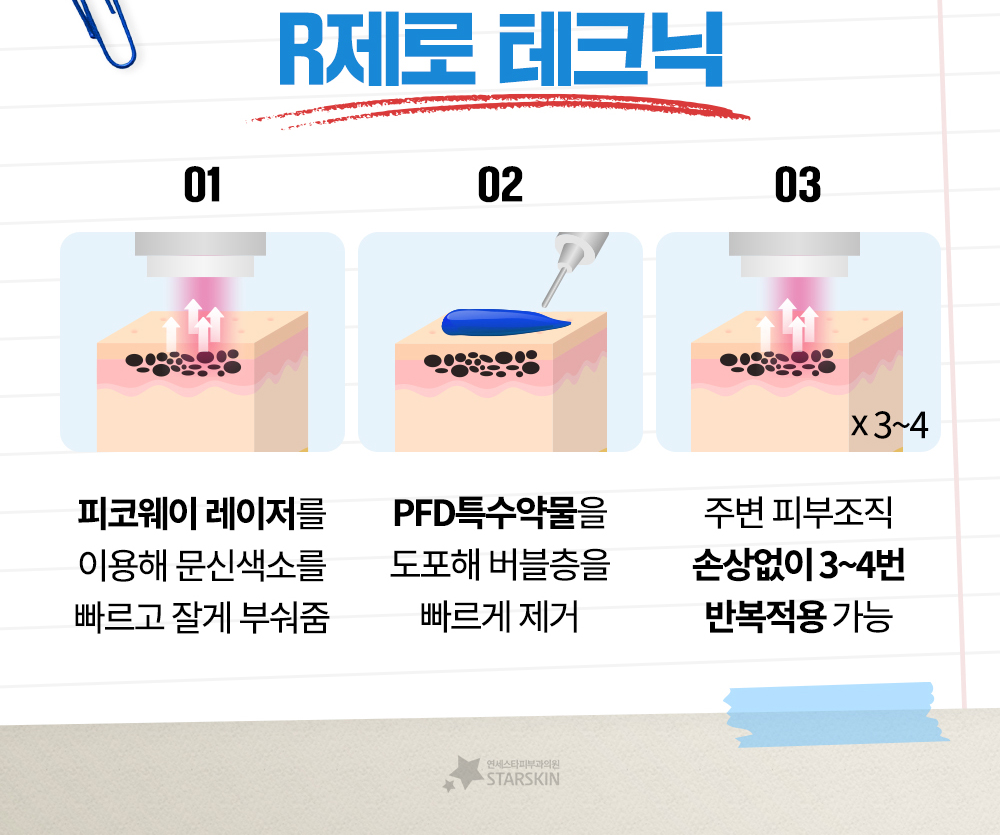
- Rapidly fragments tattoo pigment with the PicoWay Laser.
- Applies Perfluorodecalin (PFD) specialized medication to reduce the raised bubble layer.
- Repeatedly applies multiple passes in one session while minimizing damage to surrounding skin tissue.
- Adjusts output based on pigment and skin condition.
Applying the R-Zero Technique is reported to reduce the number of removal sessions compared to conventional methods. However, the required number of sessions and the outcome may vary individually depending on the tattoo's color, depth, area, and skin type.
If you have questions about the tattoo removal process or the estimated number of sessions, feel free to ask via tattoo removal chat consultation.
Considering Scars in the Process
Yonsei Star Dermatology also specializes in scar treatment. After removal procedures, we consider scar prevention.
Based on accumulated experience, we combine the R-Zero Technique with high-output CO2 laser to create space for blisters to drain and prevent scarring. Depending on the removal area or skin condition, additional scar management may be necessary, which is discussed during the pre-procedure consultation.
If You Are Concerned About Pain
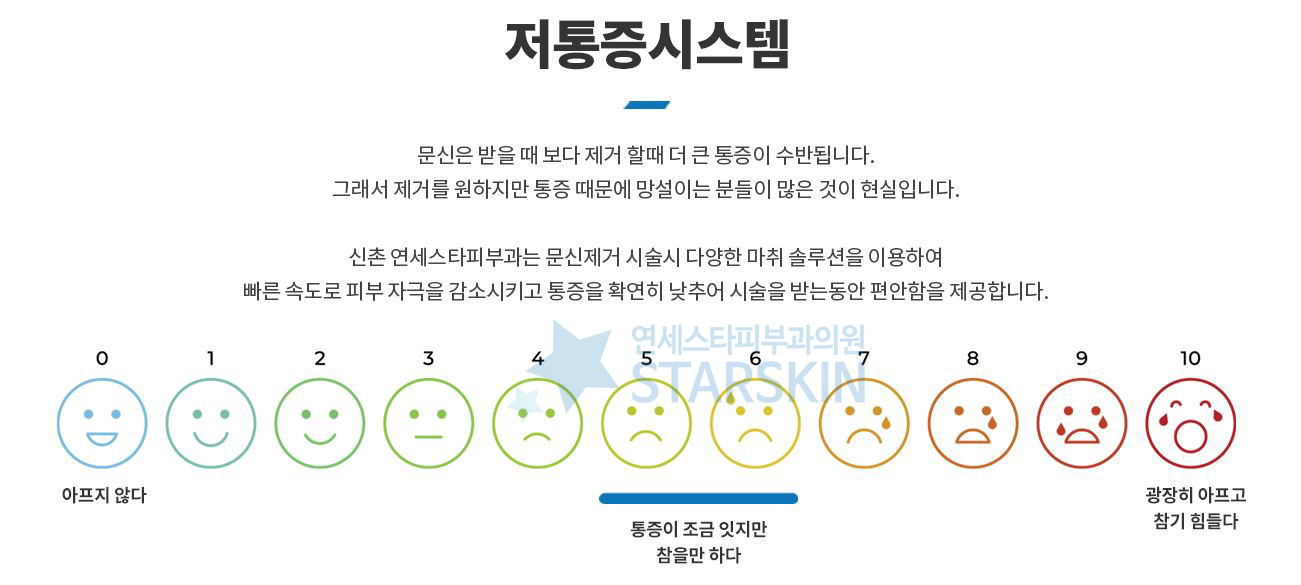
Many people hesitate to remove tattoos due to concerns about pain, even though they know they need to be removed. Yonsei Star Dermatology Sinchon has steps in place to reduce irritation and pain.
- Topical Anesthetic Cream: Sufficiently applies cream-type topical anesthetic to the skin surface.
- Air Cooling: Delivers cold air to the skin to reduce irritation during the procedure.
- Adjusts the pace of the procedure while monitoring the skin's reaction.
By proceeding through these two steps, you can undergo the treatment with less burden of pain. However, the degree of pain may vary for each individual.

In Summary
Today, we looked at the principles of Pico Tattoo Removal using PicoWay, the R-Zero Technique, scar prevention, and pain management methods. Since the appropriate approach and number of sessions vary depending on the tattoo's color, depth, and skin condition, an accurate assessment is made after directly examining the skin.
If you have any further questions, please leave them via Pico Tattoo Removal chat consultation, and we will guide you sequentially.
Dr. Sang-Joo Lee, Chief Director (MD, PhD from Yonsei University College of Medicine and Graduate School, completed dermatology residency at Severance Hospital, President of the Korean Dermatological Association) Dr. Sang-Joo Lee's Profile First Published 2023-07-26 / Last Reviewed 2026-06-16
This article is for general informational purposes only, and the suitability and outcome of procedures may vary for each individual. Please consult with medical staff for an accurate diagnosis and plan.