

Have you ever looked in the mirror, noticed dark, spot-like pigmentation on your face, and wondered, "Is this seborrheic keratosis, or just a blemish?" One of the dark pigmentary lesions that settles on the face is lentigo, and it is reported that over time, its color tends to deepen and its scope widens.
Since lentigo rarely fades naturally, it is crucial to accurately identify the cause and establish a treatment plan tailored to the lesion's characteristics. In this article, we will systematically explain why lentigo occurs and the principles behind RePott Laser treatment.
Pigmentation that hinders clear skin, its true nature
Clear and flawless skin makes an impression look brighter and neater. That's why many people consistently maintain good skin condition over time.


A representative factor that interferes with such clear skin is the dark pigmentation that appears on the face. Prolonged exposure to strong UV rays, irregular lifestyle habits, and accumulated stress can lead to blemishes. In addition, as skin ages over time, pigmentary lesions can also develop.
Why does lentigo occur?
The causes of lentigo are almost similar to the causes of general pigmentation problems. However, the likelihood of it appearing more easily increases with age, and over time, the color may gradually deepen and the size of the lesion may increase, widening the area where the face appears dull.


The problem is that lentigo rarely disappears naturally. If left untreated, the color may deepen and the area may expand, making the skin appear older than healthy skin.
In the clinic, we often see patients who say, "I thought it was just a blemish, but it seems to have gotten bigger." Lentigo is distributed at various depths, from the visible epidermal layer to the dermal layer, which is difficult to see with the naked eye.
Understanding lentigo as a benign tumor
Lentigo itself is not a disease that directly affects health. However, because it is a type of benign skin tumor, treating it in a way that resolves it cleanly in one go can help increase satisfaction.
Lentigo is a benign pigmentary lesion where pigment is distributed across the epidermis and dermis, and a precise approach tailored to the depth and characteristics of the lesion is reported to be important.
For pigmentary lesions located in the epidermis, like lentigo, referring to Epidermal Pigment Removal for blemishes, seborrheic keratosis, and freckles can help in determining the treatment direction.

Differences from previous treatment methods
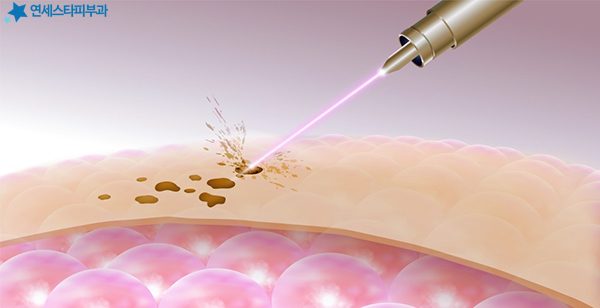
In the past, high-output laser methods were often used to destroy pigments on the skin surface or intentionally create wounds to form scabs that would naturally fall off. However, as strong stimulation was involved, the damage was often significant, requiring time for recovery, and there was a possibility of side effects depending on skin condition or type.
Consequently, the search began for methods that could reduce damage while destroying the cause of lentigo and restoring the skin to a clear state. The following criteria naturally come to mind when choosing a treatment device:
- How quickly can the problem be improved?
- Can it be safely administered?
- Can the lesion be accurately targeted?
- Is the recovery process relatively stable?
How does RePott Laser treat lentigo?
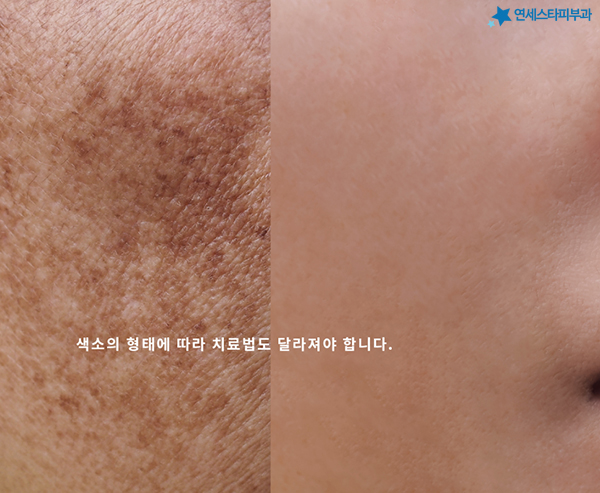
RePott Laser emerged as a specialized laser for lentigo treatment that meets these criteria. The technology of RePott can be summarized into three main points.
First, it features VSLS technology, also known as vascular rescue. This technology induces capillary constriction and is designed to protect blood vessels while reducing skin damage, even when using powerful wavelengths. If you are concerned about facial redness, where both pigmentation and vascular reactions appear, understanding this vascular protection principle can be helpful.

Second, it has a high-performance cooling system. Typically, discomfort such as redness or heat sensation often follows immediately after laser treatment. RePott is designed to prevent a rapid increase in skin temperature, allowing for a relatively comfortable treatment experience.
Third, accuracy. RePott precisely targets problematic lesions through its built-in Auto Derm tracking guide. It can be applied to the causative area of lentigo while minimizing unnecessary stimulation, allowing for more precise treatment.
If you have any questions, please feel free to ask via chat consultation for lentigo and pigment treatment.
Post-treatment recovery: DuoDERM care is key
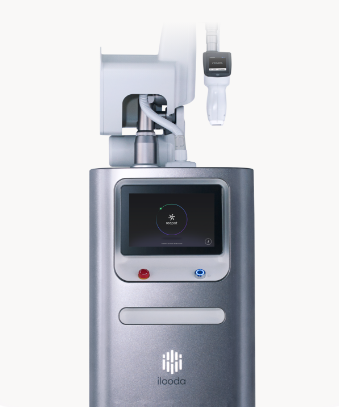
After treating lentigo with RePott Laser, DuoDERM is applied. It is important not to remove it prematurely and to observe the progress for about two weeks to ensure safe recovery.
Here are some important points to keep in mind during the recovery period:
- Keep the DuoDERM on for the instructed period without arbitrarily removing it.
- Avoid frequently touching or irritating the treated area with your hands.
- Pay attention to UV protection when going out.
- If the attached area feels different from usual, consult with medical staff.
After adhering to the recovery period and removing the DuoDERM, you may notice that the pigmentation issue has significantly improved. If you are also concerned about other benign lesions like moles or warts, it is a good idea to also look into Laser Lesion Removal.


In closing
In this article, we explored the causes of lentigo on the face and effective treatment methods. As lentigo is a benign pigmentary lesion that rarely fades naturally, it is crucial to establish a treatment plan tailored to the depth and characteristics of the lesion.
If you are unsure whether your skin condition is lentigo or another pigmentary lesion, we recommend seeking an accurate diagnosis rather than self-diagnosing.
For more detailed guidance, please inquire via chat consultation for lentigo causes and RePott Laser treatment.
Chief Director Lee Sang-ju (MD, PhD, Yonsei University College of Medicine and Graduate School, completed dermatology residency at Severance Hospital, President of the Korean Dermatological Association) Chief Director Lee Sang-ju's Profile First published 2025-02-12 / Last reviewed 2026-06-16
This content is for general information purposes only, and treatment effects and recovery processes may vary by individual. We recommend consulting with medical staff for an accurate diagnosis and treatment plan.