

It's easy to think all scars are the same once they form. However, even with the same injury, the recovery process and treatment direction differ depending on how the scar remains. To get to the heart of the question, "I'm getting scar laser treatment, which one should I choose?" the answer is not a single one, but varies depending on the type and stage of the scar.
Today, we will summarize how scars are categorized, why treatment methods differ, and what to consider first when contemplating scar treatment.
Why are scars categorized by type?

Scars do not occur in just one form but in various shapes. Even if they look similar on the surface, the underlying condition requiring treatment can differ.
In the clinic, even for scars on the same area, the guidance we provide to patients changes depending on whether the color is red or dark, or if the skin is depressed or raised. Therefore, the first thing to do when facing a scar is to identify "what type of scar this is."
Even with the same injury, if the remaining form differs, the recovery process changes, and accordingly, the choice of laser and treatment approach also changes.
Red Scars: An Approach Focused on Blood Vessels
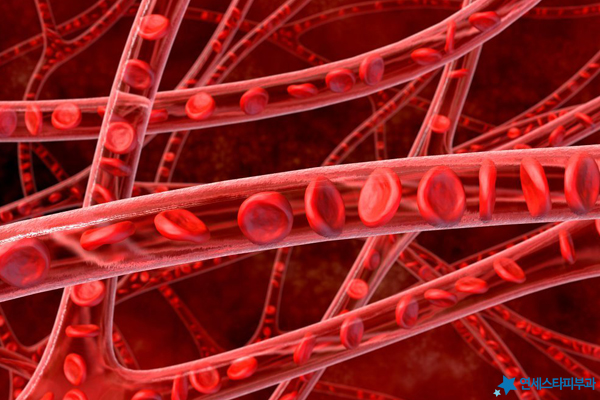
Scars that appear red may indicate that the skin has not yet fully stabilized. During this period, the skin is sensitive and susceptible to external stimuli, so management aimed at stabilizing the skin, rather than excessive stimulation, is considered important.
In particular, blood vessels can develop abnormally and excessively, causing redness, and over time, the color may turn white or appear raised. To improve these phenomena and prevent more severe scarring, laser treatments such as Vbeam Prima, known as a vascular laser, may be helpful. The effectiveness and degree of recovery may vary from person to person.
If redness persists for a long time, it may overlap with patterns of facial redness or red acne scars, and similar equipment may be considered depending on the condition.
If Dark and Dull Marks Remain
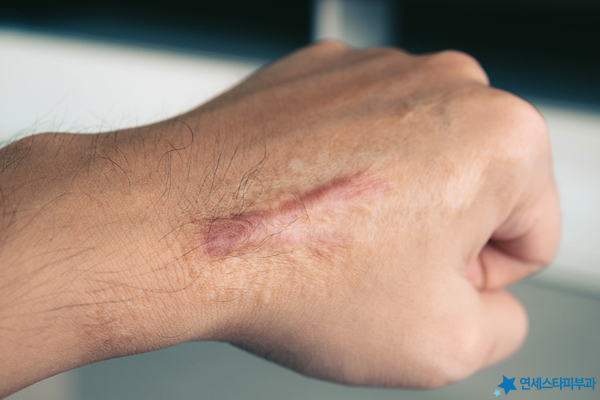
Scars can also remain brown or dark. While it may appear to be a simple color issue on the surface, it is often a case where pigment is accumulating due to continuous irritation of the skin from inflammation. Therefore, it is recommended to carefully check the condition and manage the scar with appropriate laser treatment.
Activating skin regeneration in the scar area with high-output energy lasers such as Ultrapulse Alpha and StarLux can help in recovery. If dull pigmentation issues also persist, combining with pigment lasers like PicoWay may also be considered.
Depressed or Raised Scars: Addressing Structural Changes
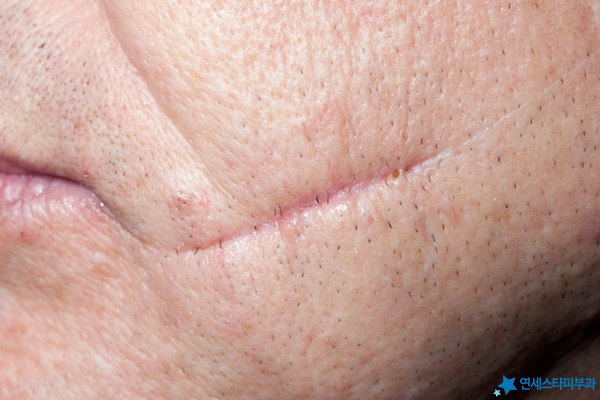
It is surprisingly common for skin to remain sunken due to damage from acne or trauma. These depressed scars are not just simple color changes but may be a structurally deformed state where some tissue within the skin has been lost. If depressed marks are a concern, it is helpful to also examine the characteristics of depressed acne scars.
Conversely, there are also scars where the skin is prominently raised. In this case, it is characterized by excessive tissue formation during the recovery process. This can be improved by activating the skin's regenerative power to naturally fill in the area with a CO2 laser, or by precisely refining the raised parts with a laser. Firmly raised areas can also overlap with the characteristics of keloid scars.
Such scars are often quite old. Synergy can be expected by combining Subcision treatment, which improves the sunken area to a state conducive to filling, or by using skin boosters to further enhance regenerative power.
If you have any questions, feel free to ask through Scar Type Treatment Consultation.
Early Scars vs. Old Scars: Differences by Stage

Scars also change depending on how long they have been present. The characteristics by stage are summarized as follows:
| Category | Key Characteristics | Considered Approach |
|---|---|---|
| Early Scars | Red and sensitive state | Stabilize while minimizing irritation |
| Old Scars | Discolored and hardened tissue | Activate regeneration, structural improvement |
Especially old scars may have undergone structural changes in the skin itself, requiring a different treatment approach than early scars, and the time required for improvement may also be longer.
Therefore, it is important to carefully check in advance what treatment you need to proceed with and choose the method. Since the skin condition varies for each scar, the method and depth of stimulation may also differ.
Things to Check Before Choosing a Scar Laser

Even for the same scar, the treatment direction and the scar laser equipment used can vary depending on the type and stage. Since the method of delivering stimulation to the skin differs according to the scar condition, the treatment approach also changes depending on which laser is used.
Here are some items to check yourself before choosing a laser:
- Confirm the form of the scar: Is it red, dark, depressed, or raised?
- Estimate how long it has been since it formed.
- Observe if your skin is usually sensitive or prone to pigmentation.
- Check if only one device is needed, or if combined treatment is necessary.
- Confirm the appropriate direction for your scar type through consultation.

You don't have to give up prematurely

Once a scar forms, it doesn't easily disappear, so many people give up on treatment and live with it. There are also cases where people have old scars because they neglected them without much expectation of "how much change a scar laser could bring."
Laser equipment that helps skin regenerate smoothly has steadily advanced, and with the help of dermatological medical staff with knowledge and experience, gradual improvement can be expected. While the effectiveness and recovery speed may vary from person to person, we hope that by not giving up prematurely and continuing with phased treatment, scar marks can become much more natural.
If you have any questions, please feel free to inquire through Consultation for My Scar Type.
Chief Director Lee Sang-Joo (MD, PhD, Yonsei University College of Medicine and Graduate School, completed dermatology residency at Severance Hospital, President of the Korean Dermatological Association) Chief Director Lee Sang-Joo's Profile First published 2026-03-23 / Last reviewed 2026-06-16
The above content is for general understanding of scars, and since scar conditions and treatment responses can vary from person to person, please consult with medical staff for an accurate diagnosis and treatment plan.