

Tattoos were once considered a permanent decision, but as lives and values change, more people wish to have them removed. If you are unhappy with a tattoo, you should understand the possible removal period and precautions, and choose a clinic carefully.

What the "Wait a Month" Advice Misses
Tattoo removal varies depending on size, color, location, and skin type, but many places generally advise waiting at least one month after the pigment is applied before removal is possible. However, if the tattoo pigment settles into the skin during that time, the number of required treatment sessions may increase.
At our clinic, you may receive removal treatment once any oozing or scabs on the tattooed area have disappeared.
The Channels Through Which Pigment Entered and Exited
During this period, the tattoo is not deeply embedded in the skin. This is because the small holes created on the skin's surface when the pigment was injected are still open.
If the holes close completely, it will take longer for the pigment to be removed. Receiving laser treatment before they close can make removal relatively easier.
However, it is necessary to assess the skin condition, so a specialist consultation is recommended first. You can check the treatment flow in the Tattoo Removal Treatment Guide.
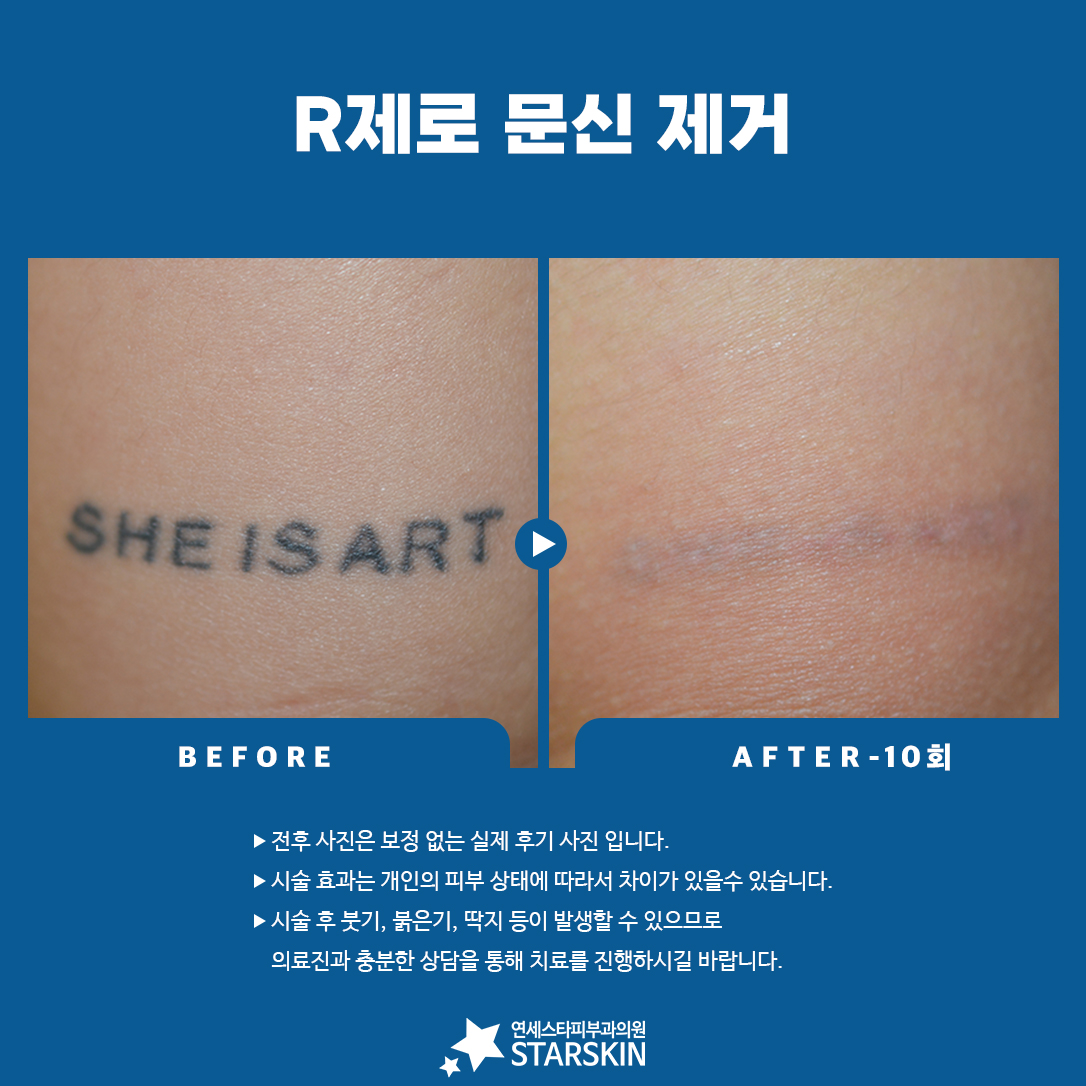
R-Zero Pinhole Technique to Overcome the Bubble Layer
The key to tattoo removal is how well the pigment is broken down. However, when a PicoWay Laser is used to irradiate the pigment area, a bubble layer forms, which obstructs further irradiation, limiting it to a single pass.
Yonsei Star Dermatology Sinchon uses the PFD specialized medication to enable up to four repeated irradiations in a single session. Even with multiple irradiations, a dermatology specialist performs the procedure directly, ensuring it is done within a range that does not overstress the skin.
In the final step, the Pinhole Technique is performed to create space for blisters to drain and prevent scarring. This combination is the R-Zero Pinhole Technique. For detailed information, please refer to the R-Zero Pico-Frectat Tattoo Removal Guide and Pinhole for Burn & Surgical Scar Treatment Guide.

Criteria That Precede Equipment
When choosing a clinic, you may consider the latest laser equipment, but more important are the experience and skill of the practitioner. Yonsei Star Dermatology Sinchon provides direct consultations and treatments by five dermatology specialists with extensive clinical experience in various tattoo removal cases.
With expertise gained from numerous removal experiences, we perform tattoo removal in a way that aims to minimize scarring.
What to Inform Us Before Consultation
Tattoo removal can leave microscopic wounds on the skin, so it should be performed when the skin is in a healthy condition. If any of the following apply to you, please inform us during the consultation to enable customized treatment:
- If you have a skin condition
- If you have had allergic reactions
- If you have an immune disorder
Time and Care Needed Between Sessions
Tattoo removal requires multiple sessions, with a period of 1 to 2 months needed between each session. This is to allow the skin to recover and for immune cells to transport the tattoo pigment.
| Period | What to Do |
|---|---|
| Immediately after treatment until recovery | Avoid sun exposure on the treated area |
| Throughout the recovery period | Apply regenerative cream diligently |
| Between sessions | Maintain a 1 to 2 month interval |
| If inflammation or pain persists | Visit the clinic where you received treatment immediately |
Ultimately, Time Remains
The removal results may vary depending on the individual's skin recovery status, tattoo size, and pigment amount. As this is a treatment that requires a long duration, it is important to consult with a dermatology specialist and continue until the end.
Please feel free to leave any questions you have by chatting with us now.

Authored and Medically Reviewed by Chief Director Dr. Lee Sang-Joo (Dermatology Specialist) Graduated from Yonsei University College of Medicine · Doctor of Medicine · Dermatology Resident at Severance Hospital Served as an advisory physician for Amorepacific IOPE · President of the Korean Dermatological Association in 2026 View Medical Staff Profile
First Published 2023-11-29 · Last Reviewed 2026-07-29
This article contains general medical information and is not a substitute for individual diagnosis and treatment. Results and recovery progress may vary by individual.